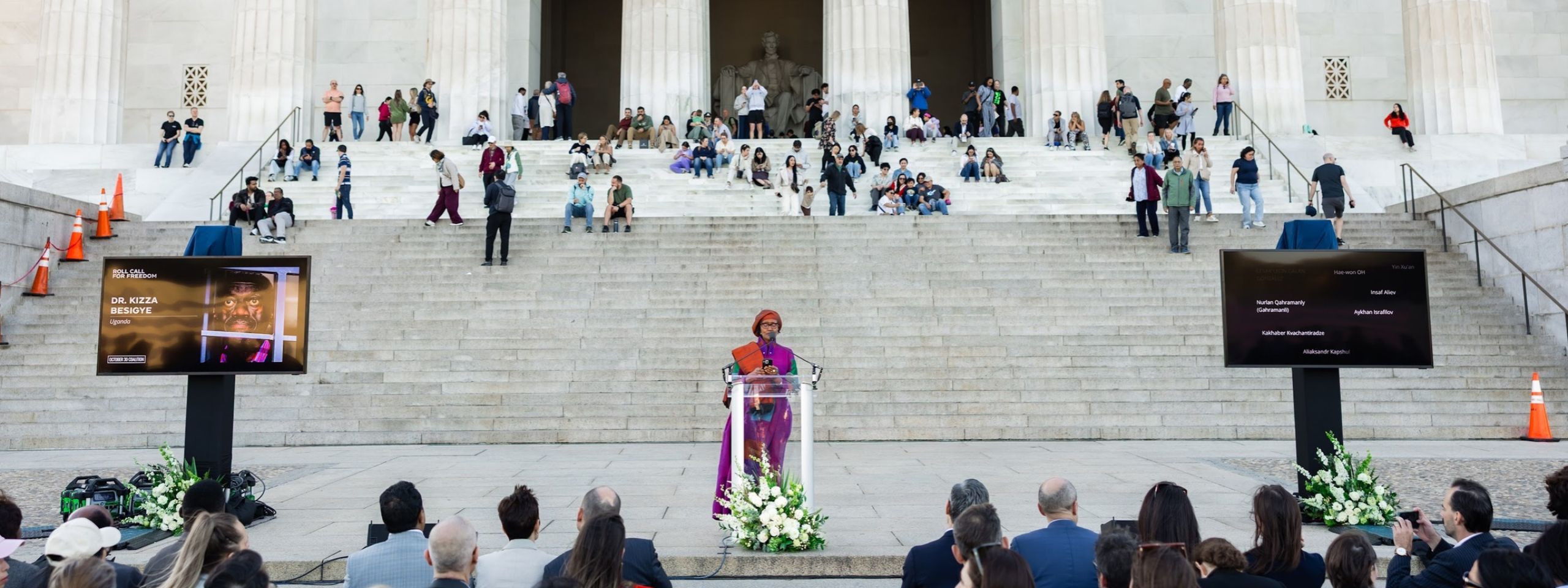
On October 30, hundreds of people gathered on the steps of the Lincoln Memorial in Washington, D.C., to voice a shared demand: freedom for the more than one million people worldwide imprisoned for exercising their fundamental rights.
At the Roll Call for Freedom, convened by the October 30 Coalition to commemorate the International Day of Political Prisoners, participants read aloud the names of people unjustly detained across Africa, Asia, Europe, and Latin America, ensuring their stories are heard in the nation’s capital.
Civic leaders, former political prisoners, families of detainees, and members of the public pledged to work together across borders to free detainees. Their commitment reflects a belief that political imprisonment demands a collective response, as dictators shut away individuals to intimidate and silence entire communities.
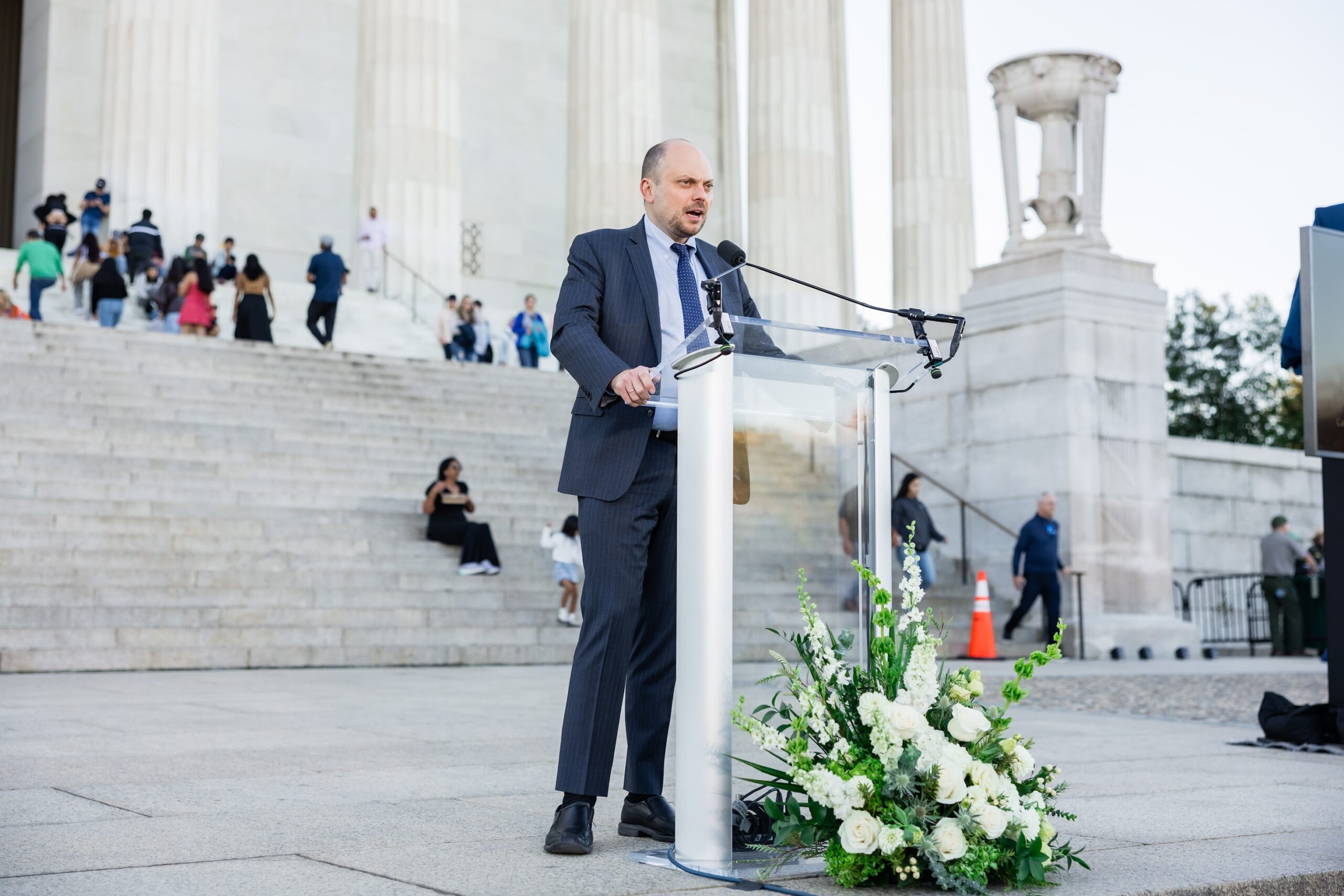
Former political prisoners Vladimir Kara-Murza from Russia and Félix Maradiaga from Nicaragua opened the ceremony. They shared their experiences of imprisonment and emphasized the importance of international support in sustaining their hopes for freedom.
“When a dictatorship imprisons a political opponent, the goal is not just to jail or to punish that person,” said Kara-Murza. “The goal is also to isolate, to demoralize, to make them feel alone and forgotten, and to make them think that nobody cares. But this is never going to happen because all of us who are here today and so many other people around the world are the voices of those whose voices dictatorships are trying to silence.”
For the families of political prisoners, that isolation can mean years of separation, hopelessness, and fear. Evgenia Kara-Murza and Berta Valle, whose husbands Vladimir Kara-Murza and Félix Maradiaga were both imprisoned for their pro-democracy work, spoke about their families’ experiences and their determination to help others still waiting for their loved ones to return home.
“We have been able to embrace our husbands again,” said Berta Valle. “So many families are still waiting for that first embrace. The release of our loved ones does not bring our responsibility to an end. Their freedom is a source of immense gratitude but also a reminder of what remains to be done.”
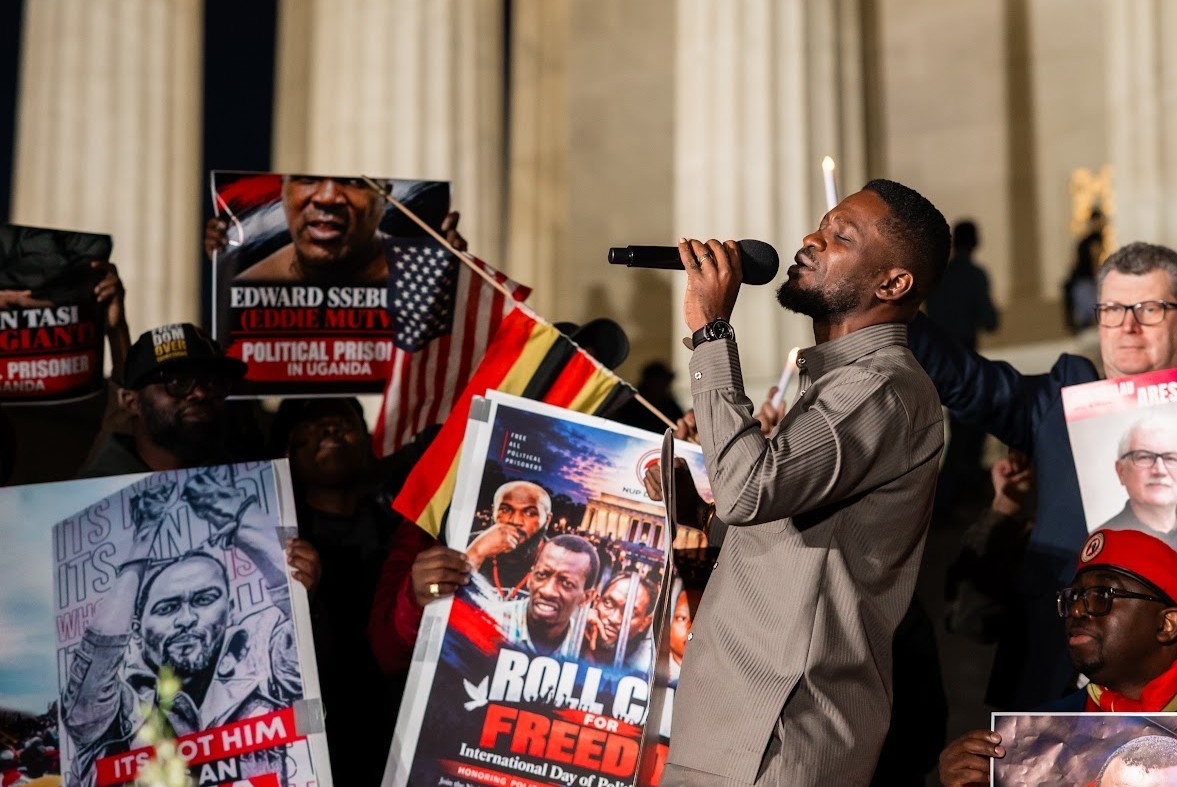
The ceremony closed with a special musical performance by Ugandan musician and pro-democracy leader Bobi Wine. His message of hope and support for political prisoners and their families came just months after he fled Uganda amid threats of violence and arrest.
The Roll Call for Freedom was part of a broader series of activities organized by the October 30 Coalition and NED to support efforts to free political prisoners. Ahead of the ceremony, NED hosted workshops to equip civic leaders with new communications skills and practical tools to help secure prisoners’ release and support their families. NED also convened a reception honoring current and former U.S. officials, civic leaders, and academics for their years of service advocating for political prisoners around the world.
***
About the October 30 Coalition
The October 30 Coalition brings together organizations committed to raising awareness of political prisoners around the world and securing their release. The coalition works to sustain international attention on individual cases, advocate for the immediate release of political prisoners, promote accountability for abuses, and support prisoners and their families. Its founding members are the 30 October Foundation, Free Russia Foundation, Free Them One by One, Freedom House, the Human Rights Foundation, the Lantos Foundation, the McCain Institute, the National Endowment for Democracy, the Raoul Wallenberg Centre for Human Rights, and World Liberty Congress.
About the National Endowment for Democracy
NED is a private, nonprofit foundation dedicated to advancing freedom and democracy worldwide. Established in 1983 as part of President Reagan’s vision to foster an “infrastructure of democracy” with a bipartisan Congressional mandate, NED supports grassroots leaders striving for the freedom to think, speak, worship, engage politically, and support their families without fear. It mobilizes key pillars of American democracy, from political parties to business and labor, to support their counterparts abroad through the Core institutes that form the NED family: the International Republican Institute, the National Democratic Institute, the Center for International Private Enterprise, and the Solidarity Center.