
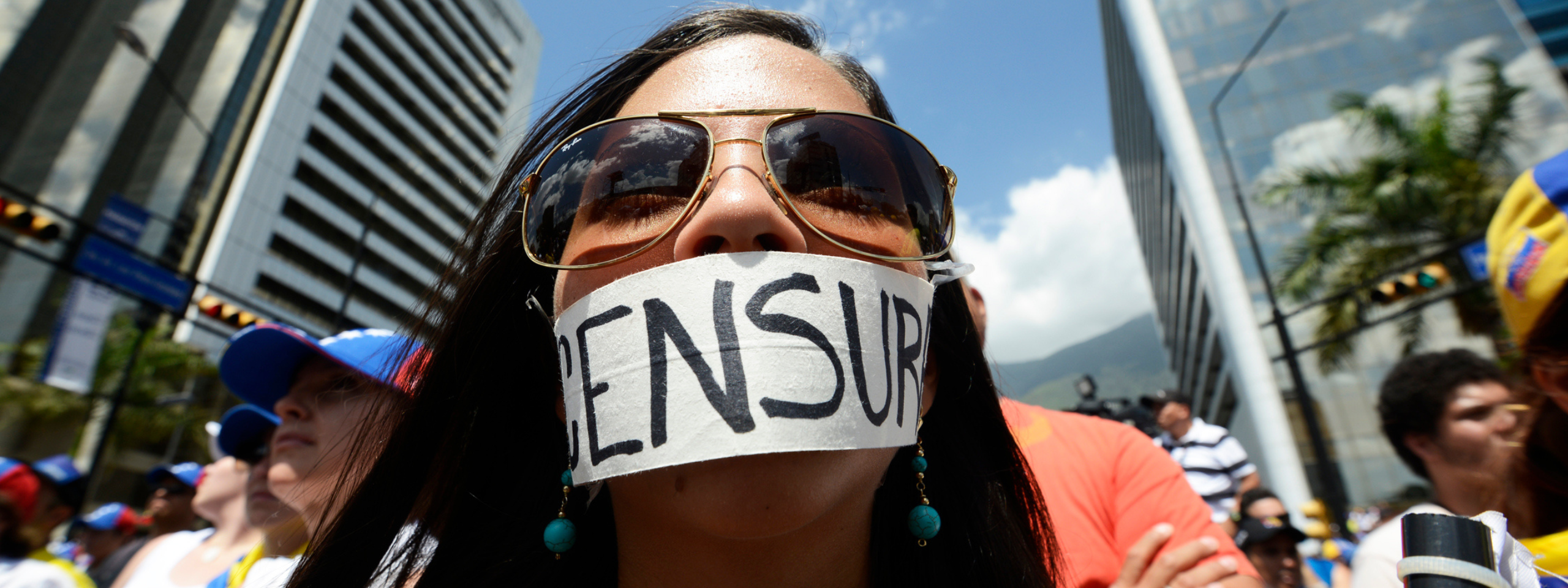
Tyrants fear free speech. In North Korea, something as simple as watching a foreign film, listening to K-pop, or sharing a flash drive loaded with news from the outside world can lead to years of hard labor in a prison camp.
They fear it for a simple reason: truth breaks monopolies of power. Once people can hear something other than the state’s version of reality, fear begins to loosen its grip, people begin to think for themselves, and the possibility of a different future begins to emerge.
Free speech is one liberty among many, and the liberty that helps safeguard the rest.
Freedom of assembly depends on the ability to call people together and organize. Free elections depend on citizens being able to hear competing ideas and judge those who seek power. The right to petition government requires the ability to criticize authority without reprisal. Even religious liberty depends on the freedom to speak, teach, and practice one’s beliefs openly.
A free society, in turn, depends on citizens being able to speak, write, worship, question, organize, create, and exchange ideas without fear. It depends, too, on access to information that allows citizens to think critically and participate meaningfully in public life.
This conviction sits at the heart of the American experiment. Long before the First Amendment was ratified, colonial Americans had direct experience with political speech as a tool of self-government: pamphlets, sermons, newspapers, petitions, and town meetings were central to the movement for independence. James Madison, in helping shape the First Amendment, gave constitutional form to that tradition—recognizing that a free people must be able to speak freely.
Authoritarian regimes understand the connection between speech and self-government. That is why they do not merely punish dissent after it appears; they try to prevent citizens from accessing the ideas, information, and networks that make dissent possible. This is why defending free speech is both a democratic principle and strategic necessity for a world in which free people shape the future.
Around the world, regimes including China, Russia, Iran, and Cuba suppress independent voices and seek to control public discourse. Critics are jailed. Speech is criminalized. Newsrooms are raided. Meanwhile digital platforms are censored, private communications are surveilled, and citizens are cut off from outside sources of information.
Increasingly, this repression extends across borders, as authoritarian censorship embeds itself in the technologies that shape how people access information. China’s DeepSeek illustrates this broader challenge: when AI systems developed under authoritarian controls reach global users, they can export limits on inquiry and expression far beyond the borders where those limits began. AI systems, search tools, social platforms, surveillance technologies, and digital infrastructure can all carry the assumptions and restrictions of the political environments in which they are built.
How NED Supports Free Speech Abroad
NED’s work begins from the premise that the desire for freedom, voice, truth, dignity, and self-government is human, not uniquely American. People do not need to be taught to want dignity or a voice in their own future. They already do. The question is whether they have the freedom, opportunity, and means to pursue it.
Defending free expression where it is under direct assault has been central to NED’s mission since its founding. Proposed by President Ronald Reagan and established in 1983 with bipartisan Congressional support, NED’s mandate is to support those working peacefully to defend and expand freedom in closed societies, authoritarian settings, and in places where democratic space is under pressure and fundamental rights remain contested.
As authoritarian tactics have changed, so has the democratic response. Where regimes once relied primarily on secret police and state broadcasters, they now combine legal intimidation, cyber harassment, internet shutdowns, surveillance, economic pressure, and information manipulation.
NED’s partners have adapted in turn—documenting abuses, protecting sources, reaching audiences, and keeping independent information flowing. From underground publishing in the former Eastern bloc to today’s tools to circumvent digital firewalls, NED supports many seeking to break through censorship and preserve independent space for speech and thought.
Congressman Dante Fascell, one of NED’s founding champions, captured the spirit of the mission when he said “The pen is mightier than the sword. Ideas do climb walls. And they go under walls and over walls and through walls.”
At its core, NED’s work on free speech is grounded in democratic values and bounded by clear principles:
First, NED supports those who defend the right to speak and who expose the abuses designed to silence it. That includes journalists, researchers, content creators, legal defenders, and civic groups who document arbitrary arrests, speech-based prosecutions, torture, raids on newsrooms, and forms of surveillance that make even private communication dangerous. Their work preserves evidence, informs citizens, and helps the world understand what repressive regimes are doing to their own people.
In Nicaragua and Belarus, independent voices have continued reporting and documenting abuse despite imprisonment, exile, and intimidation. In Sudan and Ethiopia, local media and civic networks have worked to keep information flowing amid conflict, insecurity, and severe pressure.
One principle remains constant: NED does not manufacture voices, dictate agendas, impose ideology, suppress lawful expression, or tell citizens abroad what to think or say. Nor do we support voices that advocate violence or hate.
Second, NED helps strengthen local, independent media ecosystems. Free speech depends on institutions and channels through which speech can reach people, from small community radio stations in francophone West Africa, to digital investigative platforms in the Western Balkans, to radio stations serving rural listeners in Latin America who may have no other reliable source of local news.
It also includes local newspapers, digital outlets, community radio, investigative platforms, newsletters, creators, podcasters, and other trusted civic voices that provide people with reliable information about their own societies. In many places, these voices are the only alternative to media controlled by the state, captured by oligarchic interests, or distorted by organized crime. NED helps such partners become more resilient, more secure, and more sustainable so they can continue serving their communities. These institutions keep public life from collapsing into silence, propaganda, or fear.
In Venezuela, NED has supported independent democratic voices that have continued to inform the public and defend political space even amid intimidation and censorship. In Burma, civic groups and media partners have worked under brutal pressure to keep information flowing as the junta has intensified its crackdown.
Third, NED supports efforts to break authoritarian information blockades. In closed or heavily censored environments, the problem is not only whether people are free to speak; it is whether they can access independent information at all.
That is why NED has supported in-country networks, secure communications, circumvention technologies, alternative distribution systems, mirror sites, and other tools that help people bypass censorship and communicate safely. In a world where dictators increasingly rely on digital controls to isolate their citizens from reality, this work is indispensable. The ability to obtain uncensored information is itself a form of democratic resilience in countries like China, North Korea, Cuba, and Iran.
Fourth, NED supports innovation that helps secure the future of free expression. Authoritarian regimes are investing heavily in advanced methods of censorship, surveillance, and manipulation. In fragile democracies, independent media also often faces political and financial pressure. Democratic actors cannot afford to stand still. We support partners experimenting with new tools, formats, and security practices that help citizens communicate and reach audiences under pressure. Innovation is not only technical. It can also involve new forms of storytelling, low-bandwidth distribution, offline information-sharing, and creative ways of reaching younger or harder-to-reach audiences in repressive settings. Our efforts also help independent media develop more sustainable business models.
These efforts are achieved through direct grantmaking and through the work of NED’s four Core Institutes, the International Republican Institute (IRI), the National Democratic Institute (NDI), the Solidarity Center, and the Center for International Private Enterprise (CIPE), which bring complementary strengths in political, labor, business, and international solidarity networks. Together, these efforts support investigative journalists, civic technologists, political reformers, and local democratic actors working to give citizens the tools they need to make informed decisions and press for accountable government.
Why This Matters to the United States
The defense of free expression abroad matters directly to the United States as well as to those living under censorship. Some question whether this work amounts to cultural imperialism. President Ronald Reagan addressed that argument directly when he warned that “it would be cultural condescension, or worse, to say that any people prefer dictatorship to democracy.”
There is something deeply patronizing in the claim that support for freedom abroad is merely the export of American values. It suggests that people living under censorship, repression, and one-party rule do not genuinely want the ability to speak freely, know the truth, practice their faith, organize independently, and have a say in their government. Those aspirations are not an American invention. They are human aspirations. To deny that universal striving for freedom is, in Reagan’s words, a form of cultural condescension.
The case for defending free expression abroad begins with principle: people should be free to speak, organize, and shape their own future. But free expression also helps build societies that are more accountable, stable, and resistant to authoritarian control. Free speech supports transparency, fairer markets, and a more dependable environment for American business, investment, and trade.
Closed information environments distort economies as surely as they distort politics. When speech is repressed, corruption becomes harder to expose, investor risk harder to assess, and predatory economic practices easier to conceal. Forced labor, supply chain abuses, and state-backed market manipulation can remain hidden from public view. Without independent voices, reliable information dries up, accountability weakens, and businesses are left operating in a climate of greater uncertainty, hidden risk, and tilted competition. That hurts not only local economies, but American workers, companies, and investors as well.
NED’s grantmaking helps combat authoritarianism, corruption, and other drivers of instability abroad—mitigating threats before they harden, spread, and reach the United States. Supporting freer societies overseas is not charity. Countries with stronger civic institutions and more open public discourse are better equipped to withstand pressure from authoritarian actors. They are more reliable partners for the United States and less vulnerable to domination, capture, or destabilization. It is one way America helps shape a world less hospitable to repression, extremism, and authoritarian influence.
Promoting Freedom, Stability, and Human Dignity
Defending free speech is a democratic imperative and a strategic investment in America’s future. But before all of that, this work is human.
The desire to speak freely is not confined to one country, one class, or one political tradition. It is a deeply human aspiration. People want the freedom to ask questions, tell the truth, worship according to conscience, create culture, challenge injustice, and participate in shaping the future of their own communities. Even in the most repressive settings, citizens continue to seek voice, dignity, and self-government.

We support freedom of expression because it is a fundamental right. We support it because democratic self-government cannot function without it. We support it because societies that silence citizens become more dangerous. And we support it because, from Cuba to Hong Kong and Tanzania to Mali, courageous people continue to risk everything for the freedom to speak the truth and to hear it.
We will continue to do so in a way that is principled, nonpartisan, and faithful to our mandate. In defending free expression, we are upholding a principle James Madison helped give constitutional form: that self-government depends on the liberty of citizens to speak, publish, assemble, and demand accountability from those who govern. Free speech is not a luxury to be enjoyed after freedom is secured. It is one of the conditions that makes freedom possible in the first place.
Damon Wilson is the President and CEO of the National Endowment for Democracy (NED).
Carolyn Stewart is the Director of External Communications at NED.