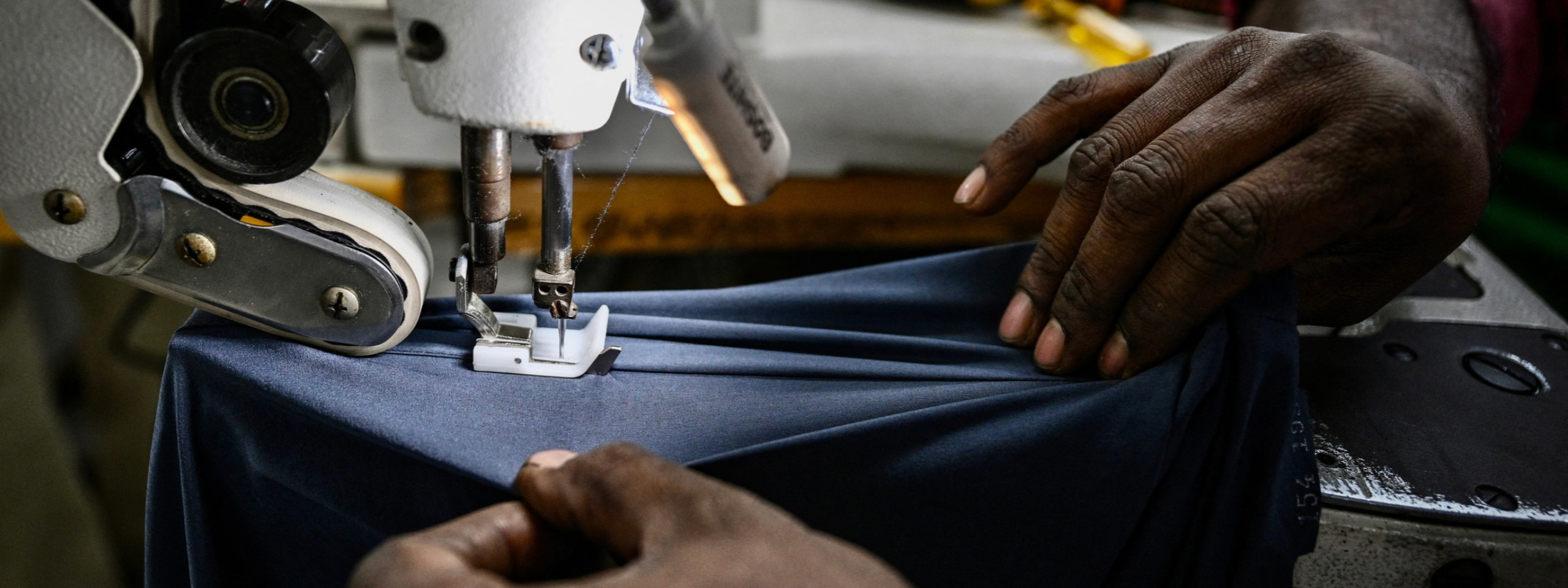
 Every day, tens of millions of people worldwide are denied fundamental freedoms and rights to make choices about their daily lives and futures. Authoritarian regimes and corrupt actors increasingly take advantage of complex global supply chains and weak governance systems to exploit vulnerable workers.
The National Endowment for Democracy (NED) and its Core Institutes support partners around the world working to expose and dismantle the systems that sustain forced labor. These partners pursue accountability for rights violations, improve transparency in global supply chains, and build local oversight mechanisms that help prevent abuses and protect workers.
This work strengthens both democracy and economic security. When workers can organize and defend their fundamental freedoms, democratic institutions and local economies grow stronger. Forced labor also harms the United States by allowing goods produced through exploitation to undercut American businesses and workers.
NED supports this work through direct grants to partners and through grants to its four Core Institutes: the Center for International Private Enterprise (CIPE), the International Republican Institute (IRI), the National Democratic Institute (NDI), and the Solidarity Center.
How NED is Making a Difference:
- China: Reporting and analysis by NED partners exposed the risk of forced labor in the production of automobile parts in China’s Uyghur region, helping prompt a major automaker to withdraw from the region in 2024. NED partners also helped inform U.S. government efforts to combat forced labor in the region, including a July 2026 move to add 43 entities to the Uyghur Forced Labor Prevention Act Entity List. Separately, investigations by another NED and IRI partner found that subcontractors of BYD, a state-supported Chinese electric vehicle maker, regularly withheld wages and passports from workers at several overseas factories, charged illegal recruitment fees, imposed excessive overtime, and banned time off. These investigations led officials to launch corrective measures to enforce their existing labor laws.
- Cuba: For decades, the Cuban regime has conducted human trafficking by coercing doctors to take part in medical missions across the world, generating revenues that support the Communist regime and its officials. One NED partner published a groundbreaking investigative series exposing the unfair treatment and deployment of Cuban doctors, which generated regional public pressure to end missions in some countries. These efforts took place amid broader U.S. diplomatic engagement urging states around the world to reconsider participation in associated medical programs.
- Cambodia: Civic groups supported by NDI are revealing how criminal actors operating scam centers in Cambodia traffic vulnerable populations and force them to carry out online fraud under threats of violence. Evidence from these investigations is informing efforts to close the scam centers, helping disrupt operations that exploit victims and steal tens of billions of dollars from Americans each year. Meanwhile, CIPE has partnered with government, labor, and private-sector actors to develop a new digital platform that aggregates previously fragmented information on compliance with labor standards in the garment sector. The system helps flag emerging forced labor risks and give companies and authorities better information to keep products made with forced labor out of global supply chains.
- North Korea: A NED-supported rights group exposed how North Korea works with actors in China and Russia to evade international sanctions and sell minerals produced through forced labor. Its investigation identified vessels transporting illicit commodities and showed how resulting sales fund North Korean military spending. By uncovering these illicit networks, the group has provided authorities with actionable information while exposing how forced labor and sanctions evasion threaten global security.
- Uzbekistan: NED partners played a leading role in helping eliminate state-mandated forced labor in Uzbekistan’s cotton sector. In conjunction with additional funding support, CIPE worked with private-sector stakeholders to strengthen supply chain transparency and compliance with U.S. and European Union forced labor regulations, and Solidarity Center partnered with labor organizations to expand worker awareness, support labor rights, and establish alternative dispute resolution mechanisms. These efforts support higher labor standards that benefit workers in both Uzbekistan and the United States, while helping Uzbek businesses gain greater access to Western markets and diversified supply chains.
- Bangladesh: Forced labor practices like wage theft, forced overtime, confiscation of personal documents, debt bondage, and threats of violence have been pervasive across Bangladesh’s garment, construction, and agriculture industries for decades. When the country transitioned to a new democratically elected government in 2026, the Solidarity Center launched extensive consultations between lawmakers, labor groups, and industry leaders aimed at tackling forced labor. Meetings were part of longstanding advocacy aimed at strengthening freedom of association, collective bargaining, and other worker protections. These efforts ultimately led to the adoption of several amendments to the country’s Labor Act that strengthened safeguards against abuses associated with forced labor, providing new protections for workers across Bangladesh.
- Indonesia: CIPE convened a coalition of civic groups, government entities, and private-sector partners to train palm oil businesses to identify forced labor risks, implement effective monitoring and compliance systems, and establish accountable complaint mechanisms. The system helps companies identify and address forced labor risks in a sector where weak oversight across complex global supply chains can enable abuses, including threats against workers, wage withholding, and excessive or uncompensated working hours.
Across the world, NED partners challenge systematic exploitation that denies people control over their lives and work. By defending these fundamental freedoms, they help restore human dignity and give communities greater power to shape their futures. Their efforts are making it harder for authoritarian regimes to fund repression through rights abuses and paving the way for fairer economic competition that benefits American businesses and workers.