
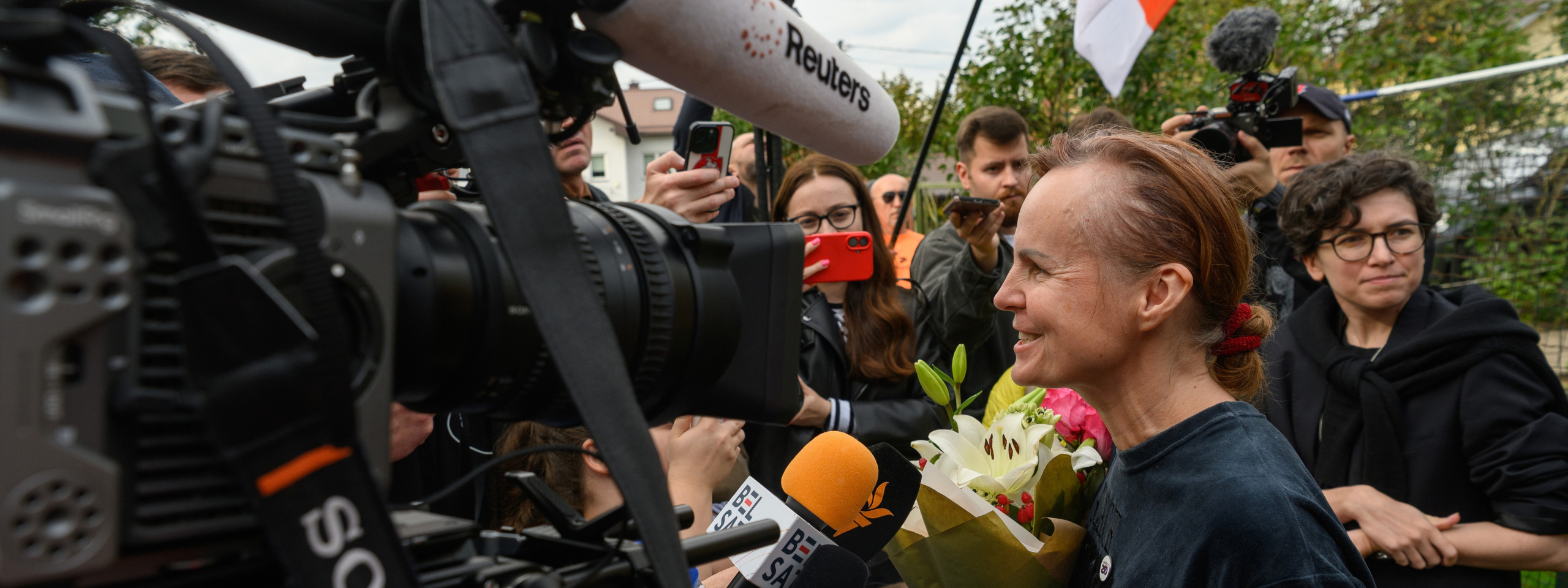
Washington, D.C.— The National Endowment for Democracy (NED) welcomes the release of 25 prisoners held by the Belarusian regime. This latest group marks the fifth release since June 2025 and comes amid ongoing U.S. diplomatic engagement led by U.S. Special Envoy for Belarus John Coale.
Among released are Lyudmila Chekina, former director of TUT.BY; Andrei Alexandrov, journalist and former BelaPAN deputy director; Dmitry Novozhilov, former BelaPAN director; and Pavel Belous, founder of the cultural initiative Symbal.by. All four received lengthy prison terms in cases that reflected the regime’s broader campaign against independent media and Belarusian civic and cultural expression.
“We welcome these releases and share the renewed hope they bring for the families, friends and of all those unjustly imprisoned. Every political prisoner freed is an achievement, and today’s release shows that progress is possible, and this momentum must continue,” said Damon Wilson, NED president and CEO. “We welcome the efforts of the Trump Administration and Special Envoy Coale, alongside the tireless advocacy of Belarusian human rights defenders. We hope that this agreement opens the way for the release of many more of those still unjustly imprisoned. NED remains committed to those working for a free, democratic Belarus.”
This release of political prisoners comes as NED recently honored Ales Bialiatski, Belarusian Nobel Peace Prize laureate and founder of the Viasna Human Rights Centre, with the 2026 Democracy Service Medal. During his most recent imprisonment, Ales spent nearly five years in harsh prison conditions before he was released in December 2025. U.S. Special Envoy for Belarus John Coale, whose diplomatic efforts facilitated Ales’ release, presented the recognition. More than 900 political prisoners remain in Belarusian regime custody, according to the Human Rights Center Viasna.
For decades, NED has supported Belarusian organizations defending fundamental rights, providing independent information, and sustaining civic participation despite repression. A critical part of this work is supporting political prisoners and their families through partners that document abuses, provide legal and humanitarian assistance, advocate for those imprisoned, and help former prisoners return to civic life. Together, these efforts help preserve the civic foundations needed for Belarus’s democratic future.