
Europe
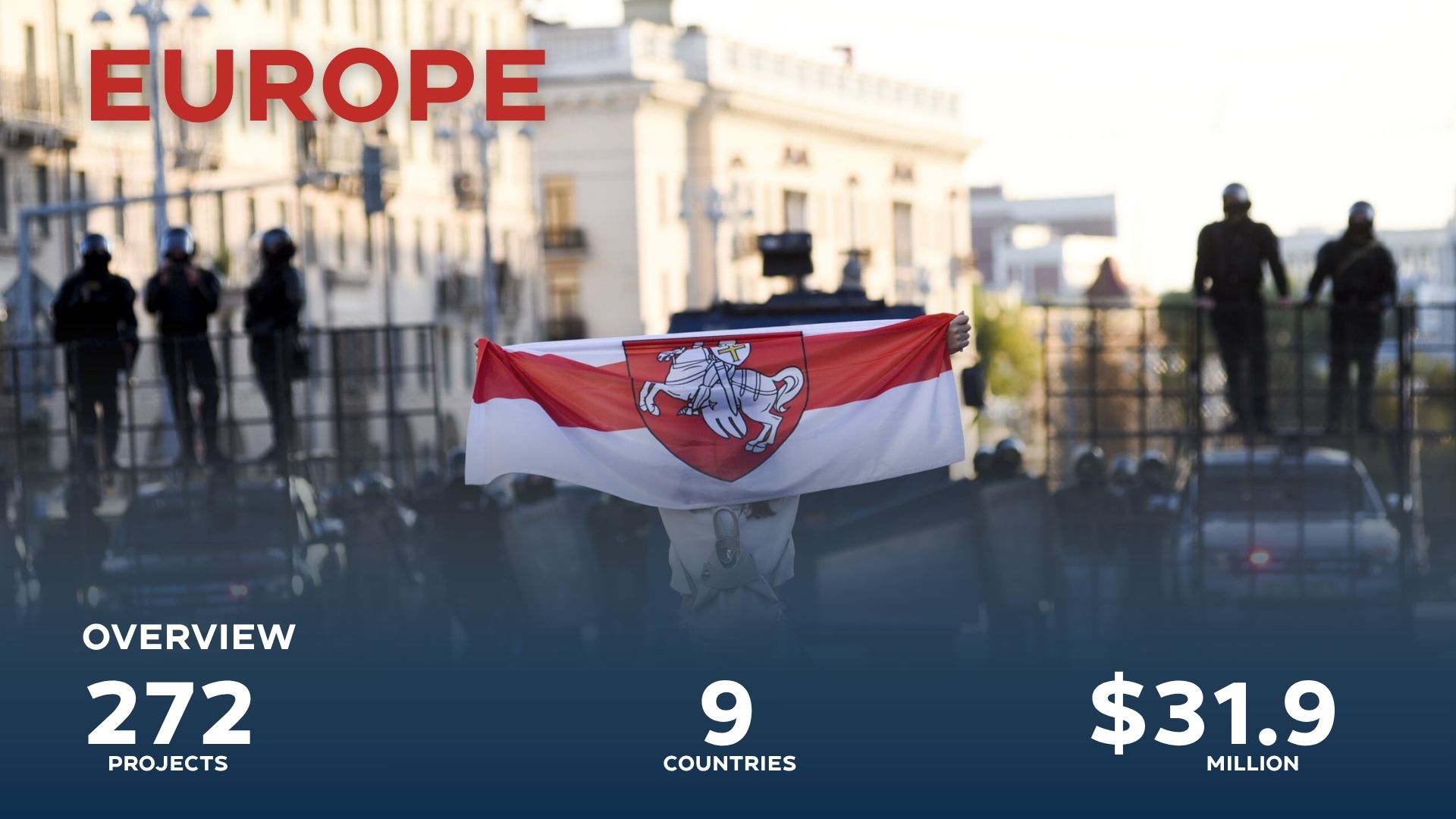
FY2025 Spending by Country | NED Active Grant Listing
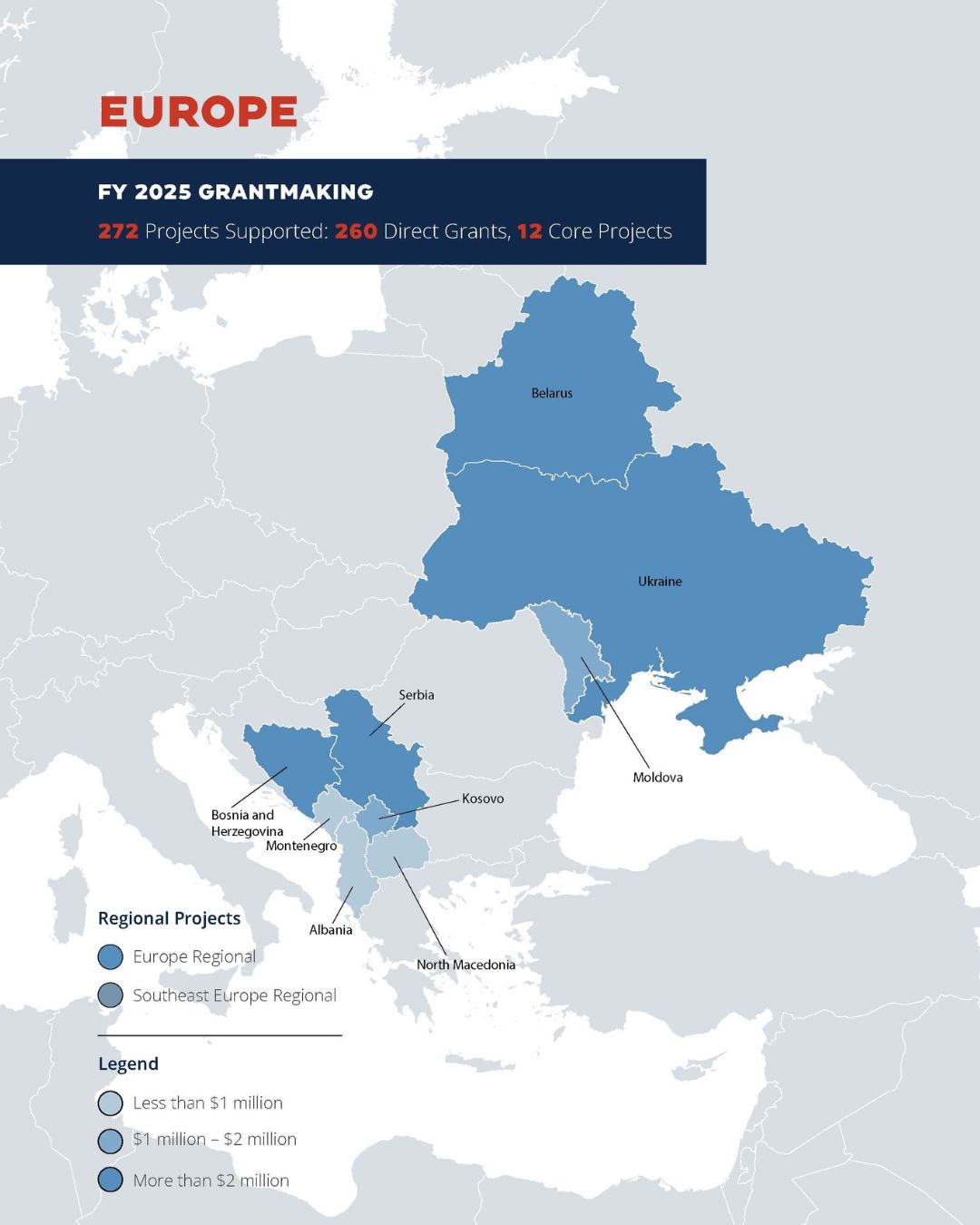
Europe’s democratic landscape in 2025 was defined by both profound strain and remarkable civic resilience. Russia’s war on Ukraine, the suffocation of political life in Belarus, and persistent tensions in Southeast Europe underscored the fragility of democratic gains. Yet throughout the region, local leaders, investigative journalists, and civic organizations advanced accountability, transparency, and rule of law, helping move their countries forward on their chosen path toward European and Euro-Atlantic integration.
In Ukraine, NED partners mobilized civil society to protect anti-corruption institutions and defend civic space, while also documenting war crimes and tracing the abduction and illegal deportation of Ukrainian children. In Moldova, citizens participated actively in parliamentary elections, despite Russian interference, sending a clear signal in support of democratic reform. Across the Western Balkans, partners advanced accountability, reconciliation, and tolerance by pursuing transitional justice measures—from documenting war crimes to facilitating dialogue across ethnic lines—to help societies move toward a more democratic and inclusive future.
A central theme across the region was the demand for better governance. Investigative journalists and watchdogs uncovered sanctions-evasion schemes, illicit financial networks, and abuse of public funds, which shifted public debate, armed reformers with credible evidence, and allowed authorities to prosecute corrupt officials. Some of these initiatives were led by youth calling for integrity, transparency, and more responsive leadership.
This push for accountability extended into electoral processes. Amid polarization and digital manipulation, democratic actors strengthened election oversight, provided voter education, and monitored campaign finance to safeguard fair competition. Independent media remained essential. Local newsrooms and regional investigative hubs protected journalists, expanded fact-based reporting, and ensured voters had credible information in environments marked by political pressure and opaque media ownership.
From Ukraine to the Western Balkans, these local actors used evidence to push for fairer political competition and better governance by fostering democratic reform, promoting greater civic engagement, and enhancing electoral oversight. Their efforts showed how democratic renewal depends on transparency, public participation, and the resilience of civic actors committed to accountable institutions.
IMPACT SPOTLIGHT: ADVANCING TRANSPARENCY ON CHINA’S INFLUENCE IN SOUTHEAST EUROPE
Learn more
International Forum Report: Authoritarian Influence in the Western Balkans

Read the Report
Impact Report: Strengthening Ukraine’s Democratic Resilience and Countering Russia’s Aggression
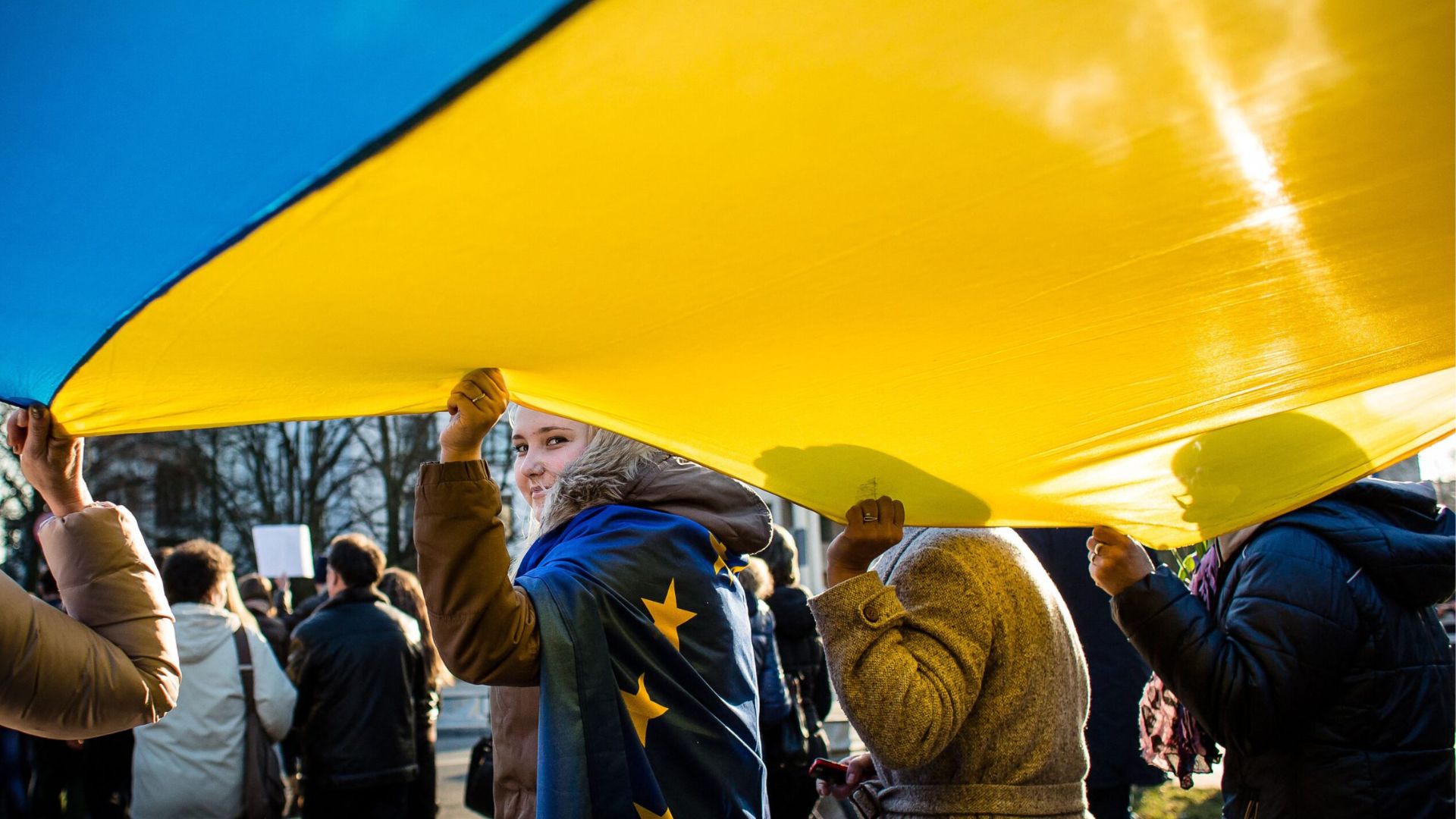 Ukrainians continue to endure bombardment, occupation, and widespread atrocities aimed at undermining their resilience. Even under these conditions, they are defending fundamental rights, documenting abuses, and sustaining democratic life against extraordinary odds. In FY2025, NED supported nearly 100 local partners inside Ukraine, providing $10.6 million in direct assistance alongside additional support to strengthen civil society and democratic resilience.
Learn More
Apply For Grant
Apply Now
1201 Pennsylvania Ave, NW, Suite 1100, Washington, DC 20004