
Eurasia
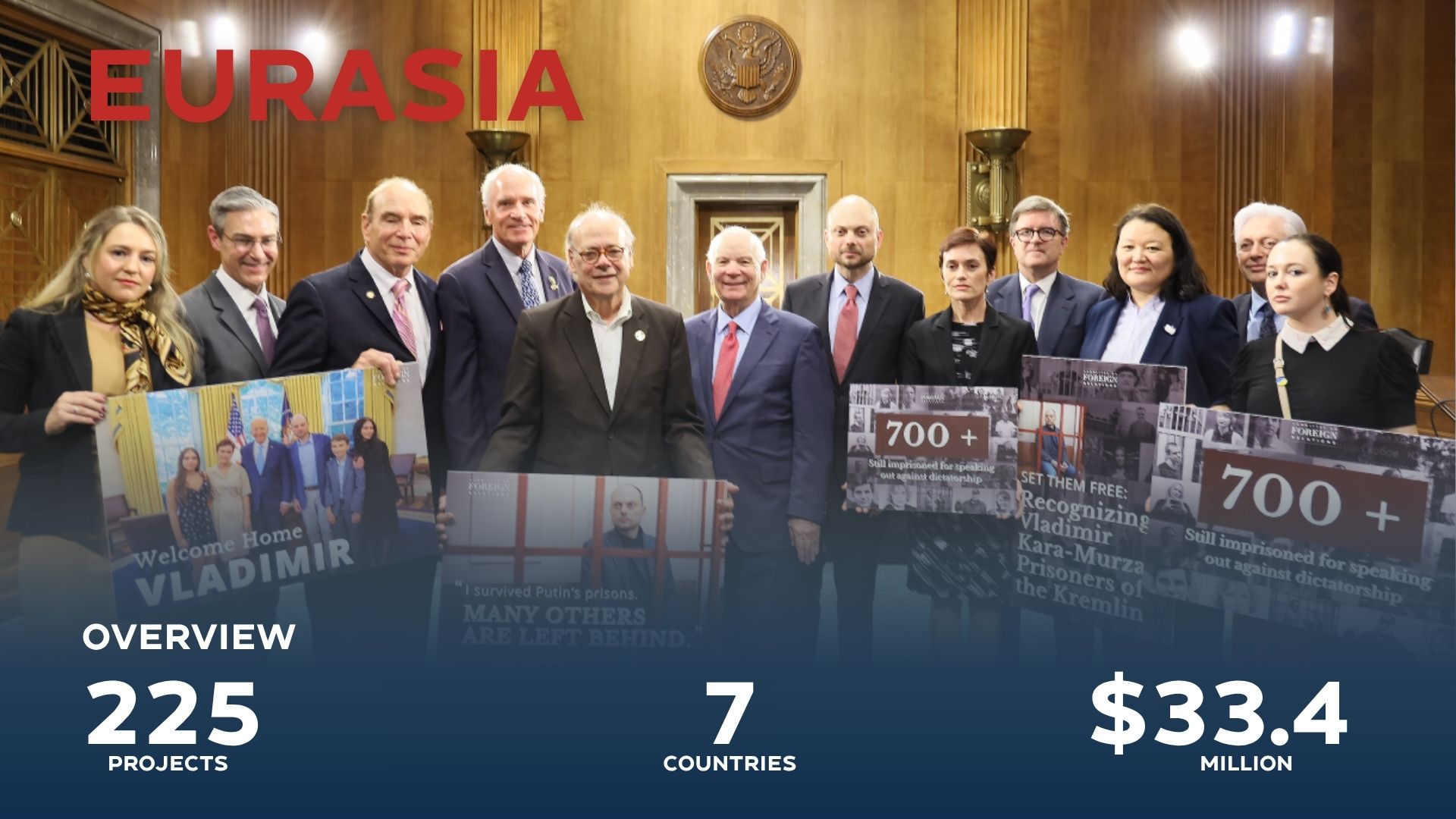
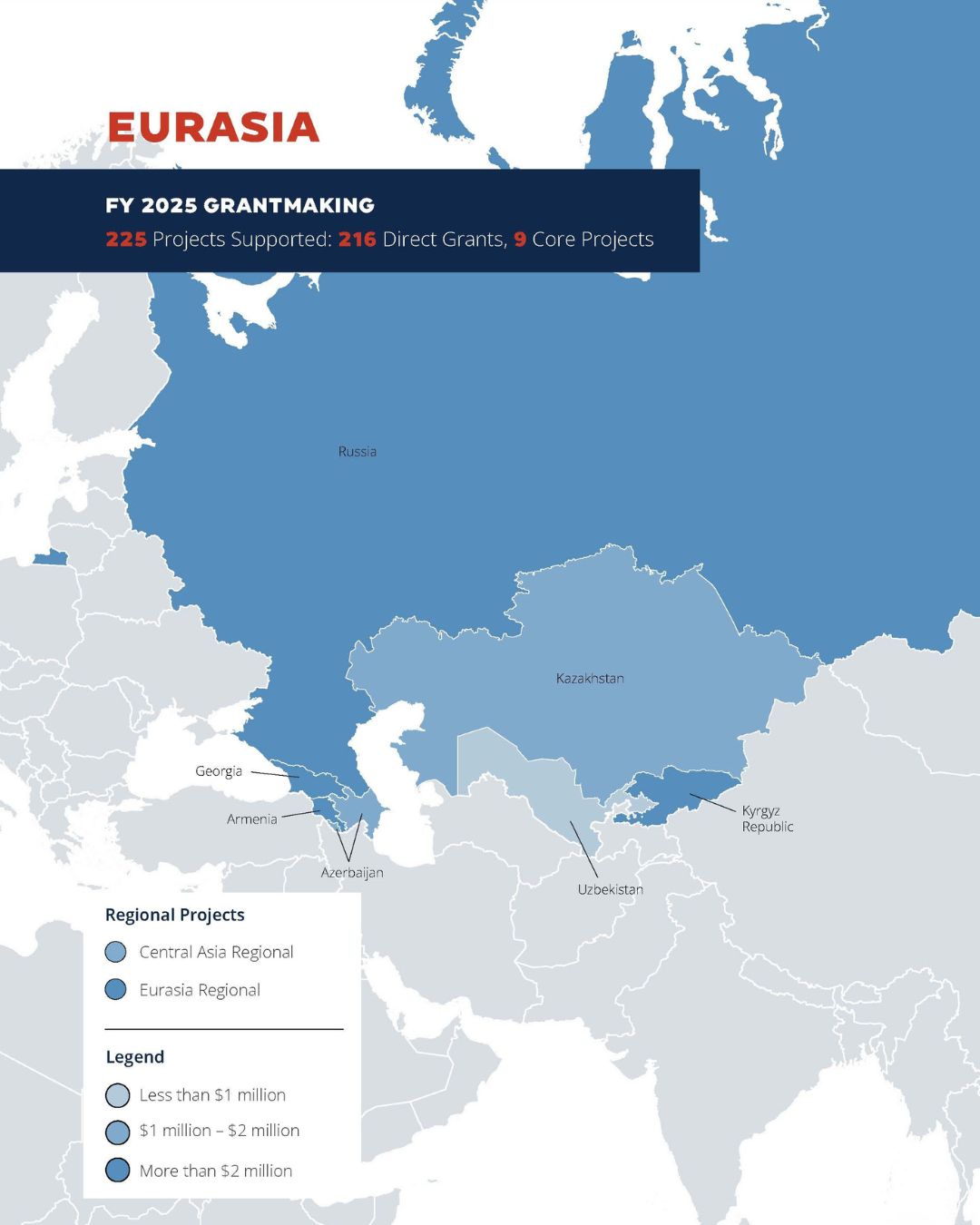
FY2025 Spending by Country | NED Active Grant Listing
In 2025, democratic aspirations across Eurasia unfolded under the shadow of Russia’s war on Ukraine and the Kremlin’s widening efforts to export repression and kleptocratic influence. Yet local leaders across the region continued to carve out space for democratic action. In Russia, despite unrelenting crackdowns, communities persisted in organizing, sharing information, and challenging the Kremlin’s influence campaigns. In Georgia and Armenia, citizens continued to assert their agency, as Georgians mobilized to defend their country’s democracy and European future, while Armenians pressed for protections of fundamental freedoms and more accountable governance amid a shifting regional landscape.
Central Asia experienced its own crosscurrents—tightened state control paired with rising public demand for good governance. In countries such as Kazakhstan and Uzbekistan, citizens more openly questioned Russian influence and voiced solidarity with Ukraine. NED-supported civic organizations worked to expand participation, increase transparency, and protect avenues for public engagement.
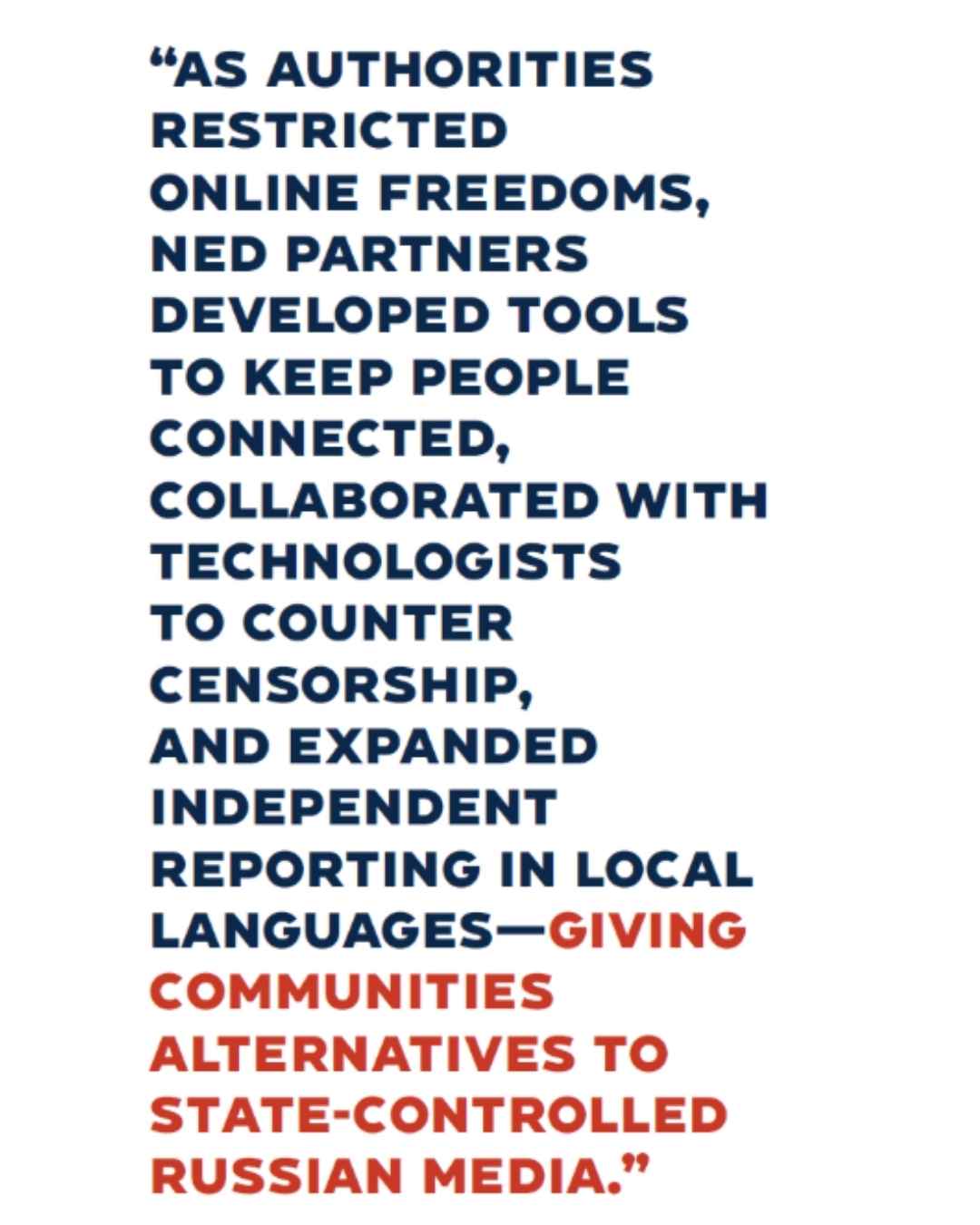
Access to information remained a defining fault line. As authorities restricted online freedoms, NED partners developed tools to keep people connected, collaborated with technologists to counter censorship, and expanded independent reporting in local languages, giving communities alternatives to state-controlled Russian media. At the same time, investigative journalists and anticorruption researchers exposed the transnational networks that underpinned authoritarian power.
Across the region, civic leaders—many operating under significant personal risk—proved that dignity and democratic agency endure even in the harshest environments. Their work demonstrated how strategic, locally rooted support can sustain democratic values in a region facing its most entrenched authoritarian challenges.
IMPACT SPOTLIGHT: TECH ACTIVISTS KEEP INFORMATION FLOWING TO RUSSIA
Learn more
Event: The Kremlin’s Use of the Russian Orthodox Church in the War Against Ukraine
Watch the full event here
Protecting At-Risk Democracy Activists: NED’s Approach

Read the full explainer
Apply For Grant
Apply Now
1201 Pennsylvania Ave, NW, Suite 1100, Washington, DC 20004