
Democracy and Insecurity in Central America: The Role of...
02:00 PM - 03:30 PM
Panelists discussed the consequences of high levels of insecurity have for democratic stability, militarization policy effects on democracy and governance, the role does civil society in civilian oversight of the armed forces and in security policy proposal and oversight, and how governments can tap into innovative policy recommendations from civil society organizations.
Engendering the Movement for Democracy in Iran
02:00 PM - 03:30 PM
In her presentation, Ms. Mahboubeh Abbasgholizadeh, a leader of the Iranian Women’s Movement, explored how women activists can draw attention to gender perspectives and promote a culture of equality within the Green Movement. By identifying shared values in a number of key areas, Ms. Abbasgholizadeh sought to locate common ground and present a strategy for further promotion and integration of gender equality.
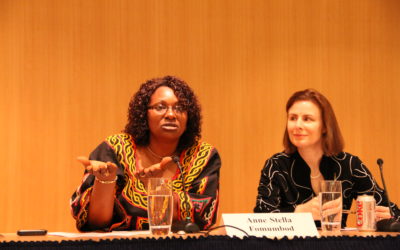
From the Grassroots to the Nation: Promoting Women’s Rights...
02:00 PM - 03:30 PM
In her presentation, award-winning development practitioner Ms. Anne-Stella Fomumbod examined the socio-cultural impediments to women’s rights, and presented the experiences and achievements of her organization, Interfaith Vision Foundation Cameroon (IVFCam), in overcoming these barriers to promote women’s rights and political participation in Cameroon.
The Role of Youth in Strengthening the Democratic Transition...
03:00 PM - 04:30 PM
Kingsley N. T. Bangwell, founder and project director of longtime NED partner Younstars Development Initiative, discussed the role of youth in strengthening the democratic transition in Nigeria.
Côte d’Ivoire: Prospects for Democracy and Reconciliation
04:00 PM - 05:50 PM
Hon. Charles Djrekpo, NDI's Resident Director in Côte d’Ivoire, discussed prospects for democracy and reconciliations in Côte d’Ivoire.
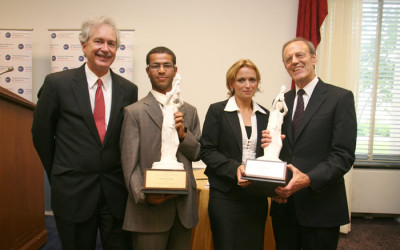
2011 Democracy Award
05:30 PM - 07:30 PM
The 2011 Democracy Awards were accepted by Tunisian activist Jamel Bettaieb and Zahraa Said, sister of murdered businessman Khaled Said, on behalf of all Tunisians and Egyptians who have struggled for a democratic future. William Burns, U.S. Under Secretary of State for Political Affairs, spoke at the ceremony, which as preceded by an experts panel on the continuing struggle for democracy in the Middle East.
Making Gender Quotas Work: A Case for Doubling the Seats...
10:00 AM - 11:30 AM
In her presentation, Dr. Medha Nanivadekar examined the contradiction between an excess of quotas for women at the local level and their deficit at the state and national levels. She argued that equal access to power at the highest levels would not only boost perceptions of women’s political power but would ultimately result in reduced individual vulnerability to gender-based violence and discrimination.
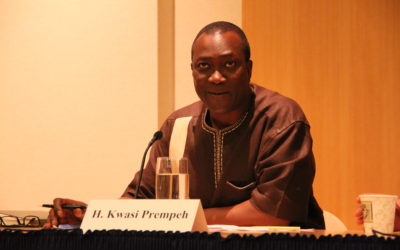
How (Not) to Write an African Constitution: Reflections...
03:00 PM - 04:30 PM
In his presentation, H. Kwasi Prempeh assessed these viewpoints and explained how conventional approaches to constitution-writing in Africa have left in place some of the most problematic features of its authoritarian past.
The 2012 Mexican Elections: A New Test for Democracy
02:00 PM - 03:30 PM
Dr. Luis Carlos Ugalde, former president of Mexico’s Federal Electoral Commission (IFE) in 2006, put the upcoming 2011 Mexican elections in historical perspective and to offered recommendations on how to strengthen Mexico’s evolving democracy.
Ukraine’s Convoluted Transition: Between Dysfunctional...
10:00 AM - 11:30 AM
In his presentation, award-winning Ukrainian journalist and scholar Mr. Mykola Riabchuk examined the main causes of Ukraine’s incoherent development and explored the potential to break this vicious circle and push the stalled transition towards democratic consolidation.


1201 Pennsylvania Ave, NW, Suite 1100, Washington, DC 20004