
By Kevin Sheives, Alexander Cooley, Caroline Costello, William Nee, and Florindo Chivucute
Table of Contents
A New, More Permissive Context for Authoritarian Influence at Scale / Kevin Sheives (NED)
China’s Authoritarian Influence: Ambition and Scale Meet Open Doors and New Opportunities / Caroline Costello (Atlantic Council) & William Nee (NED)
Losing Allies, but Doubling Down: Russian Authoritarian Influence after the Invasion of Ukraine / Alexander Cooley (Barnard College, Columbia University)
Autocratic Exports, Local Consequences, and Civic Resistance: China and Russia’s Reinforcement of Angola’s Authoritarianism / Florindo Chivucute (Friends of Angola)
Download the Report
Executive Summary
Every day, democracies are tested by authoritarianism. However, today’s moment is perhaps more consequential. In recent decades, democratic actors have seen China and Russia’s use of “sharp power” as an irritation and, at times, a spoiler to democratic development. Now, however, their authoritarian influence strategies operate at scale, with far more advanced tools, and with the knowledge of failures and successes over the last decade or more. A challenge undermining democratic development and entrenching authoritarianism worldwide, these powers act within a fundamentally new, more permissive international environment that has just recently come to the fore. This environment is predominantly defined by rapidly shifting geopolitical alignments, eroded international standards and institutions, and a pervasive technology race.
China and Russia, principally, test the limits of this new period of autocratic impunity—not just in the abstract but in ways that fundamentally impact citizens, businesses, democratic institutions, and the practice of basic freedoms in every region. This essay series analyzes how these emerging patterns will create new vulnerabilities for democracy actors.
An overview essay by Kevin Sheives of the National Endowment for Democracy’s (NED) International Forum for Democratic Studies analyzes this new context, presents common findings from analysts and practitioners, and offers a broad agenda for democratic action. Caroline Costello (Atlantic Council) and William Nee (NED) describe how China’s comprehensive influence strategy undermines human rights and rule of law in backsliding democracies. Alexander Cooley (Barnard College, Columbia University), showcases how Russia’s strategy is evolving into more kinetic, repressive measures to interfere in Europe and elsewhere. Florindo Chivucute (Friends of Angola) highlights how these new patterns of influence play out locally in Angola. Chivucute offers recommendations for how civil society can respond
and the challenges they still face.
Emerging Trends
• Transnational repression is becoming easier—and more popular. Tactics have become more sophisticated, professionalized, and cross a far wider range of digital and financial tools. Other regimes now copycat China and Russia.
• Electoral interference, in particular Moscow’s aggressive tactics along Russia’s European periphery, has broadened beyond manipulation of media narratives to include financial and cyber tools. Backed by economic threats and promises, the CCP has been able to exercise significant political leverage over elites no matter who is in power.
• China and Russia’s sharp power activities reach a far wider set of sectors and actors than in the past. The more prominent use of lawfare, paramilitary security aid, law enforcement co-optation, and state-run “civic” organizations by both authoritarian powers has presented new challenges for unprepared democracies.
• These powers’ engagement in other countries will become more affiliated with criminal enterprises. The new “gig economy” for transnational repression, continued illegal activity by China’s United Front apparatus, and the growing nexus between Chinese overseas criminal activity and party-state interests represent new threats poised to exploit a more permissive international environment.
Democratic Vulnerabilities
• Legal gaps that facilitate authoritarian influence strategies have developed from potential vulnerability into a clear and present problem. These gaps must be remedied through stronger collaboration between civic groups and policymaking officials, and civil society efforts to enlist new, unlikely allies in the financial, legal, and security sectors.
• A digital imbalance between the capacities of authoritarian powers and civic actors can be especially harmful for electoral integrity, open discussion of geopolitically sensitive topics, and free speech.
• Normative, material, and moral leadership on democratic progress is more dependent than ever on local actors and movements. In countries where U.S. and European support and diplomacy once helped to prevent government backsliding, other international and local democratic actors will bear more of the burden with respect to public advocacy, funding, and political pressure.
• The struggle for civic space will move from a contest among domestic political actors to international ones as well. 2026 RightsCon’s cancellation over PRC pressure, the copycat of foreign NGO funding laws, and the targeting of new civic groups outside of the human rights space portend a situation where actors need new strategies to preserve civic space in backsliding societies.
• Regionally, Russia’s European periphery is set to experience more aggressive interference tactics, while partly free countries elsewhere remain most vulnerable to China’s leveraging of its economic relationships at the expense of democratic development.
A New, More Permissive Context for Authoritarian Influence at Scale
By Kevin Sheives, DIRECTOR OF THE INTERNATIONAL FORUM FOR DEMOCRATIC STUDIES AT NED
• Electoral interference, in particular in Europe by Moscow, has broadened beyond manipulation of media narratives to include financial and cyber tools.
• China and Russia’s sharp power activities more prominently use lawfare, paramilitary security aid, and law enforcement co-optation.
• Their strategies will likely become more affiliated with criminal enterprises.
• Advanced technologies allow democracy supporters to go on the offensive, yet those technologies have also supercharged the capacity of foreign governments to reach across borders and exert antidemocratic influence.
• Leadership on democracy is more dependent than ever on local actors and movements.
• The struggle for civic space will move from a contest among domestic political actors to international ones as well.
• Russia’s European periphery is set to experience more aggressive interference tactics, while partly free countries elsewhere remain most vulnerable to China’s leveraging of its economic relationships.
Every day, democracies are tested by authoritarianism, in one way or another. What distinguishes this moment is not simply the number of crises confronting democratic actors, but the simultaneous erosion of the political, technological, and normative limits that once constrained authoritarian power.
Outlooks from JPMorgan Chase and the World Economic Forum both suggest a fundamental transformation of geopolitics over just the past two years, driven by the promise of artificial intelligence (AI), geoeconomic confrontation, and a new U.S. foreign policy approach.1 The leading indices of global democratic health, meanwhile, show that a long-term decline has intensified, with V-Dem reporting that in 2024, autocracies outnumbered democracies for the first time in more than 20 years.2 While public support for democracy and especially individual rights remains strong, a common thread in surveys from International IDEA and Pew highlights strong dissatisfaction with the political institutions meant to uphold norms of behavior.3 Stanford University’s AI Index and other global assessments have converged on a thesis that the impacts of AI are rapid, compounding, and erratic.4
Just as the world and many other sectors must grapple with these rapid shifts, the democracy community of civic leaders, funders, analysts, and policymakers must also grapple with this new context fundamentally reshaping their own work. The present report gathers insights from key experts and practitioners to help democracy supporters better understand and ultimately respond to the shifting geopolitical, normative, and technological landscape. A new international environment is already prompting the development of new strategies by autocratic powers, and the prodemocracy actors that seek to confront them will have to keep pace.
Major authoritarian powers—principally China and Russia—remain a crucial obstacle to any reversal in the long-term decline of global democracy.
Defining Transnational Authoritarian Influence, Now at Scale
Democracies face many challenges in today’s environment. However, major authoritarian powers—principally China and Russia—remain both a crucial obstacle to any reversal in the long-term decline of global democracy and an accelerant to the repressive and aggressive capacities of other authoritarian states. Beijing and Moscow actively exacerbate the problem at least as much as they exploit and benefit from it.
The troubling activities and strategies of autocratic powers hold impacts well beyond their borders. Specifically, these actors: (1) repurpose democratic institutions, for example by co-opting civil society, media outlets, or judicial systems; (2) undermine the exercise of democratic and human rights in both democracies and nondemocracies, for example by impairing the ability of citizens or dissidents to speak freely, ensure their own privacy, or participate in governance and political affairs; and (3) directly interfere in democratic processes, for example by funding preferred political candidates, fueling insurgencies, or providing security assistance to prop up other autocratic leaders.
• Repression by Proxy: Rather than using their own agents, authoritarians often hire local organized crime networks to surveil, attack, and intimidate dissidents.
• International Lawfare: Authoritarians are branding dissidents as criminals and abusing mechanisms like the Interpol Red Notice to have them repatriated.
• Export of Surveillance Tech: Russia and China have been promoting technology that would allow authoritarian allies to track and identify dissidents and monitor their online activity.
Nearly 10 years ago, the National Endowment for Democracy’s International Forum for Democratic Studies began to define the impacts of transnational authoritarian influence, or “sharp power.”5 An initial report and subsequent analyses documented the ways in which Beijing, Moscow, and other less
prominent authoritarian powers penetrated and manipulated the media, research, cultural, business, and political sectors in targeted countries. Now, the same societies and institutions face a profoundly different—and more dangerous—international environment and a more capable, assertive set of authoritarian regimes seeking to shape it. New tools and collaborations among autocrats have strengthened their efforts, and democracies’ attempts to check them have only a mixed record of success. Even liberal democratic practices long undertaken by media outlets, institutions of higher education, activist consumers, and international sports bodies have at times been repurposed to
serve the interests of authoritarian powers.6
The Rising Stakes of Situational Awareness
In this new period of autocratic impunity, local grassroots democracy activists cannot afford to ignore or underestimate the external sources of authoritarian influence and control that may already be affecting their societies. Igor Blaževič, a trailblazing human rights defender, once encouraged democracy activists to remain rooted in their own countries’ democratic struggles, but also to spend one-quarter of their time thinking beyond their national contexts and supporting the struggles of others.7 Giving strategic consideration to fundamentally new global conditions for the democratic development of your own country is one way to meet Blaževič’s tall order.
When major authoritarian powers operate internationally, their companies, civic organizations, and even individual citizens frequently face enormous pressure to comply with and advance regime directives, rather than functioning as free and independent actors. This phenomenon can be found, for instance, in technology agreements, infrastructure projects, and academic cooperation when at least one party is based in a deeply authoritarian setting. The global influence efforts of the Chinese Communist Party (CCP) offer perhaps the starkest example. The ripple effects of Beijing’s persecution and co-optation of independent civic activists and journalists within China are visible in its treatment of their counterparts overseas.8
Today, the international operating environment for both autocracies and democracies has fundamentally changed.
Outlining a New Period of Autocratic Impunity
A decade ago, CCP leader Xi Jinping and Russian President Vladimir Putin were still consolidating their own rule, and their foreign policies were just beginning to demonstrate the levels of aggression and coercion that would eventually be felt by their neighbors. The United States, Europe, and Japan still hoped for strategic cooperation with a CCP-led China. Widely accessible, effective general purpose AI models were over the horizon; the global spread of Huawei’s surveillance-ridden “smart cities” project was in its early stages.9 Despite ample evidence of Putin’s belligerence following the 2008 Russian invasion of Georgia and the 2014 occupations of Crimea and the Donbas in Ukraine, the all-out rupture with Washington and Brussels that accompanied the 2022 full-scale invasion had yet to come. Leading democracies provided relatively reliable political and financial support to international human rights bodies and other accountability mechanisms.
Today, the international operating environment for both autocracies and democracies has fundamentally changed. Relations among major and rising powers—from China, Russia, and the United States to regional players like the United Arab Emirates and Saudi Arabia—are more competitive, mercantilist, and, at times, coercive. Liberal international structures and the norms that have helped uphold them are more vulnerable than at any other time since the end of the Cold War. Similarly, the digital and physical tools now available for transnational repression (TNR) are more widespread and destructive.
While there are bright spots for democratic growth, political reform, and government accountability, prodemocracy actors—including governments, civic organizations, philanthropies, and citizens—now face a far more challenging global context. This is not just an era of “declining democracy” around the world.10 Instead, all those seeking to confront repressive rulers must contend with a new period of autocratic impunity.
So what do these geopolitical shifts look like and how are they manifested in transnational authoritarian influence strategies that affect democratic development? Just within the past two years:
• Beijing has significantly expanded its outward-facing influence strategy toward Global South regions like Africa, Latin America, and South and Southeast Asia.11 China’s foreign engagement now plays out mostly in a field of partly free democracies and fellow autocracies where the CCP regime finds an easier path in pursuit of its interests.
• Moscow faces enormous pressures stemming from its failure to date in Ukraine and the apparent loss or weakening of autocratic allies in places like Syria, Venezuela, Iran, and the Sahel.12 While the temporary and partial breakup of this autocratic network holds promise, the Kremlin has continued to demonstrate complete disregard for the most basic principles of democracy, sovereignty, and territorial integrity.
• Although the turmoil in the Middle East is not yet settled, the Iranian regime’s capacity to fuel insurgencies and spread its repressive ideology has been severely degraded over the past three years.13 The resulting geopolitical realignments and rivalries among Iran and the Persian Gulf monarchies will continue to animate their respective strategies for authoritarian influence outside their borders.14
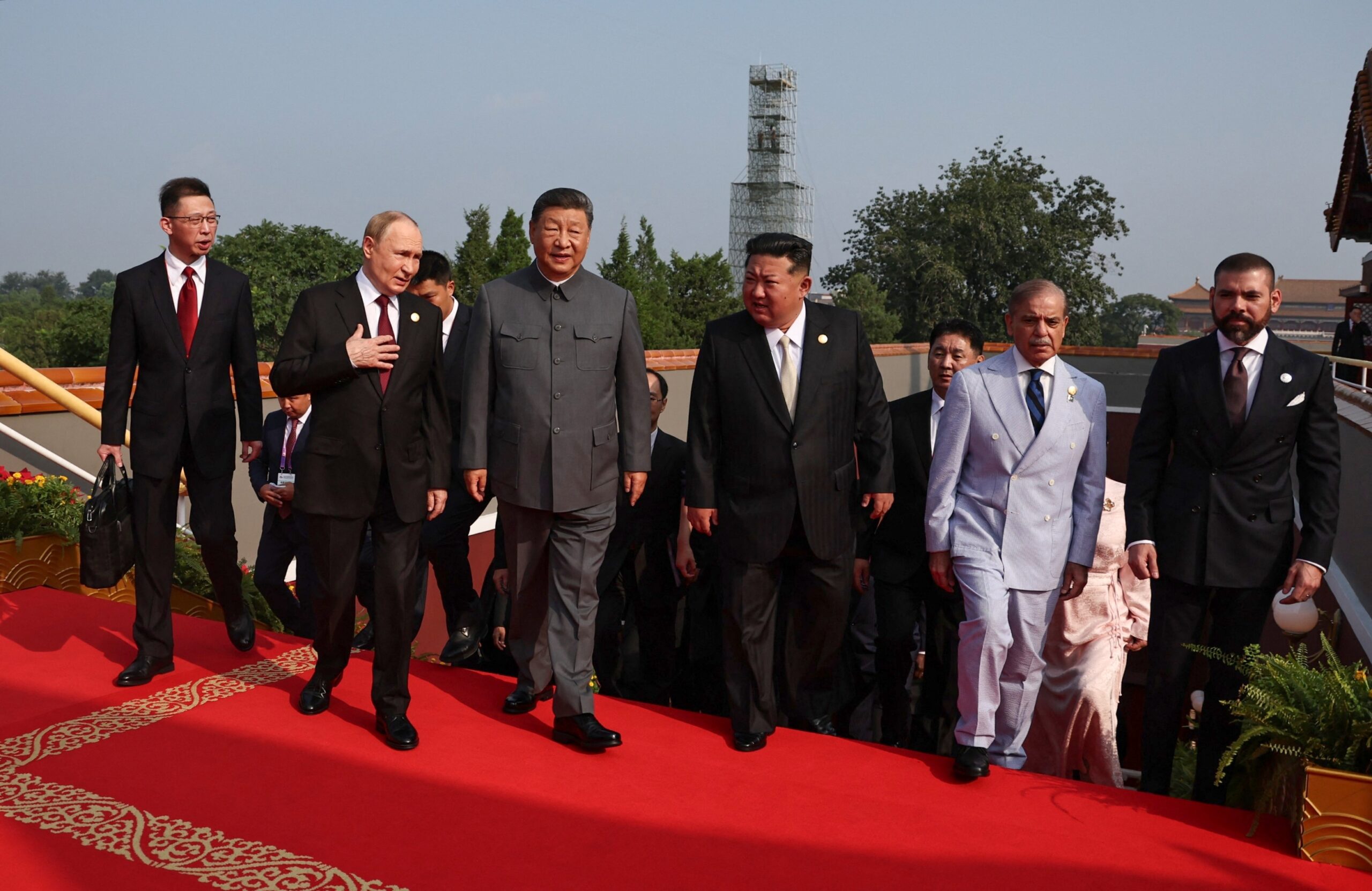
• Key autocratic powers, including Russia and China, are now increasingly aligned and collaborating in meaningful ways. Although these collaborations have stopped short of formal military alliances, what were once uneasy and mostly diplomatic partnerships have now matured into exchanges of significant, material support at the expense of world peace and fundamental freedoms.15 The mutual support has included North Korean troops fighting on Moscow’s behalf against Ukraine, Tehran deploying Chinese and Russian technology to suppress mass protests, and cross-promotion of propaganda in foreign-facing state media.
• Foreign policy changes in the United States and Europe have shifted their priorities away from soft power initiatives and toward military readiness and immediate security threats.16 The deteriorating global security environment and perceived threats from Western Hemispheric dictatorships and from Russia in Eastern Europe will focus U.S. and European government resources on the most urgent defense needs, as opposed to long-term foreign assistance and support for democracy outside high-priority regions.
New sources of strain have compounded long-term erosion of international institutions and the norms that underpin their work.
Within the system of international institutions that offer material, moral, and political support to those confronting authoritarian abuses, new sources of strain have compounded long-term erosion of these bodies and the norms that underpin their work.
• The effectiveness of multilateral institutions tasked with promoting human rights and democratic principles has deteriorated, particularly in areas like technology, elections, justice, and protection of civil society. The actions of major autocratic powers like China within international human rights bodies have contributed to this decline, a trend that the Forum analyzed in depth two years ago.17 New political realities in democracies that have traditionally held leadership roles further dim the prospects for reform of these institutions.
• Democracy, human rights, and governance funding from leading democracies like the United States and some European countries has been dramatically reduced.18 The ability of grassroots democratic movements to consolidate and expand their successes with foreign funding has been diminished not only by these reductions on the part of donors, but also by a proliferation of restrictive laws on foreign funding in the recipients’ countries. Beyond their financial impact, the changes threaten the moral and diplomatic support that has long buoyed prodemocracy activists working under difficult conditions.
• New multilateral arrangements led by Beijing and Moscow have laid bare a widespread dissatisfaction with the architecture of established international institutions, and the alternative entities have increasingly served as clubs for autocrats and others who share their vision for a revised international order. Initiatives including the BRICS group, China’s Global Security Initiative, and the Shanghai Cooperation Organization— as well as symbolic gatherings like Beijing’s World War II victory parade in September 2025—have had mixed records in terms of their practical impact.19 However, they all lend diplomatic legitimacy and political clout to an increasingly collaborative global cohort of autocratic rulers.20
• Public support for democratic norms, rights, and reform remains strong, but frustration with elites and existing political systems is high. According to multi-country polling, citizens feel that political elites and the systems they manage do not work for them and are unlikely to change.21 This breeds pessimism about the value of domestic and international institutions, but it can also motivate new international approaches, democratic reform initiatives, and protest movements like those in Bangladesh, Nepal, and Kenya in recent years.
A surge in demand for critical minerals used in renewable energy and AI infrastructure has made control over their extraction and distribution a top priority for governments around the world.
Today’s rapidly intensifying technological competition has major implications for the engagement strategies of authoritarian powers, principally China, but also others like Russia, Saudi Arabia, and the United Arab Emirates.
• Recent advances in the applications of generative AI, which will have transformative effects across governments, economies, and societies, are already fueling what some analysts have called an AI Cold War.22 For both major and smaller powers, AI breakthroughs have triggered military modernization programs; deepened partnerships like those between the United States and the Persian Gulf monarchies; and altered the tools that governments utilize to enforce laws and administer public services.
• A surge in demand for critical minerals used in renewable energy and AI infrastructure has made control over their extraction and distribution a top priority for governments around the world. This creates opportunities and vulnerabilities for emerging mineral source countries in Africa, Latin America, and elsewhere, most of which are rated partly free or not free by Freedom House. Driven by the intensity of national security demands following China’s coercive approach to rare earths, demand for such minerals, which already account for roughly 10 percent of global trade, is expected to triple in five years and quadruple in 15 years.23
• Advanced technology has reduced the cost and difficulty of authoritarian efforts to control dissent. Rather than deploying huge numbers of security personnel and informants, autocratic regimes can now rely on ubiquitous cameras, spyware, and AI-enabled data processing to surveil populations. They can also cut or selectively throttle global internet access during protests, or harass critics and exiles located thousands of miles away.24
• The race for control over key natural resources and technologies has contributed to neo-mercantilist approaches to foreign economic engagement among many countries.25 This has further undermined the international rules and norms supporting a stable system of market-driven global commerce, which had also incorporated important democratic principles like the rule of law, public participation, and labor rights.
It might be easy to dismiss this new geopolitical, normative, and technological context as an outgrowth of the competition between great powers that is less relevant for smaller societies, including most of the not free and partly free countries where NED partners work. However, the new dynamics will have an impact far beyond Beijing, Moscow, Washington, or Brussels. To date, the most significant targets for Chinese and Russian authoritarian influence have been places like Syria, Moldova, Belarus, Taiwan, Pakistan, Zimbabwe, and Panama.26 Small and medium-sized countries—and the vulnerable civic actors within them—have long relied on the protections of an international normative and institutional framework whose force is now greatly diminished. Moreover, poorly managed growth in extractive industries has historically led to harmful, exclusionary outcomes that undermine the rights of workers, fuel corruption and kleptocracy, and impair or reverse democratic development.
Poorly managed growth in extractive industries has historically led to harmful, exclusionary outcomes that undermine the rights of workers.
Toward New Thinking and New Responses
To help the global community of civic actors—activists, researchers, independent journalists, and funders—better understand the new context and ultimately respond with innovative approaches, the International Forum for Democratic Studies convened three roundtable discussions with foreign policy specialists, civic partners and experts, democracy scholars at the University of Notre Dame’s annual conference, and NED staff between late 2025 and the first half of 2026. The essays in this series resulted from and were shaped by the views of the participants. China foreign policy and democracy experts Caroline Costello (Atlantic Council) and William Nee (NED) describe how Beijing’s comprehensive authoritarian influence strategy has undermined democratic freedoms and human rights in this new period of impunity, operating within backsliding democracies and in a less restrictive international environment. Alexander Cooley (Barnard College and Columbia University’s Harriman Institute) explores the ways in which Moscow’s global strategy has evolved since its full-scale invasion of Ukraine, showing that, despite a string of failures, the Kremlin has leaned into more aggressive measures to promote its interests and punish its opponents in Europe and elsewhere. Florindo Chivucute (Friends of Angola) highlights how these new authoritarian strategies have played out locally in Angola, where both Beijing and Moscow have helped accelerate and entrench corruption, opacity, and repression, at the expense of Angolan development and citizens’ rights. His challenge regarding how civic actors in places like Angola can respond will help inform future, deeper work by the International Forum for Democratic Studies on how democratic actors should respond.
Key trends, predictive analysis, and democratic vulnerabilities
The essays and the roundtables that preceded them point to a few key trends in authoritarian powers’ influence efforts, as well as critical vulnerabilities among democracies of all stripes. Civil society activists and all those working for democratic progress will have to contend with these conditions in the years to come.
• Transnational repression is becoming easier—and more popular. Tactics have become more sophisticated and cross a far wider range of digital and financial tools. TNR has also been professionalized within authoritarian systems and contracted out to third parties, affecting a far broader array of exiles and citizens of other countries. Beyond China and Russia, the roster of new governments perpetrating or willingly participating in transnational repression has expanded rapidly.
• Electoral interference, in particular by Moscow in its European periphery, has broadened beyond manipulation of media narratives to include financial and cyber tools. The CCP’s electoral interference remains limited, as Beijing’s representatives—backed by economic threats and promises—have been able to exercise significant political leverage over elites no matter who is in power.
• China and Russia’s sharp power activities reach a far wider set of sectors and actors than in the past. The more prominent use of lawfare, paramilitary security aid, law enforcement co-optation, and state-run “civic” organizations by both authoritarian powers has presented new challenges in more societies that are unprepared for them.
• These powers’ engagement in other countries will become more affiliated with criminal enterprises. The new “gig economy” for transnational repression, continued illegal activity by China’s United Front apparatus, and the growing nexus between Chinese overseas criminal activity and party state interests represent new tools better equipped for a more permissive international environment, especially in less developed economies.
Legal gaps that facilitate authoritarian influence strategies have developed from a potential vulnerability into a clear and present problem.
These trends have exposed deeper vulnerabilities in all types of democracies, both in terms of entrenching autocratization and developing democratically. They must be properly understood and addressed by civic actors, democracy support funders, and democratic governments.
• Legal gaps that facilitate authoritarian influence strategies have developed from a potential vulnerability into a clear and present problem. Authoritarian powers now readily exploit weak campaign financing laws, frivolous lawsuits, exceptions to public procurement oversight, poor antiharassment laws, and debanking provisions. Found in democracies up and down Freedom House’s scale, these gaps must be remedied through stronger collaboration between civic groups and policymaking officials, and civil society efforts to enlist new, unlikely allies in the financial, legal, and security sectors.
• Advanced technologies allow democracy supporters to scale up their activities to go on the offensive, yet those technologies have also supercharged the capacity of foreign governments to reach across borders and exert antidemocratic influence. This digital imbalance between authoritarian powers and civic actors can be especially harmful for electoral integrity, open discussion of geopolitically sensitive topics, and free speech in general.
• Normative, material, and moral leadership on democracy is more dependent than ever on local actors and movements, as international institutions have eroded and democratic leadership wanes. In countries where U.S. and European support once helped to prevent government backsliding, local democracy activists will bear more of the burden with respect to public advocacy, funding, and political pressure.
• The struggle for civic space will move from a contest among domestic political actors to international ones as well. 2026 RightsCon’s cancellation over PRC pressure, the copycat of foreign NGO funding laws, and the targeting of new groups outside of the human rights space portend a situation where civic actors need new strategies to preserve civic space in backsliding societies.
• From a regional perspective, Russia’s European periphery is set to experience more aggressive interference tactics while partly free countries elsewhere remain most vulnerable to China’s leveraging of its economic relationships at the expense of democratic development. The EU’s intense efforts to defend its democracy and integrate newer members could provide a moral and practical counterweight to Russia. However, few of those same dynamics of external support exist in vulnerable democracies in the Global South navigating their own relationships with China.
For civic actors seeking to counter foreign authoritarian influence, the challenges have grown and the responses have not kept up. The situation calls for the development and analysis of new tactics and methods. Leading democratic governments and philanthropic donors must recommit to competing with authoritarian powers by providing rights-respecting media, technology, and security support. Local democracy activists in turn will need to deepen their connections and learning across the Global South and build collaborative relationships with new partners in their own societies.
Despite this new era of autocratic impunity, the demand for dignity, accountability, and freedom endures among ordinary citizens. An adaptive, connected, resolute, and well-supported community of local and global civic actors can still make progress toward a more open and democratic future in the
face of foreign authoritarian influence.
For civic actors seeking to counter foreign authoritarian influence, the challenges have grown and the responses have not kept up.
China’s Authoritarian Influence: Ambition and Scale Meet Open Doors and New Opportunities
By Caroline Costello, ASSISTANT DIRECTOR WITH THE ATLANTIC COUNCIL’S GLOBAL CHINA HUB
and William Nee, SENIOR PROGRAM MANAGER FOR EAST ASIA AT NED
Facing many internal challenges, the Chinese Communist Party is reaching deeper into overseas communities to crush voices that oppose it. China’s cross-border influence tactics—now more fully at scale and paired with its economic power—are taking root in a more permissive international environment. China has moved to export its policing model abroad, exploit international financial and legal systems to pressure critics, and supply authoritarian actors with an operating system for mass digital surveillance and repression.
Projected Trends for 2026-2030
• Beijing’s transnational repression will become more brazen and consequential in vulnerable democracies.
• The PRC will attempt to sway international religious organizations as its repression strategy targets religious and minority groups.
• Countering Beijing’s extraterritorial security claims will grow more challenging as China’s bilateral security relationships deepen and its officials, companies, and diplomats leverage open legal systems to the party-state’s advantage.
• CCP narratives will reach wider audiences as democratic competitors struggle to keep pace and their digital and media tools advance.
• Beijing will use the UN and related bodies to promote CCP narratives, silence dissent, and project stability.
• The PRC will leverage economic engagement to achieve geopolitical goals, no matter which regimes—democratic or autocratic—are in power.
In 2023, while civilians were dying in Vladimir Putin’s full-scale invasion of Ukraine, and just days after the International Criminal Court issued a warrant for Putin’s arrest, Xi Jinping shook Putin’s hand, telling him that the global order was undergoing changes “the likes of which we haven’t seen for 100 years” and that the two of them were “driving these changes together.”1 The episode epitomized both Beijing’s ambitious global agenda and the sorts of partners the CCP is willing to enlist to achieve its aims.
Even as the Chinese Communist Party (CCP) appears to stride confidently on the world stage, however, it faces stark economic difficulties, severe demographic problems, and increasing social unrest within its borders.2 To maintain its ironfisted rule domestically, the regime feels it must reach ever deeper into foreign societies to crush voices that oppose it and shape an external environment that will be more conducive to its authoritarian practices.
This coercive transnational pressure on those who might loosen the regime’s grip at home effectively hinders the practice of democracy abroad as well. In just one example from April 2026, the Zambian government abruptly canceled RightsCon, the world’s largest annual gathering of human rights and democracy advocates, following pressure from People’s Republic of China (PRC) officials who were concerned about criticism from Taiwanese participants.3
Beijing’s aggressive campaign for international influence has been on display for nearly a decade, but its tactics are currently being applied at scale amid new global dynamics: the weakening of international institutions and the rules based order, geopolitical reconfiguration in the wake of major U.S. foreign policy changes, and rival visions for technology governance linked to rising great power competition. As its escalating authoritarian influence efforts encounter this new and often more permissive international landscape, the PRC is rapidly reshaping legal and normative modes of interaction around the world.
Democratic actors now confront the challenge of assessing the vulnerabilities created by Beijing’s manipulation of systems that were designed to ensure transparency, accountability, and adherence to international law. They must work to understand how the CCP’s authoritarian influence practices are evolving on the new international terrain, and use this understanding to design a successful democratic response.
As its escalating authoritarian influence efforts encounter this new and often more permissive international landscape, the PRC is rapidly reshaping legal and normative modes of interaction around the world.
Exploiting the Openness of Democracies and International Institutions
Violence, financial leverage, and technology enhance Beijing’s transnational repression
As the CCP has intensified its control over civil society in China over the last 10 to 15 years, many independent activists and journalists have moved overseas to continue their work.4 Beijing has consequently pursued them, pouring enormous resources into transnational repression (TNR) operations that internationalize its efforts to control dissent. These campaigns intimidate CCP critics living abroad, and often target China-based families of some critics. Legal gaps in foreign countries that fail to recognize TNR ultimately permit this blatant violation of sovereignty.
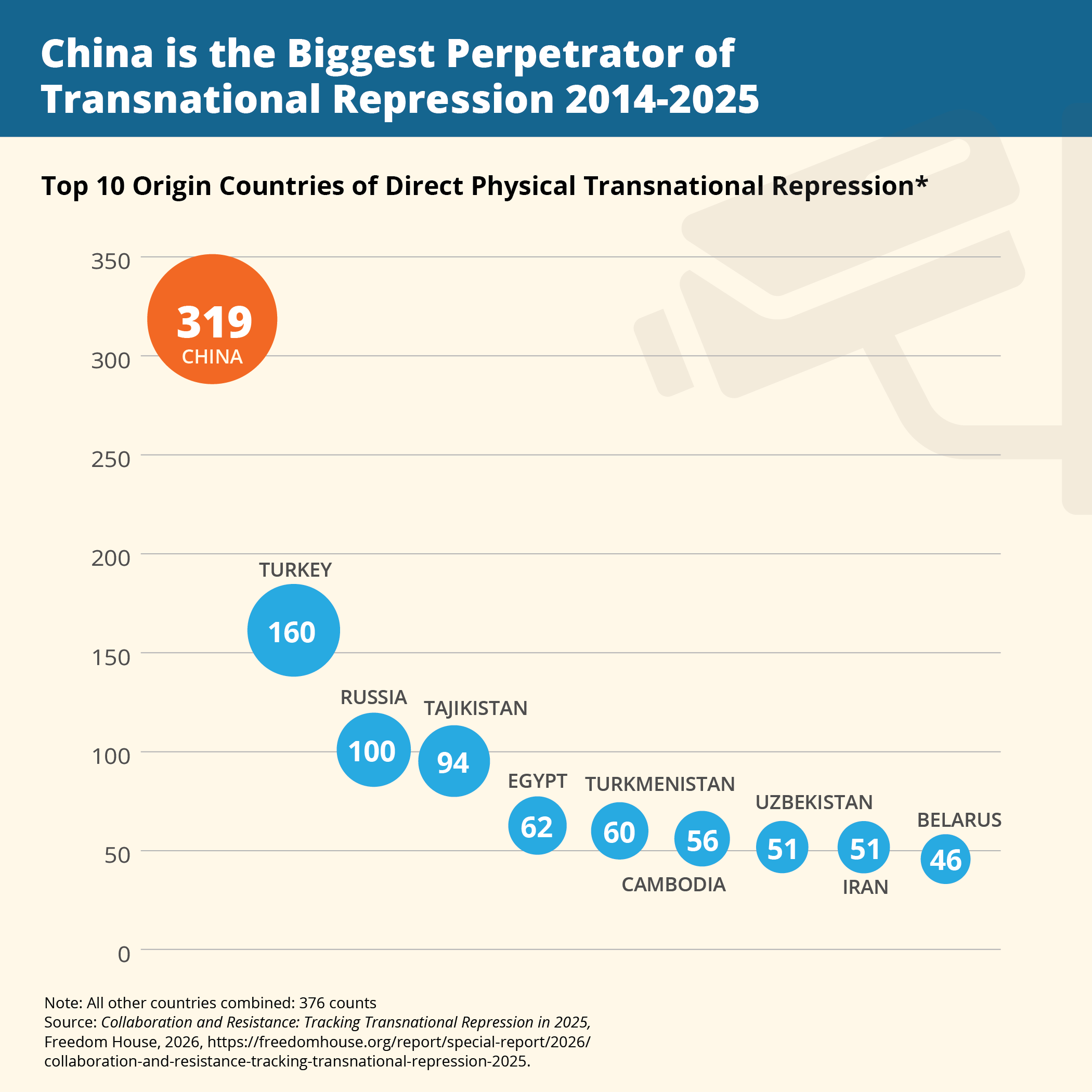
According to Freedom House, the CCP is the world’s most prolific perpetrator of TNR, accounting for more than 20 percent of the direct, physical incidents recorded between 2014 and 2025.5 Historically, the TNR activities of PRC security services had been labor intensive and geographically constrained.6 Now, technological advances have allowed Beijing’s intimidation to traverse geographic barriers, enabling the surveillance of diaspora communities on an unprecedented scale. For example, a report by Citizen Lab found that PRC operatives deployed customized malware through open source Uyghur language software to surveil Uyghur human rights groups.7 Separately, OpenAI disclosures have revealed that a ChatGPT account linked to PRC law enforcement was used to plan and document “cyber special operations,” including pro-CCP propaganda and smear campaigns targeting Beijing’s critics.8
PRC agents have also issued violent threats, and in some instances followed through on them. During CCP leader Xi Jinping’s visit to San Francisco for the Asia-Pacific Economic Cooperation summit in 2023, Beijing launched a massive operation involving numerous “United Front” groups to harass, intimidate, and assault peaceful protesters,9 including Tibetan activists calling for the preservation of Tibetan language and culture.10 In another case, an office manager at the Hong Kong Economic and Trade Office in London tracked dissidents, found their addresses, and discussed an alleged plan to hire members of criminal organizations living in the United Kingdom to physically attack a prodemocracy activist.11 Online abuse campaigns against female dissidents—and male dissidents’ wives and daughters—also tend to take on an explicitly violent and sexual character.12
Beijing is increasingly using financial leverage to silence its overseas critics. Given the risk to their business interests in China, foreign financial institutions are complying with domestic PRC security laws that punish human rights defenders by closing their bank accounts, freezing their pension funds, and revoking their professional licenses.13 For example, in 2020, HSBC froze the bank accounts of former Hong Kong legislator Ted Hui in order to comply with police orders under Hong Kong’s National Security Law.14 An HSBC executive later told a UK parliamentary committee that his job was to “comply with the law,” not to “make moral or political judgments on these matters.”15 The China Strategic Risks Institute has advised governments to define economic TNR in their national laws, and recommended that companies adopt special internal processes to respond to demands from foreign states that run afoul of international human rights principles.16
According to Freedom House, the CCP is the world’s most prolific perpetrator of TNR, accounting for more than 20 percent of the direct, physical incidents recorded between 2014 and 2025.
Foreign entities facilitate Beijing’s overseas law enforcement operations
The PRC is extending its repressive policing efforts beyond its borders through two distinct but related means: weaponizing international law enforcement cooperation frameworks and conducting covert police operations abroad.
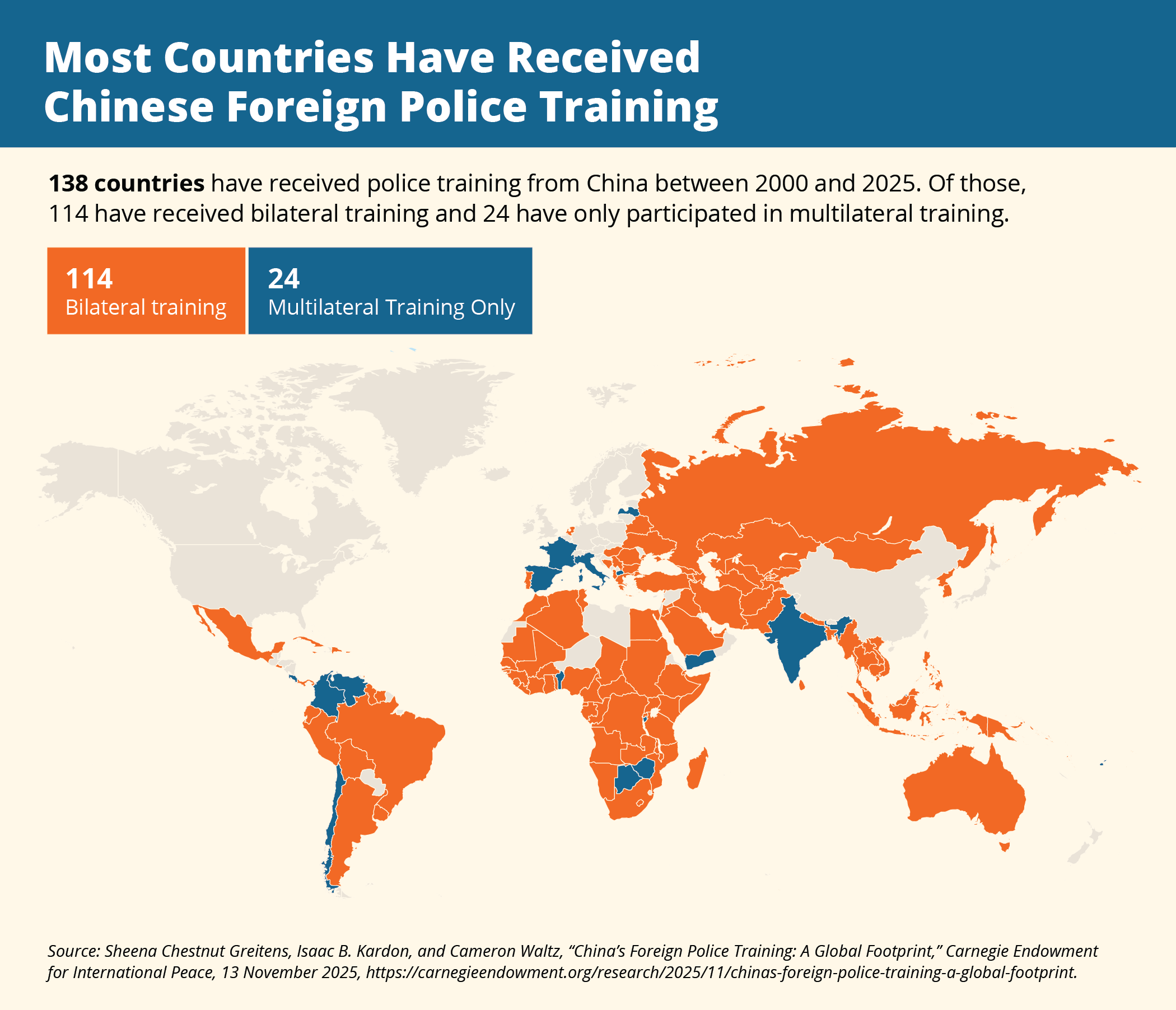
A recent report from the Carnegie Endowment for International Peace documented how Beijing has propagated the normative and intellectual foundations for its vision of state control around the world through expansive police training programs.17 Between 2000 and 2025, PRC authorities trained up to 20,000 foreign police officers, including representatives from 82 percent of the world’s authoritarian regimes.18 By integrating technical capacity building with coercive tactics designed to protect an incumbent leadership’s political security, these programs normalize Beijing’s internal security model, which prioritizes control over speech and suppression of dissent. PRC law enforcement experts view these trainings and their multilateral Global Public Security Cooperation Forum as integral elements of a strategy to “actively promote a positive image of Chinese police”—despite their gross and systemic abuses of basic human rights and due process.19
Beijing also sends law enforcement officers abroad to conduct illegal “persuasion to return” operations, in which PRC nationals are coerced into returning to China. The pressure campaigns often target victims’ family members, including children, and have included outright kidnapping.20 Often weaponized against regime critics, “persuasion to return” operations extend the PRC authorities’ ability to monitor and neutralize overseas dissidents.21 In 2022, Safeguard Defenders revealed that Beijing had established 102 police stations across 53 countries, some of them covertly, and others with explicit approval from the host government.22 Although Beijing insists that these outposts merely perform administrative tasks, they have been used to conduct “persuasion to return” operations.23
Some governments have merely turned a blind eye to these operations, but others have deployed their own police forces to actively support them. In April 2026, a court in Kazakhstan sentenced 19 individuals who had taken part in a peaceful protest condemning the enforced disappearance of an ethnic Kazakh man in northwestern China’s Uyghur region.24 Although the protesters had been detained at the scene and convicted of “petty hooliganism,” Kazakh authorities brought heavier charges against them just days after receiving a letter in which the PRC consulate called the protest an “open provocation against the dignity of the PRC and an insult to the Communist Party of China and China’s leader.” Prosecutors cited the diplomatic letter in their decision to pursue the case. Kazakh police have also monitored members of the activist group responsible for the protest and detained other members for sharing footage of the protest on social media.25
When host governments arrest foreign nationals, deportation is always a risk. In March 2026, under apparent pressure from Beijing, Malaysian authorities detained Uyghur religious scholar Abdulhakim Idris for 15 hours before deporting him to the United States, preventing him from engaging with Malaysian civil society on Uyghur rights issues.26 In the worst cases, the PRC has compelled states to deport Uyghurs back to China in violation of the international legal principle of nonrefoulement, which prohibits the return of individuals to situations in which inhumane treatment is likely. In February 2025, the Thai government defied the United Nations and U.S. lawmakers by repatriating more than 40 Uyghur men, portraying the forced returns as “family reunifications.”27
Between 2000 and 2025, PRC authorities trained up to 20,000 foreign police officers, including representatives from 82 percent of the world’s authoritarian regimes.
At the United Nations, Beijing reshapes human rights norms, funding, and leadership
The UN human rights system, despite its flaws and uneven track record, has remained a source of credible condemnation for Beijing’s violations of international human rights law, with UN human rights bodies producing 146 communications to Beijing since 2018.28
Given that Xi Jinping has repeatedly claimed to support an international order with “the UN at its core,”29 the UN system’s rebukes on human rights pose an awkward dilemma for Beijing. The regime has responded by deepening its engagement with the United Nations in order to reshape international human rights norms according to its preferences. For example, the PRC has worked behind the scenes to slash funding for the specific UN agencies in question.30 Meanwhile, by boosting its overall UN staffing and financial contributions, Beijing has placed personnel in key leadership roles and injected the CCP’s
authoritarian norms into the broader UN ecosystem.31
Beijing often introduces rights-eroding language into UN texts and debates to undermine established human rights norms and divert institutional capacity away from monitoring and accountability. For example, PRC diplomats consistently insert language calling for human rights to be interpreted according to countries’ “national conditions,” thus weakening the universal standards that underpin frameworks like the Universal Declaration of Human Rights and the International Covenant on Civil and Political Rights.32 PRC-backed resolutions have also tasked UN bodies with developing reports on “capacity building in fostering mutually beneficial cooperation in promoting and protecting human rights.” These efforts have practical effects. They divert time and resources toward busywork and away from core watchdog functions, such as by investigating abuses or promoting state accountability in countries like Syria and North Korea.33
Beijing has also grown more assertive in UN Human Rights Council (UNHRC) deliberations, coordinating with other authoritarian states to water down resolutions—particularly those that would strengthen civil and political rights, accountability mechanisms, or measures against TNR.34
PRC representatives have weaponized pseudo-independent CCP front organizations to shield authoritarian regimes at the UNHRC. These front organizations, sometimes referred to as government-organized nongovernmental organizations (GONGOs), use UN venues to intimidate prodemocracy advocates and shift criticism toward democracies. While their presence is not new, it has grown rapidly in recent years. CCP GONGO interventions at UNHRC sessions have surged sixteenfold since the initial U.S. withdrawal from the UNHRC in 2018.35
CCP government organized nongovernmental organization interventions at UN Human Rights Council sessions have surged sixteenfold since 2018.
New PRC media models face weakened global competition
Beijing is pouring enormous resources into its external propaganda infrastructure. Its new investments and adaptations come at a time when the United States has cut or suspended programs supporting hundreds of individuals and dozens of organizations that counter the CCP’s false narratives, including news services, journalists, human rights defenders, and prodemocracy groups. In the absence of these independent actors, Beijing’s media influence has grown unchecked. In Botswana, for example, the U.S. embassy reported in 2025 that—without U.S.-backed alternatives—Russia’s Sputnik and the PRC’s Xinhua were expected to become the country’s main sources for international news.36 Exploiting the vacuum left by that year’s cuts to U.S. international news agencies, China Global Television Network announced an expansion to produce content in over 80 languages, and even began recruiting foreign journalists laid off by U.S. outlets.37
Since 2018, the PRC regime has also built nearly 150 “international communication centers”—entities run by Chinese provinces, cities, and counties to produce pro-CCP content and build partnerships with foreign media outlets.38
Meanwhile, Beijing is amplifying its foreign propaganda enterprise by enlisting young social media influencers to “tell China’s story well.” In June 2025, China Youth Daily and the World Youth Development Forum launched the China Global Youth Influencer Exchange Program. This initiative offered all-expenses paid trips to prominent influencers in exchange for promoting a curated image of the country. The program was part of what appears to be a broader strategy of courting influencers from around the world. Throughout 2025, online content creators—including Kenyan comedians, Senegalese TikTokers, and the American live-streamers IShowSpeed and Hasan Piker—generated hundreds of millions of views from their trips to China.39
Beijing is amplifying its foreign propaganda enterprise by enlisting young social media influencers to “tell China’s story well.”
The Political and Legal Conditions of the PRC’s Economic Relationships
Economic ties with China can come with political strings attached and suppress public accountability
While the United States since 2025 has increasingly sought to use tariffs as a tool to achieve its policy goals, the PRC has presented itself as a reliable guardian of free trade. As of mid-2026, Beijing was seeking to finalize at least 20 new trade deals, capitalizing on partner countries’ unease with U.S. policy changes.40 Economic ties with China are not inherently harmful, but they do expose democratic governments and prodemocracy actors to real risks. Beijing has repeatedly demonstrated a willingness to cut off normal commerce as a punishment for partner states that criticize the CCP or take human rights actions against CCP interests. Although there are dozens of such cases, Lithuania, Australia, and Sweden serve as three examples of democracies that Beijing has recently targeted.41
Similarly, Beijing has tried to market itself as a steady partner for human development.42 As the United States and Europe slashed foreign aid over the past two years, the PRC stepped in with modest but real funding that, in a few cases, mirrored the exact initiatives abandoned by the U.S. Agency for International Development just months earlier.43
Despite these gestures, Beijing’s overseas lending priorities are shifting away from the economic development and social welfare of recipient countries and toward the PRC’s own economic competitiveness and national security. In recent years, PRC entities have diverted lending from poorer countries to richer ones; from big-ticket infrastructure to smaller, commercially viable projects; and from poverty reduction to strategic sectors such as technology and rare earth minerals.44 These changes are already underway, but they are set to accelerate following a December 2025 directive from Beijing’s top economic agencies, which mandated that state capital be synchronized with national security priorities.45 When the geopolitical and commercial interests of both the PRC and host governments emphasize speed over regulatory enforcement, environmental, labor, and corruption-related abuses become inevitable. A recent report from the U.S. House of Representatives’ Select Committee on China found that China’s global network of mining companies engage in a wide range of rights abuses, including extortion, trafficking, loan sharking, contract manipulation, and the use of intimidation and violence.46
PRC Mining Operations in Zambia: Speed over Safety, Opacity over Transparency
The ways in which PRC corporate interests, Beijing’s political interests, and local government complicity can align to harm civil society were on clear display last year in Zambia. After setting the ambitious goal of tripling copper production by 2033, Zambia became increasingly reliant on China-based partners to deliver the speed and scale necessary for such an expansion.47 In February 2025, a dam failure at a Sino-Metals Leach Zambia mining facility devastated a river system that provided water for agriculture, industry, and human consumption, affecting 25 million people.48 The authorities’ decision to prioritize speed led them to overlook extreme negligence.
Sino-Metals Leach Zambia operated within the Zambia-China Economic and Trade Cooperation Zone, a special area designed to attract investment through tax breaks, limited regulatory oversight, and streamlined approvals, including for environmental reviews.49 Despite long-standing warnings that tailings dams (large embankments used to contain mining waste) were being systematically mismanaged across Zambia’s Copperbelt region, the Chinese company had chosen to store the waste from a new plant in one of these precarious structures.50 Instead of building a new dam, the company raised an existing wall. After the containment project was finished, it was not subjected to routine inspections.51 The dam was expanded again in 2022, even though a 2017 study had found that nearby groundwater was already contaminated.52 The massive environmental, agricultural, and economic disaster ensued three years later.
Beijing’s overseas loans are also becoming more difficult to trace, with many transactions routed through shell companies in jurisdictions that are subject to strict banking secrecy laws.53 This opacity prevents civil society activists from holding their governments accountable for potentially problematic terms and conditions attached to PRC loans, undermining a core pillar of democratic governance.
Exploiting liberal legal systems, the CCP applies its repressive standards abroad
Since 2015, Beijing has enacted a growing number of laws that claim extraterritorial jurisdiction. These laws invoke a broad conception of national security to justify expanding the CCP regime’s legal reach beyond its borders. When the PRC deems its wide-ranging national security interests to be at stake, the laws grant the authorities expansive jurisdiction over foreign nationals, governments, and corporations. Statutes covering national security, intelligence, cybersecurity, and trade empower PRC officials to seize personal data, communications, and financial assets.54
Now, more than a decade later, PRC-affiliated entities have further exploited the more open and liberal legal systems of democracies to protect the reputation of the party-state and intimidate any civil society voices that push back. PRC firms are increasingly using host-country judicial systems to neutralize opposition to the CCP’s overseas interests, particularly with respect to research that may trigger policy change. Employing local counsel, they initiate defamation suits and issue threatening legal letters with the aim of suppressing scrutiny and oversight. Nearly a dozen such incidents emerged between 2019 and 2025, with roughly half occurring in 2024–25.55
Leveraging Open Legal Regimes to Silence Civil Society Transparency Efforts
Following the February 2025 mining disaster, the Zambian media outlet News Diggers produced a documentary on the opportunities and environmental risks associated with PRC investment. When the outlet shared a teaser on Facebook, the Chinese Chamber of Commerce in Zambia secured an emergency injunction to block broadcasting. Neither the Chinese Chamber of Commerce nor the court conducted a prior review of the full film, but the court granted the injunction ex parte—denying News Diggers the right to formally respond. Although the case was later dismissed, it “cost News Diggers money it didn’t have,” according to the outlet’s editor in chief.56 This pressure is not unique: an investigation by Inside Climate News found more than a dozen cases in which African journalists reporting on environmental or human rights harms caused by Chinese enterprises faced retaliation for their journalism, although it was unclear to what extent the Chinese government and local governments were involved in these repressive efforts.57
Exporting Frontier Technology and Norms at Scale
The PRC promotes an operating system for authoritarian repression
Well-established as a major player in emerging technologies, Beijing is no longer just exporting its surveillance technology abroad. Today, the PRC supplies an entire operating system for authoritarian governance, from hardware and infrastructure to software, content, legal norms, and trained personnel.
PRC firms are selling increasingly sophisticated monitoring and censorship systems modeled on the PRC’s domestic architecture to governments around the world. Most notably, the telecommunications firm Huawei has helped politicians in Uganda and Zambia access the phones of their opponents.58 PRC cybersecurity firm Meiya Pico provided training on extracting data from phones and computers to foreign governments.59 Another firm, Geedge Networks, founded by the “father of the Great Firewall,”60 installed surveillance equipment directly into state-owned data centers, empowering the client governments to block websites, disable virtual private networks (VPNs), and surveil users.61 A September 2025 leak revealed that the Geedge dashboard was simultaneously monitoring 81 million internet connections in Burma alone.62
PRC-based providers are poised to build their long-running “smart city” partnerships to create “city brains”—powered by artificial intelligence (AI) systems—that integrate and centrally process data from across an entire city. Such a comprehensive, real-time surveillance apparatus poses an obvious threat to privacy rights and other individual liberties. PRC technology firms have exported “smart city” systems to governments in more than 80 countries to date, and in 2018, Kuala Lumpur became the first “city brain” outside of China.63
Beijing has helped rogue regimes build digital payment systems to evade sanctions. The United States and other democratic governments enforce sanctions in part by isolating banks from U.S. dollar clearing and the messaging system of the Society for Worldwide Interbank Financial Telecommunication, or SWIFT. China’s e-CNY is a state-issued digital currency distributed via commercial banks and users’ digital wallets. Settling transactions directly in e-CNY allows sanctioned entities to trade outside traditional enforcement channels. Moreover, using Huawei technology and infrastructure, the military regime in Burma is now building its own digital currency, partly to bypass sanctions and insulate its transactions from external oversight.64
Today, the PRC supplies an entire operating system for authoritarian governance, from hardware and infrastructure to software, content, legal norms, and trained personnel.
PRC-based AI models present censored information to global users
The AI models developed by PRC-based companies are programmed to censor political content and advance CCP narratives,65 and they are rapidly capturing the global market. PRC companies are especially prominent in the development of open-weight models—AI systems whose parameters are publicly released and can be downloaded, analyzed, or adjusted by users. Between 2024 and 2025, PRC AI models’ share of weekly global open-weight AI usage surged from 1.2 percent to 30 percent.66 Fueled by government subsidies, training-data advantages, and efficient computation, these systems keep user costs 10 to 20 times lower than their foreign competitors.67 To accelerate global adoption, Beijing bundles its AI systems with digital infrastructure offerings in emerging markets, and firms like Huawei are integrating the DeepSeek model into many of its leading products and devices.68 Developers around the world—from cash-strapped start-ups to Fortune 500 companies—are now powering their applications with China’s AI models.69
Although skilled users can customize parameters to bypass CCP information guidance, most developers lack the resources or technical expertise to sufficiently disentangle their models from state-directed censorship priorities.70 Of the 10 applications using PRC-based AI models that were tested by the China Media Project, none had successfully decoupled their systems from official censorship and propaganda.71 This creates a global risk as the widely used PRC AI models subtly align with Beijing’s preferred narratives, mirroring CCP positions, for example, on the invasion of Ukraine, journalism, domestic Belgian and Kenyan politics, or human rights conditions in India, the United Arab Emirates, and Indonesia.72
Authoritarian states emulate Beijing on tech governance
In addition to exporting techno-authoritarian tools, Beijing provides a governing template for global emulation. Repressive governments in countries such as Tanzania, Uganda, Vietnam, and Zimbabwe have enacted restrictive media and cybersecurity laws modeled on those in the PRC.73 Russia’s state-controlled MAX application mirrors China’s WeChat, integrating a messaging platform with government services, health care, and education under direct state oversight.74 Iran’s Supreme Council of Cyberspace performs the same role as China’s Cyberspace Administration on an institutional level and has used PRC-supplied technology to suppress dissent.75
Meanwhile, as Washington reduces its footprint in UN technical bodies, other democracies have failed to fill the vacuum, allowing CCP officials to secure top leadership positions. Within the International Telecommunication Union, Beijing is increasingly proposing internet protocols that are designed to help governments more easily monitor and block online content.76 In December 2025, China outbid the United States to host the 2027 World Radiocommunications Conference, thus securing a critical opportunity to steer international telecommunications standards toward its censorship-friendly model and export its domestic digital architecture.77
The AI models developed by PRC based companies are programmed to censor political content and advance CCP narratives, and they are rapidly capturing the global market.
Projecting Future Trends for 2026–30
If Beijing’s recent innovations and emerging practices are any guide, the following trends are likely to prevail over the next five years, presenting serious challenges for vulnerable democracies and civil society organizations seeking to counter authoritarian influence:
• Beijing’s TNR will become more brazen and consequential in vulnerable democracies. With the assistance of AI tools, the CCP’s TNR efforts will become more digitally sophisticated. The PRC will also utilize economic and lawfare tactics to target activists abroad. If host governments are unwilling to proactively prevent TNR, support victims, or impose costs on Beijing, its campaigns will only grow more aggressive. Chinese international students and diaspora communities already bear the brunt of Beijing’s covert efforts, but if they feel unsupported or stigmatized, they may fail to report TNR incidents to host-country law enforcement authorities.
• The PRC will attempt to sway international religious organizations. As suggested by Beijing’s targeted TNR operations against Uyghur religious figures, the PRC is likely to persecute other religious minority groups both at home and abroad. As the 14th Dalai Lama, currently 90, announces further details on the future of his institution, the CCP regime will seek to counter the authorized succession process and build acceptance in the international community for its preferred, illegitimate Dalai Lama. Similarly, to deflect criticism of its domestic crackdowns, Beijing will ramp up efforts to co-opt Muslim and Christian communities.
• Countering Beijing’s extraterritorial security claims will grow more challenging. As the PRC’s bilateral security relationships deepen, Beijing may more explicitly demand that partner governments comply with its political objectives, ensuring that their territory is not a safe haven for activities deemed detrimental to the CCP. Meanwhile, the regime will continue to use laws asserting extraterritorial jurisdiction to pursue its political interests abroad, and PRC companies will resort to time-consuming and expensive defamation lawsuits to silence their critics.
• CCP narratives will reach wider audiences as competitors struggle to keep pace. Beijing’s preferred narratives will gain traction around the world, not just through flagship state media outlets like Xinhua and CGTN, but through content-sharing partnerships with foreign outlets, journalist and social media influencer exchanges, and the subtle discourse guidance embedded in PRC-based AI tools.
• Beijing will use the United Nations and related bodies to promote CCP narratives, silence dissent, and project stability. As Beijing seeks to reshape human rights norms in its favor, it will continue to defund UN oversight bodies, install CCP personnel in leadership positions, inject authoritarian ideology into international frameworks, and deploy front organizations to silence dissent.
• The PRC will leverage economic engagement to achieve geopolitical goals. Beijing will continue to prioritize building strategically beneficial economic relations that grant it control over key supply chains and leverage over partner countries’ political decisions. China’s growing economic power will serve as a force multiplier for the CCP’s sharp power, motivating governments to overlook TNR incidents and PRC policing on their territory. Beijing is also likely to continue to commit human rights abuses, disregard environmental standards, and engage in corruption in order to maintain access to critical minerals around the world.78
If even some of these trends materialize in the coming years, democratic actors will be hard pressed to coordinate an effective response. In addition to addressing their own legal, institutional, and policy vulnerabilities, democracies must work together to help other states and international bodies do the same. A successful strategy must also go beyond defensive measures and devote attention to the domestic concerns that have long motivated the CCP’s influence efforts abroad.
Losing Allies, but Doubling Down: Russian Authoritarian Influence after the Invasion of Ukraine
By Alexander Cooley, CLAIRE TOW PROFESSOR OF POLITICAL SCIENCE AT BARNARD COLLEGE, COLUMBIA UNIVERSITY
The Kremlin may be at an inflection point: its influence operations are not sufficiently effective and its military efforts—like those in Ukraine—are proving too costly. In recent years, Russia has been expanding its authoritarian playbook in an effort to undermine European states supporting Ukraine. These tactics have become more aggressive and urgent, driven by the war and the loss of autocratic allies. To that end, Russia has expanded its social and traditional media reach, exported advanced Russian technological tools for narrative dissemination and surveillance, and intensified its efforts to find and silence dissidents and war critics abroad.
Projected Trends for 2026-2030
• Russia’s damaging loss of autocratic allies in recent years will continue. In part, this will intensify its drive to secure influence in Russia’s immediate neighborhood.
• Moscow’s election interference and social media operations will continue to integrate financial support, local microtargeting, and AI-generated content.
• Subversive Russian operations in Europe will incorporate more aggressive paramilitary and criminal tactics. The legal frameworks of democratic states may struggle to effectively counter these new measures.
• Russian narratives in the Global South will continue to find politically aligned partners and receptive audiences as democratic competitors struggle to compete.
• Moscow’s transnational repression campaign will continue to scale up, driven by the growth in the Russian exile population.
• Moscow will continue to block, counter, and stigmatize independent media in exile.
Introduction: Authoritarian Influence amid Global Uncertainty
For over two decades, the Russian regime has positioned itself as the principal revisionist challenger to the rules-based international order and its associated democratic norms and practices. Russian influence strategies rest on Moscow’s long-held claim that promotion of democracy is a cover for geopolitical pressure, that democracy assistance serves as a pretext for destabilizing regime change, and that support for civil society constitutes unwarranted interference in the sovereign affairs and security of its partners.1
Moscow has justified its full-scale invasion of Ukraine in 2022 as an attempt to counter the encroachment of this international order, and particularly the expansion of the North Atlantic Treaty Organization (NATO), arguing that the West applies its principles selectively and hypocritically.2 The war—and its resolution on terms favorable to the Kremlin—remains Moscow’s greatest foreign policy priority and a driver of its aggressive and potent tactics. This objective shapes the targeting logic, urgency, and resource allocation behind nearly every influence activity examined below.3
The 2024 U.S. elections, the prospect of a more transactional and constructive Russian relationship with Washington, and mixed international pushback against Russian aggression have not yielded a quick peace agreement on Moscow’s preferred terms. Moreover, the Russian regime is confronting the loss of a string of autocratic allies that it had carefully cultivated over decades as part of its global revisionist strategy. The successful U.S. military operation in January 2026, in which Venezuelan leader Nicolás Maduro was seized and rendered to the United States to stand trial on drug-trafficking charges, was a striking demonstration of the political precarity of Moscow’s reliance on autocratic partners and clients.4
This essay makes the case that the Kremlin’s broader authoritarian playbook—which spans foreign agent laws, Interpol abuse, social media campaigns, globally oriented state media outlets, and the intimidation of civil society—has expanded in scale and sophistication around the world in recent years. The Russian regime’s most assertive tactics are concentrated against European states that it views as its principal adversaries in Ukraine, and include election interference, as well as transnational repression against exiled Russian war critics and regime opponents. These escalations have occurred amid complex global crosscurrents that are largely outside Moscow’s control. The Kremlin mostly watched from the sidelines while a series of regime collapses eroded its network of autocratic allies, for instance, yet the contraction of prodemocracy global media services provided an unexpected boon.
The Russian leadership may now face an inflection point in its strategy: Its soft and sharp power efforts are not sufficiently effective, and its hard power enterprise in Ukraine is proving too costly.
The rest of this essay explores the evolving Russian approach in three tactical areas: electoral interference and democratic subversion, Russian media infrastructure and autocratic narratives in the Global South, and the expanding campaign of transnational repression against the Russian exile community in Europe. In each area, Moscow’s tactics have notably grown more forceful and belligerent, while its fixation on the war in Ukraine has given its efforts an increasing urgency. The regime is likely to pivot further toward a more aggressive, technologically sophisticated strategy centered on securing its immediate neighborhood, contesting the narratives of its political foes through propaganda, and silencing dissent elsewhere in the world.
The Russian leadership may now face an inflection point in its strategy: Its soft and sharp power efforts are not sufficiently effective, and its hard power enterprise in Ukraine is proving too costly.
Electoral Interference: Integrated Tactics Aimed at Europe
Moscow’s election interference methods once focused on centralized troll-farm operations that manufactured divisive content for Facebook and Twitter, but they have developed over the past 10 years to incorporate more diffuse and technologically advanced campaigns.5 The operations now span a wider social media ecosystem—including TikTok and other short-form video platforms—and increasingly use artificial intelligence (AI) tools to tailor messaging to local contexts and younger audiences.6
In 2024, for example, Moscow launched perhaps its most ambitious interference operation of the decade, targeting Moldova’s October presidential election and a concurrent European Union (EU) accession referendum with the goal of derailing President Maia Sandu’s pro-European agenda.7 The Russian campaign was remarkable for its scale and directness. Moldovan police accused Ilan Shor—a former Moldovan politician who had been convicted in the 2014 “billion-dollar theft” banking scandal and was later sanctioned by the EU, the United Kingdom, and the United States—of funneling at least $39 million into the country from a Russian bank as part of a large-scale interference and vote-buying operation.8 The effort reportedly used recruitment networks based on the Telegram messaging platform and centered geographically in the autonomous ethnic minority region of Gagauzia to deliver cash and Russian Mir payment cards to as many as 130,000 voters, representing approximately 10
percent of the Moldovan electorate.9
The Moldova operation was also analytically significant due to its integrated character. In addition to the payments, a coordinated information manipulation campaign deployed deepfake audio and recruited Moldovans to produce false AI-generated news stories, including claims that the government planned to falsify election results and that Sandu was linked to child trafficking.10 The Russian Orthodox Church amplified this anti-Sandu and anti-EU messaging.11 Even if Moldova’s particular vulnerabilities, including the separatist-ruled, Russian-occupied territory of Transnistria and Gagauzia’s pro-Moscow orientation, created unusually favorable conditions for such campaigns, the episode illustrated the Russian regime’s capacity to integrate digital propaganda, covert financing, and vote-buying into a single influence operation.
Nevertheless, the operation ultimately failed. The referendum passed by a margin of just 0.7 percent, Sandu decisively won reelection with 55 percent of the vote in a November 2024 runoff, and her Party of Action and Solidarity retained its majority in September 2025 parliamentary elections. The interference was followed by a set of law enforcement actions, with a Gagauz official convicted in August 2025 of funneling illicit Russian funds.12 Greece then extradited Vladimir Plahotniuc, a powerful oligarch and former Moldovan politician who had fled after being implicated in the $1 billion bank fraud scandal of 2014.13 Overall, Moscow’s most direct electoral intervention in a decade produced a visible defeat and a loss of political influence.
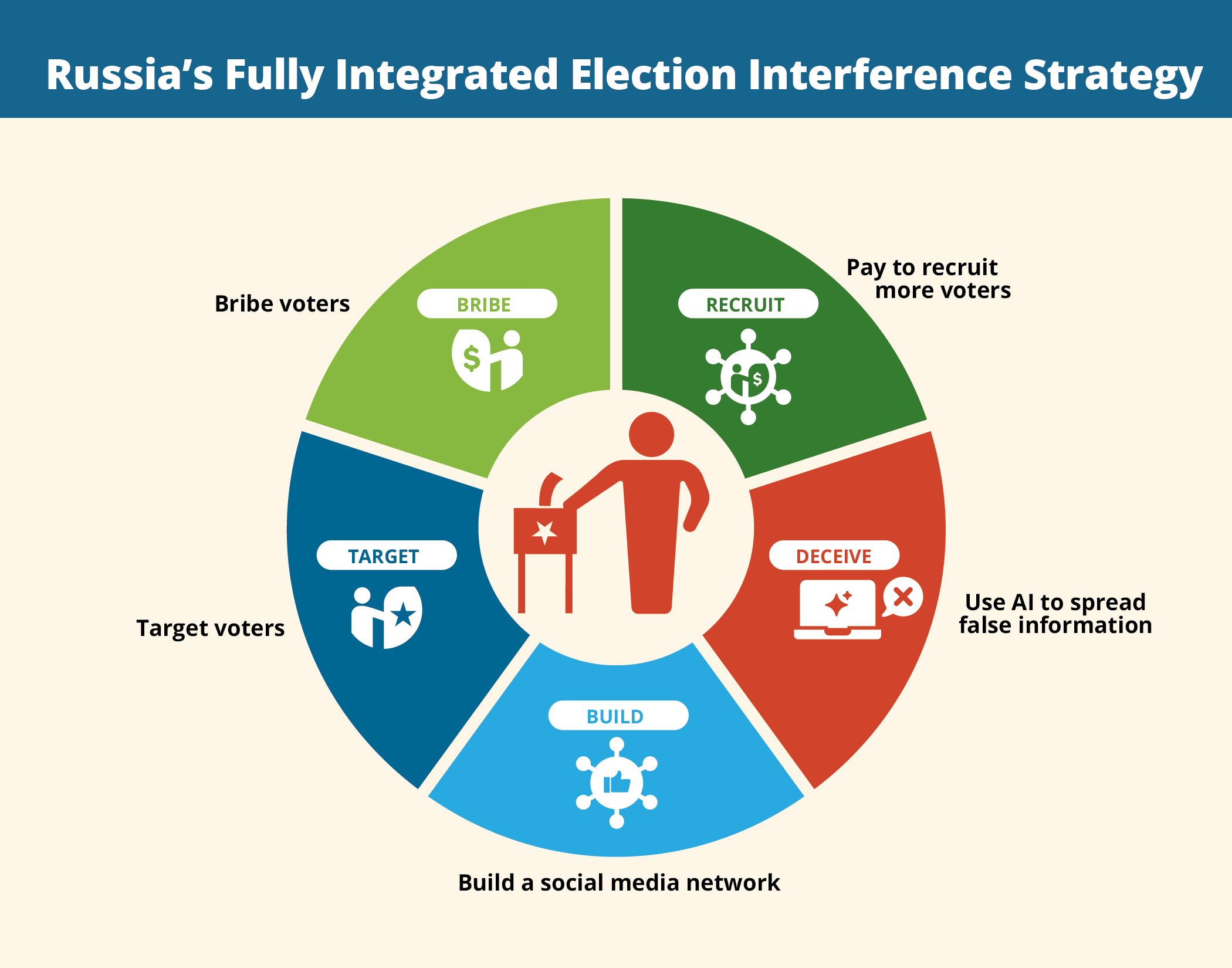
A parallel case in Georgia shows what Moscow can accomplish when working in partnership with an authoritarian-aligned domestic government to achieve similar antidemocratic goals. Once viewed as a reliably pro-Western state, Georgia has increasingly drifted toward Moscow under the governance of
the ruling Georgian Dream party, whose leadership has adopted many of the repressive tactics and laws developed by the Kremlin, including a Russian-style “foreign agents” law enacted in June 2024.14 In the October 2024 parliamentary elections, Georgian Dream retained its majority amid allegations of fraud, intimidation, and Russian-manipulated social media. Georgian President Salomé Zourabichvili, an independent, refused to recognize the results, saying they had been falsified as part of a “Russian special operation.”15 In the run-up to the balloting, Russian-backed propagandists had spread claims across social media that the United States and the West were preparing violent protests and even a coup in the event of a Georgian Dream victory.16
After the Georgian government announced in late November 2024 that it would suspend EU accession talks until 2028, mass protests did erupt across Tbilisi and other cities. Authorities cracked down in response, with hundreds of arrests reported.17 In early 2025, the EU suspended parts of its visa facilitation agreement affecting travel for Georgian diplomats and officials.18 The anticorruption watchdog Transparency International later found that approximately 700 civil servants had been fired for supporting the protests.19 Georgia’s local elections a year later highlighted another tactic borrowed from Moscow, as the Georgian Dream government invited fake or biased international election observers to lend legitimacy to the outcome.20
The Georgian case suggests that in countries where a friendly domestic government is in place, Moscow does not need the elaborate financial and digital infrastructure it deployed in Moldova. Instead it can work through incumbent elites and exploit administrative resources to suppress opposition, manage media coverage, and insulate electoral outcomes from external scrutiny and accountability.21
The Georgian case suggests that in countries where a friendly domestic government is in place, Moscow does not need the elaborate financial and digital infrastructure it deployed in Moldova.
Information Warfare in the Global South: Old Wine in New Bottles
Outside of Europe, Russian authoritarian influence efforts are concentrated mostly on shaping the information environment, engaging with local partners, and spreading AI-generated content. Moscow’s global media and information operations have expanded considerably over the past decade. Despite major economic strains associated with the war in Ukraine, the Kremlin has chosen to increase its spending on foreign propaganda. The 2026 draft federal budget proposed to raise allocations for mass media and propaganda by 6.6 percent to a record 146 billion rubles ($1.78 billion), including $390 million for the global television outlet RT (Russia Today).22
Although Europe remains a primary focus, Africa and Latin America are priority regions in the Global South, where the Kremlin seeks to erode international support for Ukraine, extract resources, build authoritarian partnerships, and position Russia as a champion of the postcolonial world and anti-U.S. movements. Russian state media—principally RT, Sputnik, and the news service TASS—collectively maintain at least 58 bureaus worldwide; offer dedicated channels in Arabic, English, French, and Spanish; and produce content in many other languages.23
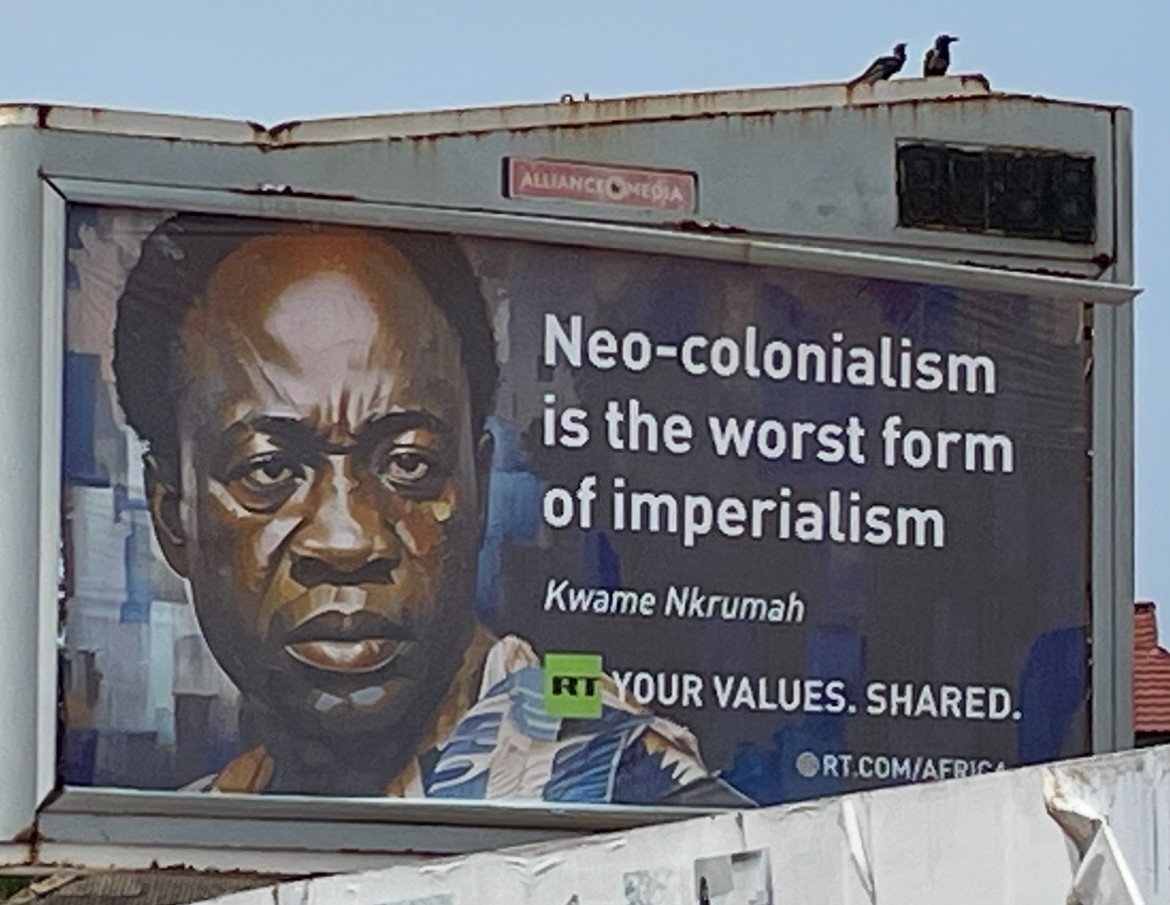
Critically, the narratives generated by these state sponsored Russian outlets are amplified within local media ecosystems, through either formal content-sharing agreements—numbering at least 99 globally—or informal reproduction.24 In Africa, local stations and networks now regularly rebroadcast RT and Sputnik packages or partner with Russian-aligned channels like Afrique Média.25 Moscow’s “African Initiative” project was launched in 2023 in Mali and presented as a journalism school and independent news agency; it trains local journalists and funnels Kremlin-friendly content into national and regional media environments.26 In Latin America, RT and Sputnik collaborate with the Venezuela-based TeleSUR and the Iran-backed HispanTV, sharing offices and anti-U.S. editorial outlooks.27 Recent analysis has shown how local platforms in Mexico and Brazil reproduce Russian and Cuban state media content, often stripped of attribution.28
In 2025, the United States undertook dramatic changes to its foreign policy, and Moscow’s autocratic allies in Africa, the Middle East, and Latin America faced intense domestic and foreign pressures. To analyze whether Russian narratives had thematically adjusted during this period of change, we conducted original content analysis on a sample of 101 news stories from January through December 2025, drawn from RT, Sputnik, and affiliated local outlets, including regional amplifiers and Russian embassies’ social media accounts.29 Each item was coded for prominent themes in Russian messaging that typically promote antidemocratic interests, such as support for host-country sovereignty against Western interference, accusations of U.S. hypocrisy, and critiques of U.S. sanctions policy.30 Such narrative themes are used to bolster local authoritarians in the face of international criticism and stigmatize civil society groups that receive foreign funding. While not a comprehensive survey, the sample was sufficient to identify prominent thematic patterns and regional variation.
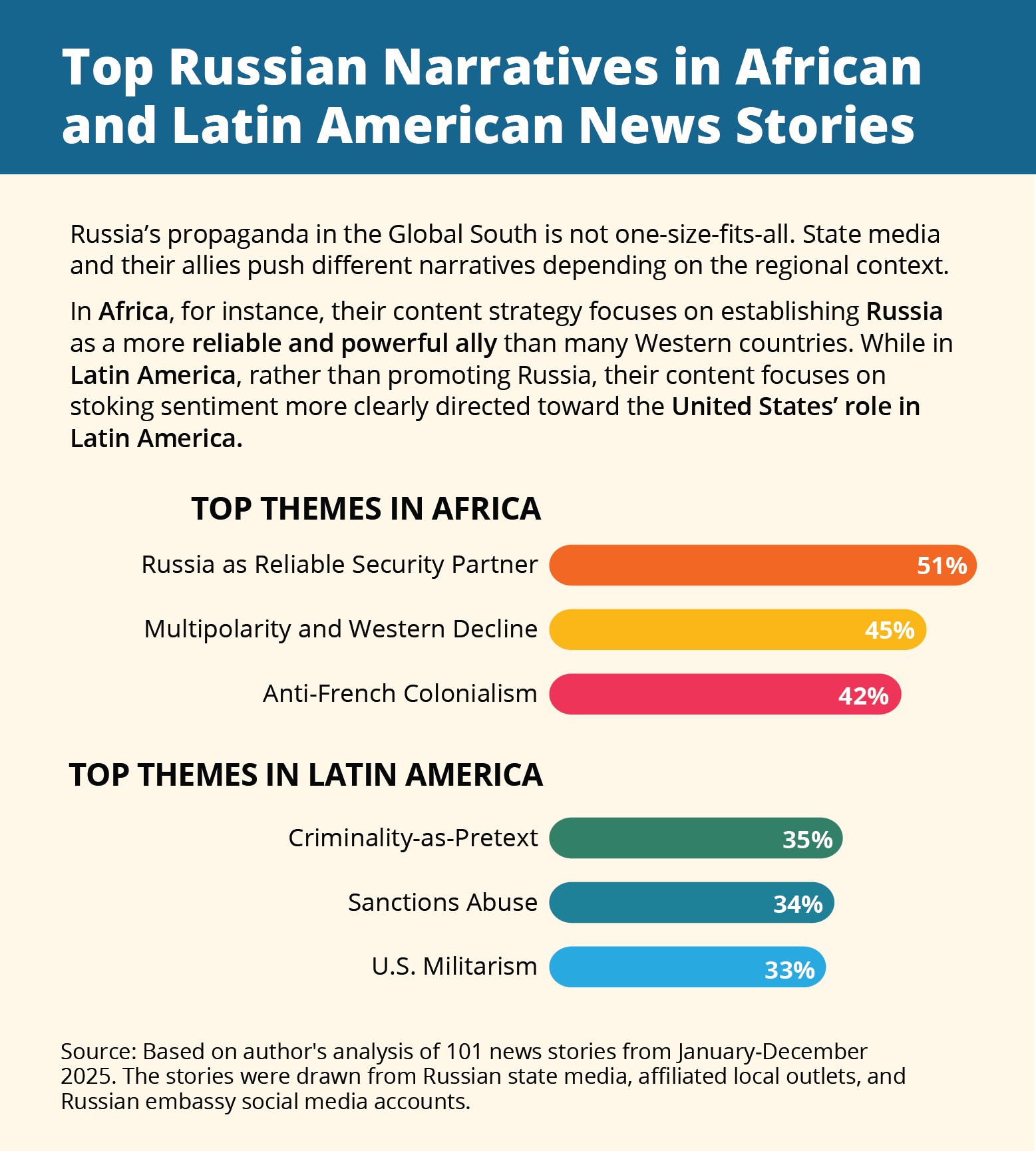
The analysis revealed distinct regional messaging strategies. In Africa, Russian narratives consistently emphasized “positive authoritarianism,” with about half of the news stories framing Russia as a reliable security partner and a stabilizing guarantor of host-country sovereignty among postcoup military regimes, as well as “multipolar” perspectives that present non-Western development paths as more desirable than Western-backed lending institutions and development models. Anti-French and anticolonial references were present in over 42 percent of the African news stories. Notably, despite the fact that the U.S. Agency for International Development (USAID) was previously a major target of Kremlin backed conspiracy theories, Russian outlets’ Africa coverage contained almost no mentions of the agency and its closure after August 2025, or of the public health consequences of the withdrawal of U.S. humanitarian aid, reinforcing the finding that Russian regional messaging prioritized promotion of Moscow’s partnerships with African autocratic governments over delegitimization of the United States per se.31
Latin American content, however, reflects a fundamentally different approach, directly criticizing U.S. policy and instruments rather than mentioning Russia and its activities. Over a third of the Latin America items drew attention to sanctions abuse (34 percent), U.S. militarism (33 percent), or the criminality-as pretext themes (35 percent) that cast American counternarcotics operations as illegitimate forms of aggression. Events related to Venezuela were featured in 40 percent of all regional stories, with coverage surging in the final four months of the year.
Taken together, these findings point to a strategic posture best described as old wine in an expanding collection of new bottles. The narratives themselves—Russia as a stabilizing force that opposes European colonialism in Africa, and criticism of U.S. imperialism in Latin America—are durable and largely unchanged. But Moscow continues to expand its media infrastructure as it opens more bureaus, concludes more content-sharing agreements, establishes local media partnerships, and cultivates aligned regional outlets.32 Even as the Ukraine war drains the Russian federal budget, the Kremlin has continued to increase investments in RT and its affiliated networks,33 a signal that the regime views this global apparatus as cost-effective and its Global South messaging as a strategic priority.
One might expect a volatile global environment to have prompted a rethink of the Kremlin’s Global South strategy. Instead, the Russian leadership has chosen to scale up its worldwide propaganda apparatus, confident that the existing strategy has worked and warrants an even greater infusion of resources.
These findings can best be described as old wine in an expanding collection of new bottles. The narratives themselves remain durable, but Moscow continues to expand its media infrastructure.
Transnational Repression: New Targets, New Perpetrators, and New Tools
Moscow’s transnational repression operations now reach a wider set of targets, draw on a broader array of state-affiliated perpetrators, and exploit more authoritarian-friendly technologies than ever before. Freedom House’s 2014–25 dataset attributes 100 physical incidents of transnational repression to the Russian regime, ranking it third globally.34 The Kremlin is particularly notable for the prominent role that assassinations play in its tactics; of 60 such cases in Freedom House’s 2014-24 dataset, 13 are attributed to Moscow.35
Since February 2022, Russian authorities have escalated their targeting of political dissidents, independent journalists, and civil society activists who fled the country following the full-scale invasion of Ukraine. The Russian human rights project OVD-Info estimates that more than 900,000 Russians have left since the invasion, with most initially moving to visa-free destinations in the former Soviet region.36 In response, Russian security services have leveraged long-standing bilateral relationships, extradition arrangements, and data sharing agreements to pressure host-country counterparts into surveilling,
detaining, and even repatriating these exiles.37 For example, between 2022 and 2024, at least seven Russian dissidents were arrested in Kazakhstan and four in Kyrgyzstan;38 in 2026, the pace of extraditions increased, with Kazakhstani authorities granting four extradition requests to Russia, including for an activist who had volunteered with the organization of late Russian opposition leader Aleksey Navalny.39 In June 2023, Kyrgyzstan’s government—with Russian guidance—introduced a facial recognition system that has since been used to identify Russian antiwar dissidents and activists.40
Other exiles have relocated to EU member states, which has tested the capacity of European democracies to contend with a sustained campaign of transnational repression. In practice, the Russian regime employs a diverse toolkit to target exile communities residing in liberal democracies, ranging from legal harassment to direct lethal violence or intimidation by contracted agents.41 Physical attacks remain a key part of the repressive apparatus.42 In 2023, German police launched investigations into the possible poisoning of two Russian exiles who participated in a dissident meeting in Berlin.43 In Spain, a Russian helicopter pilot who had defected to Ukraine was shot six times and killed in February 2024.44
Moscow’s increasing reliance on proxies in the European theater likely reflects a structural shift.
Exiles are not the only victims of Moscow’s cross-border violence. Ukrainian journalist and media commentator Dmytro Gordon was the target of two separate Federal Security Service (FSB) assassination plots, disclosed by Ukrainian authorities in June 2025.45 The campaign has also expanded to those directly supporting Ukraine’s defense. German and American intelligence services disrupted a plot by Russia’s military intelligence agency, known as the GRU, to assassinate the chief executive of the German firm Rheinmetall, a major supplier of weapons to Kyiv.46
Moscow’s increasing reliance on proxies in the European theater likely reflects a structural shift. As European states have expelled more than 750 Russian diplomats since 2022, the capacity of Russian intelligence services to operate under official cover on EU soil has been sharply reduced.47 This has driven the rise of what Nate Schenkkan has described as a “gig economy” model of transnational repression, in which operations are outsourced on a freelance basis to local or third-country proxies recruited through online channels.48 For example, British police disrupted a Bulgarian organized crime network that had been working on behalf of the GRU to conduct surveillance and plot attacks against Russian dissidents in the United Kingdom. GRU Unit 29155 has since been sanctioned by both the EU and London for assassination attempts and other destabilization activities.49
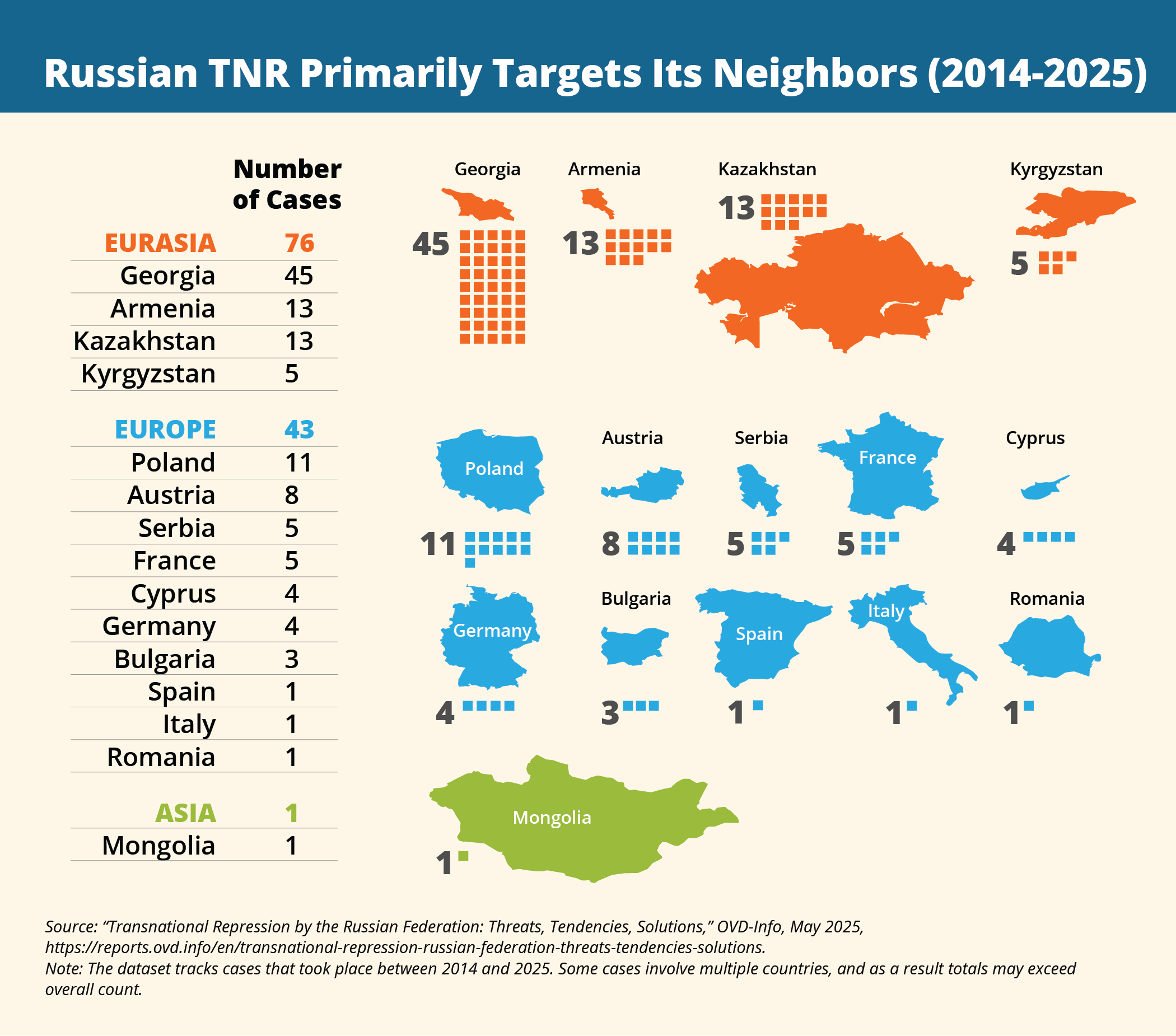
Beyond physical attacks and proxy operations in host countries, Moscow has expanded its use of coercion-by-proxy since 2022; Russian security services now routinely contact the Russia-based families of exiles as a means of intimidation. Russian authorities have also increased efforts to infiltrate antiwar and opposition activist groups, surveilling both online and offline activities to identify and intimidate diaspora members.50 While harder to quantify than physical attacks, these “everyday” forms of transnational repression may have the most significant cumulative impact, leading to self-censorship, social withdrawal, and disengagement from civic and political life across the exile community.51
In addition, the Russian leadership has increasingly leveraged legal and administrative channels to pursue its critics abroad. The Kremlin has extended the extraterritorial reach of its domestic judicial system to regularly conduct criminal prosecutions in absentia and to issue international arrest warrants.
New batch designations of “undesirable organizations,” affecting both groups and individuals, effectively function as tools of transnational harassment.52 By late 2025, Russian courts had convicted at least a dozen exiled journalists and opposition figures in absentia, often handing down multiyear prison terms that would be enforced if the individuals returned to Russia.53 According to OVD-Info, the combined list of “foreign agents” and “undesirable organizations” includes at least 1,525 individuals and organizations, 1,062 of which had been added since 2022, with 2025 marking the biggest single-year expansion (331 additions).54 Legislative changes in 2024–25 further tightened restrictions on those listed, allowed for the confiscation of their property, and simplified the process of opening criminal cases for alleged violations of the relevant laws’ reporting and labeling requirements.55
Moscow has also exploited international mechanisms that are designed for legitimate law enforcement cooperation. Leaked Interpol data indicate that, as of September 2024, Russia maintained 4,817 active Interpol Red Notices, more than any other country.56 Reviews conducted by the United Nations and Freedom House revealed that many of the Russian cases pursued across borders involve journalists, opposition figures, and activists who were inappropriately charged with “extremism” or “terrorism.”57 The European Parliament’s 2026 study on transnational repression found that European host states too often accept origin-state claims that individuals are “extremists” or “terrorists,” leading to unlawful deportations that disproportionately affect lower-profile individuals who lack resources for high-quality legal representation.58
Finally, Russian authorities have built a less visible but highly consequential enabler of transnational repression by exporting digital surveillance and censorship technologies. Beginning in April 2024, the Kremlin actively promoted Russian cybersecurity tools among security services around the world.59 Its exports include lawful interception systems similar to Russia’s domestic System for Operative Investigative Activities (SORM), which capture telephone and internet metadata and content; they include social media monitoring capabilities that can track subscriber metadata and personal information on messaging platforms, enabling the identification of protesters and political activists.60 The watchdog Recorded Future has named at least 15 telecommunications companies in Central Asia and Latin America as likely customers of Russian SORM providers, including Kazakhtelecom in Kazakhstan and Kyrgyztelecom and MegaCom in Kyrgyzstan.61
While harder to quantify than physical attacks, these “everyday” forms of transnational repression may have the most significant cumulative impact.
Conclusion
The future of Moscow’s authoritarian influence in the world seems increasingly dependent on its pressing priority of ending the war in Ukraine on favorable terms and disrupting international support for Kyiv and the sanctions regime. This explains the Kremlin’s more aggressive information tactics in Europe, designed to undermine transatlantic unity and aid for Ukraine’s defense, as well as its transnational targeting of dissidents in the diaspora and exile communities. The pivotal importance of Ukraine also accounts for the continued expansion of Russian channels for information operations across the Global South, where Moscow seeks to secure UN votes, erode sanctions support, and frame the war as a Western imperialist proxy conflict. But while some Kremlin strategists may have initially welcomed a new U.S. administration that is willing to break with traditional policy priorities regarding the transatlantic alliance or foreign assistance, the events of 2025 and early 2026 have left Moscow in an increasingly challenging global position despite its significant investments in authoritarian influence activities.
What is the Russian leadership likely to do next? How might the dynamics described above play out over the next three to five years?
Projecting Future Trends in 2026–30
Russia’s damaging loss of autocratic allies will continue. Since late 2024, Moscow has witnessed the fall or degradation of client regimes in the Middle East, Africa, and Latin America, which has exposed the fragility of a global strategy built on personal ties with autocratic leaders. To date, Russian officials and media have compartmentalized their reactions, focusing on separate analyses of the fallout from each incident. The Communist Party regime in Cuba, Moscow’s oldest Western Hemisphere client, now faces a deepening economic crisis caused by energy sanctions and U.S. pressure. Iran’s regime faces even more intense difficulties.
The Kremlin’s loss of global allies will intensify its drive to secure influence in Russia’s immediate neighborhood. As its network of distant autocratic partners weakens or collapses, Moscow is likely to double down on maintaining control in the states it considers strategically essential, particularly in the nearby South Caucasus, Central Asia, Belarus, and Moldova. Its priority will be to prevent additional defections close to home by whatever means necessary.
Moscow’s election interference and social media operations will continue to integrate financial support, local microtargeting, and AI-generated content. The Moldovan case showed that Russian authorities have moved well beyond the clumsy social media influence campaigns of a decade ago. Their toolkit has
demonstrably expanded. Policymakers, civic watchdogs, independent media, and authentic election observers must develop frameworks capable of both detecting and countering this more potent Russian use of digital technologies.
Subversive Russian operations in Europe will incorporate more aggressive paramilitary and criminal tactics. The outsourcing of extraterritorial operations to organized crime networks and contractors indicates that Moscow’s activities on European soil have escalated into a sustained pattern of political violence, far surpassing older interference campaigns that were largely limited to manipulation of the information space. The legal frameworks of democratic states may struggle to effectively counter these new measures.
Russian narratives in the Global South will continue to find politically aligned partners and receptive audiences. Despite Moscow’s recent geopolitical losses, its global influence operations are likely to increase in scope and potency. They have been relatively inexpensive to date and achieve many of the Kremlin’s narrative objectives in the affected regions. The contraction of independent and democratically funded media outlets has created structural conditions that favor Russian messaging. The Russian regime’s expanding network of local media bureaus and partners is embedding its content in ways that will be difficult to detect or disentangle.
Moscow’s transnational repression campaign will continue to scale up, driven by the growth in the Russian exile population. The Kremlin continues to face its largest diaspora challenge in a century. Civic organizations and democratic governments that support Russian dissidents should anticipate escalating threats, surveillance, and both digital and physical infiltration of exile and diaspora communities.
Moscow will continue to block, counter, and stigmatize independent media in exile. The independent Russian journalists and media organizations that have relocated to Europe are conducting important investigations and disseminating news and analysis that are unavailable elsewhere. This makes them vulnerable targets of—and some of the most effective counterweights to—Moscow’s transnational repression campaign. Sustaining these journalists and outlets through fellowships, start-up funding, and support for investigative projects should be a top priority for democratic donors.
The future of Moscow’s authoritarian influence in the world seems increasingly dependent on its pressing priority of ending the war in Ukraine on favorable terms.
Autocratic Exports, Local Consequences, and Civic Resistance: China and Russia’s Reinforcement of Angola’s Authoritarianism
By Florindo Chivucute, FOUNDER AND EXECUTIVE DIRECTOR OF FRIENDS OF ANGOLA
• intensified legal risks,
• acute resource constraints,
• a lack of understanding of the long-term benefits of democratic institutions.
More than two decades after the end of Angola’s civil war, the country presents a troubling paradox: formal multiparty elections coexist with entrenched executive dominance, systemic corruption, and shrinking civic space. These dynamics are reinforced by weak institutional checks on abuses of power, limited parliamentary oversight, constrained judicial independence, and opaque public financial management systems.
Angola’s domestic civic actors must contend not only with homegrown constraints on meaningful democratic practice, but also with the compounding influence of external authoritarian powers that face minimal accountability in the country’s permissive political environment.
Authoritarian states like China and Russia are not just spoilers or obstacles to Angola’s democratic progress. They are, unfortunately, active participants in the country’s autocratization. They have helped entrench a kleptocratic political order through practices such as opaque financing, provision of digital surveillance capacity, security cooperation, partnerships in extractive industries, and assistance with information control.
Although engagement in Angola by Beijing and Moscow is not new and has had a poor track record in terms of debt accumulation and failed efforts at ideological influence, the two regimes’ more practical and institutional forms of antidemocratic influence have accelerated over the last few years. This trend presents massive challenges to civic actors in Angola and their counterparts in similar settings as they seek to advance democratic goals. However, there are some immediate steps that Angolan prodemocracy activists can take to clear the way for meaningful progress.
Angola’s domestic civic actors must contend not only with homegrown constraints on meaningful democratic practice, but also with the compounding influence of external authoritarian powers.
Beijing and Moscow’s Long-Standing Engagement and Impact in Angola
The Russian and Angolan governments maintain a diplomatic and strategic relationship that dates to Angola’s independence from Portugal in 1975. Their ties deepened during the final decades of the Cold War, when the Soviet Union provided military support and ideological backing to the ruling People’s Movement for the Liberation of Angola (MPLA) as it fought a civil war against the anticommunist National Union for the Total Independence of Angola (UNITA), now the main opposition party.
As a result of this relationship, Angola has become one of the leading foreign clients for Russian military exports.1 Arms deals between the two countries are calculated in the billions of dollars, and are often rife with corruption involving senior Angolan officials.2 Investigative outlets such as the Organized Crime and Corruption Reporting Project (OCCRP) have detailed sordid transactions between then–Angolan President José Eduardo dos Santos and middlemen with ties to Russia’s oligarchy.3 The pattern of corruption extends beyond arms purchases, reflecting a broader system of opaque financial practices and networks that benefit Angolan elites at the expense of the public interest.
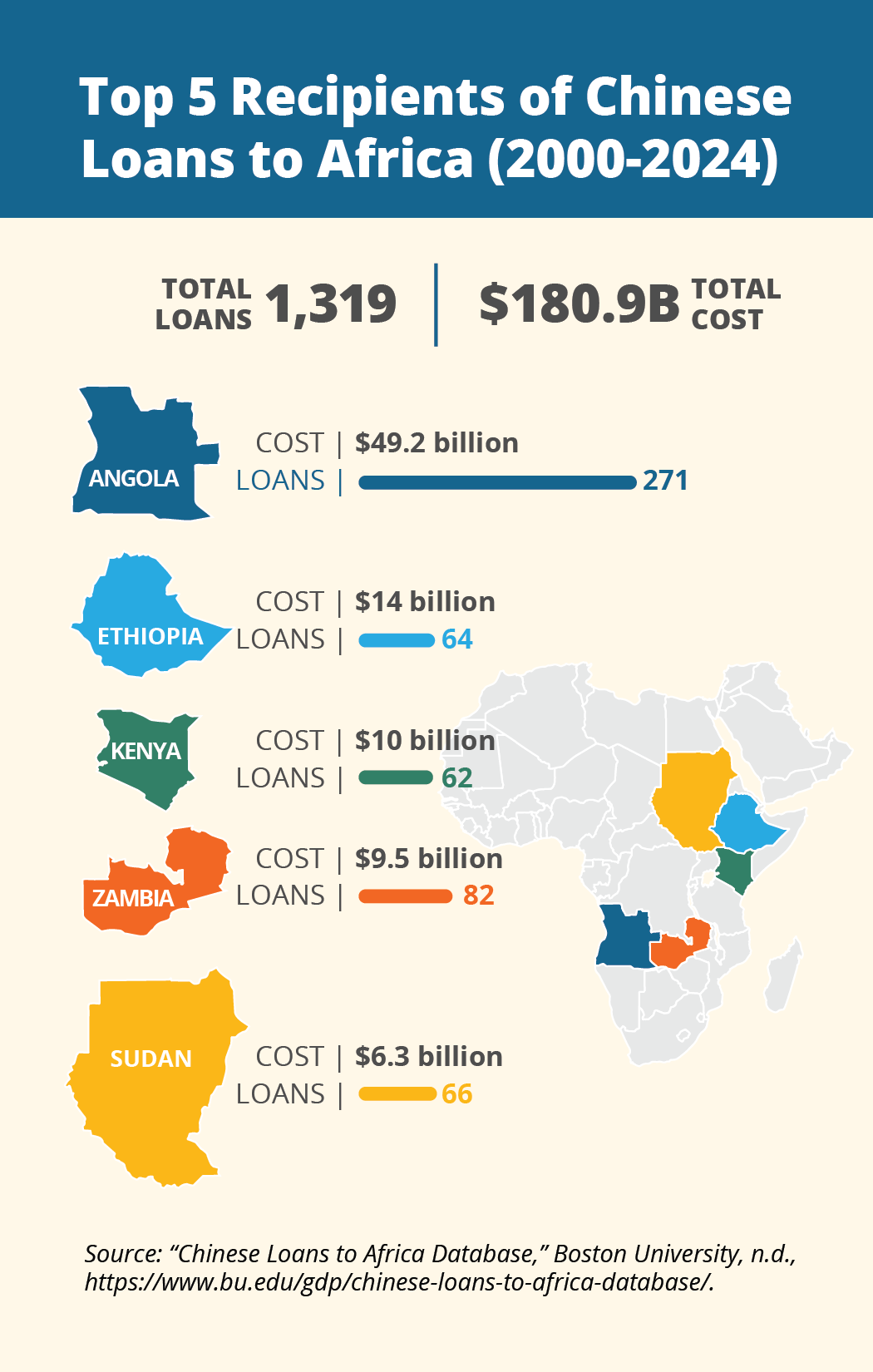 Beginning in 2002, Beijing introduced an aid model in which it offered infrastructure development in exchange for access to oil, providing loans to Angola that totaled $49.2 billion between 2002 and 2024.4 While often described as “no-strings attached” deals, these arrangements typically carried implicit conditions, including resource-backed repayment structures and requirements to use Chinese contractors and labor.5 Beijing’s aid model was nevertheless appealing to the Angolan leadership, as it entailed fewer domestic transparency, governance, and reform requirements than those imposed by democratic and multilateral lenders.6
After more than two decades, however, this approach has done little to improve the lives of most Angolans. Oil-based loans negotiated without public scrutiny have enabled a political elite associated with the MPLA and the executive branch to embezzle billions of dollars, while more than half of the population lives in poverty.7 Development contracts are issued without parliamentary review or public disclosure,8 often resulting in poor-quality infrastructure projects, especially in housing and road construction.9 In this environment, international companies that are subject to strong anticorruption safeguards in their home countries find it nearly impossible to compete in Angola,10 as corruption has become not an exception, but a core governing method sustained by Moscow and Beijing.
Despite their overall continuity, the strategies employed by the Russian and Chinese regimes are not static. New legal, informational, technological, and economic tools provide fresh opportunities for these powers to increase the antidemocratic impacts of their engagement in Angola. The examples described below offer some insight into how the evolving forms of authoritarian influence have affected governance and civic space in Angola just over the last few years. A better understanding of these new conditions will help Angolan and international civic actors to adapt and respond effectively.
The pattern of corruption extends beyond arms purchases, reflecting a broader system of opaque financial practices and networks that benefit Angolan elites at the expense of the public interest.
Undermining Angolans’ Labor Rights
Angola’s natural resources and construction sectors are marked by a high degree of corruption.11 As with the better-known cases of Venezuela and Zimbabwe, a combination of graft, large-scale infrastructure projects, and political influence has enabled the enrichment of Angola’s ruling elite at the expense of its citizens and workers.12 This corruption, however, has been enabled not just by weak domestic oversight, but also by the exploitative practices of China’s state-affiliated enterprises.
One prominent figure who has been implicated in corruption allegations is General Manuel Hélder Vieira Dias Júnior, better known as “Kopelipa,” a former senior official in charge of construction projects. According to Imparcial Press, Kopelipa allegedly received some $200 million in bribes linked to contracts for the construction of three major housing developments (centralidades) in Angola. Imparcial Press also reported that the payments were allegedly made by a Chinese construction company, Pan-China Group, through intermediary firms connected to Kopelipa.13 In 2021, the United States announced corruption related sanctions against Kopelipa.14
However, the public exposure and sanctions stemming from these transactions did not prevent Pan-China Group from exerting further harmful influence on Angola’s construction sector and the rights of its laborers.
A combination of graft, large-scale infrastructure projects, and political influence has enabled the enrichment of Angola’s ruling elite at the expense of its citizens and workers.
Pan-China Group’s Treatment of Angolan Workers
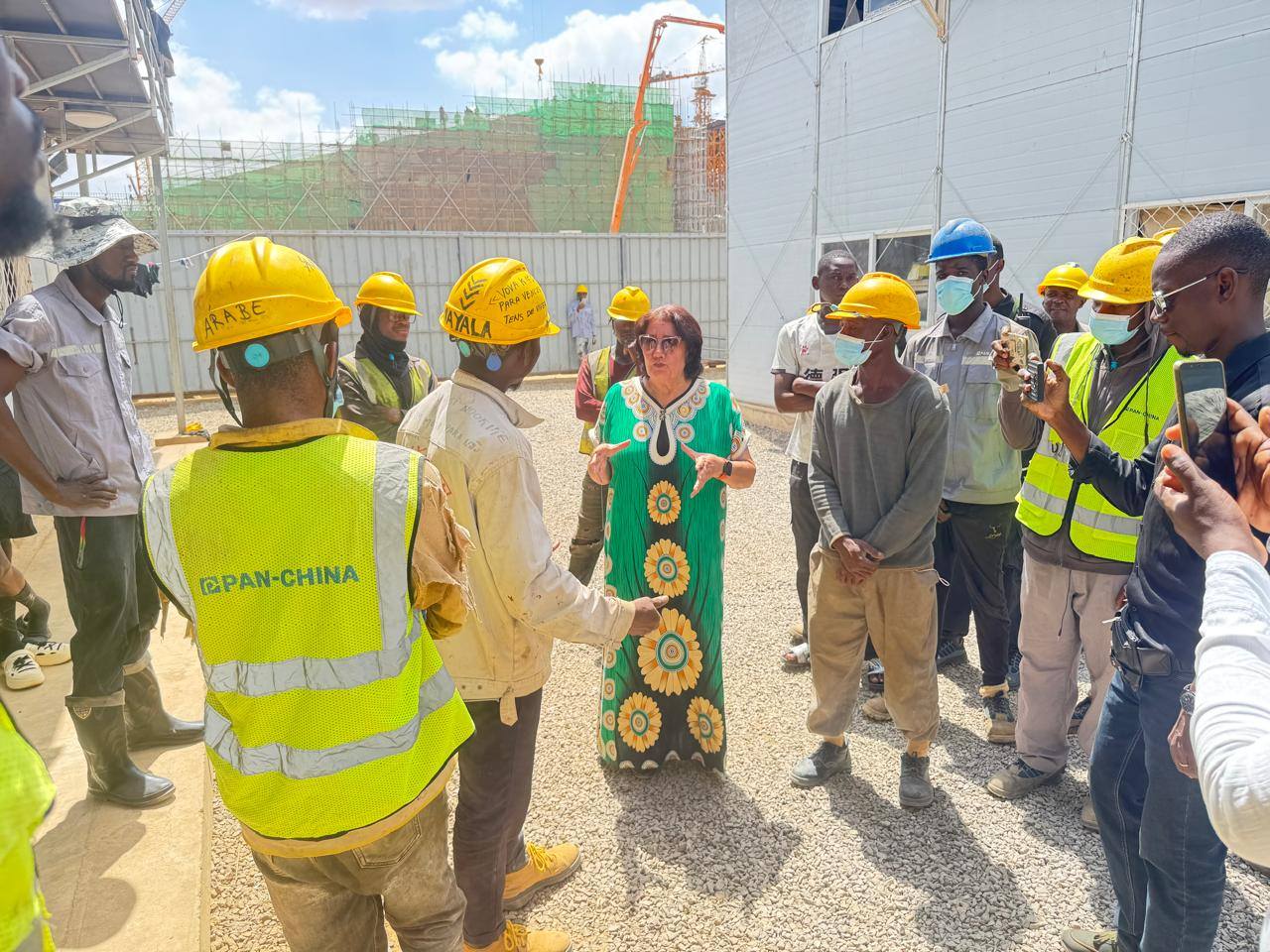
In January 2026, members of the Angolan National Assembly visited the site for a major local construction project built by the Pan-China Group in Luanda. Their visit followed disturbing allegations that Angolan workers had faced degrading treatment at the site.15 The visit raised serious concerns among local civil society organizations about the credibility of Angola’s labor protections, oversight institutions, and commitment to human dignity.16
The parliamentary delegation found that Angolan workers were housed in overcrowded 20-foot shipping containers, with up to 10 individuals per unit and no air conditioning, in a city where temperatures typically range from 68°F (20°C) to highs of 87°F (31°C).17 Foreign workers—reportedly PRC nationals—received significantly better accommodations.18 Paulo Faria, a member of the National Assembly, argued that the Angolan workers were “treated as slaves,” while a separate unit was reserved for PRC nationals.19 Faria noted the stark discrepancy between the worker accommodations featured in Pan-China’s promotional materials and the conditions actually observed during the site visit. He said that the sanitation facilities resembled pigsties (pocilgas), and characterized the meals provided to Angolan workers as inadequate and degrading.20
Equally concerning were reports that the Angolan workers allegedly earned about 70,000 kwanzas ($75) per month, well below the legal minimum wage of 100,000 kwanzas ($108) per month.21 During the visit, workers reportedly expressed fear of retaliation or dismissal if they spoke openly with members of parliament.22 Although Angola’s labor law regulates employment relationships and provides formal protections related to wages and working conditions,23 enforcement remains inconsistent due to corruption, weak institutional capacity, and the prevalence of informal employment in many sectors.24 According to UNITA, the parliamentary delegation tried to communicate its findings to the General Labor Inspectorate, but the relevant officials were unavailable.25
Pan-China Group is reported to have originally operated under the direct administrative oversight of China’s Ministry of Construction.26 It remains a major PRC state-owned construction enterprise known for large-scale international projects and its role in developing Angola’s domestic infrastructure, including the MPLA’s own headquarters.27 The company works closely with Beijing and foreign government entities and contributes to Chinese state priorities like “smart cities,” other urban development, and the Belt and Road Initiative.28
Pan-China Group’s established relationship with the MPLA, combined with its ties to the Chinese Communist Party (CCP) regime, raises important questions about the political dimensions of its operations. While direct evidence of influence activities remains limited, Chinese firms in general often pursue projects linked to Beijing’s political goals, warranting further investigation into their potential role in advancing CCP interests abroad.29
The allegations that emerged from the recent site visits by Angolan lawmakers raise serious concerns about labor conditions, elite capture, and corruption within major infrastructure projects operating under foreign management in the country.30 The Angolan government’s limited response to such violations illustrates how foreign-backed projects can proceed within, and benefit from, an environment in which authoritarian elites’ political and economic priorities override regulatory enforcement, the rule of law, and public accountability. In this context, labor abuses are not only a human rights issue but also a symptom of a broader antidemocratic governance model.
Labor abuses are not only a human rights issue but also a symptom of a broader antidemocratic governance model.
Digital Surveillance and Technology Imports
As in countries across Africa, PRC technology companies like Huawei and ZTE have played a major role in building Angola’s telecommunications infrastructure. They have been particularly active in the construction and modernization of mobile networks, fiber-optic systems, and digital backbone projects.31 In addition, Angola is often cited as hosting “smart cities”—urban digitalization projects that feature integrated high-tech surveillance systems—developed with PRC firms’ support.32 There are indications that the Angolan government is stepping up its use of surveillance technology in cooperation with China’s government and its companies.33 For instance, an AidData report lists Angola among the countries that have reached an agreement to deploy China-sourced facial recognition technologies for population monitoring.34 Since Angola does not have a comprehensive data privacy law, it is difficult to
determine who has access to the data that these technologies collect.35
China’s export of surveillance technologies is not a novel phenomenon. However, the simple transfer of these technologies has increasingly been integrated with institutional training, infrastructure development, and government diffusion.36 In Angola, the expansion of PRC-built digital infrastructure, combined with access to surveillance technologies from multiple global providers, has strengthened the state’s capacity to monitor and deter dissent.37
The trend is visible in the deepening role of Huawei, which is providing telecommunications infrastructure and digital systems along with technical training programs that shape how information is managed and monitored.38 Huawei’s expanded footprint includes plans for a research and development hub in Luanda that would focus on “connectivity, artificial intelligence, and data storage.” Such a facility would fit within the company’s wider African strategy as “a regional hub for innovation and technological training.”39
Angola’s relationship with the Chinese company KEDACOM provides another example. Angolan government entities have consulted with the firm as part of its National Public Security Integrated Platform project,40 which entails the construction of digital monitoring centers across Angola. The centers are likely to expand the state’s surveillance and data management capabilities, mirroring PRC supported “smart city” models that aim to deliver both enhanced public security and increased capacity for population monitoring and information control.
Among other impacts, such ubiquitous high-tech surveillance creates what analysts describe as a “chilling effect” on journalists, opposition figures, and civil society activists, who could face reprisals by Angolan authorities for their work or critical speech.41
The threat of domestic repression is compounded by the many cross-border risks associated with such Beijing-backed projects. For instance, the CCP can compel Chinese companies to provide access to data stored on the systems they install abroad. China’s legal and governance framework as a whole blurs any distinction between state-owned and ostensibly private enterprises, further compromising the security of private data.42
In Angola, the expansion of Chinese-built digital infrastructure has strengthened the state’s capacity to monitor and deter dissent.
Moscow’s Information Manipulation Campaigns
The Russian regime’s long-running propaganda campaigns across the region have taken on new significance in the context of heightened interest and engagement in Angola by well-resourced powers like the United States, the European Union (EU), the United Arab Emirates, and China. Moscow’s well-documented campaigns have sought to shape public opinion by utilizing social media influencers, fabricated content, local lawyers, and amplification loops through state-controlled media networks. Findings published by Radio France Internationale in 2025 indicated that the Russian regime is adapting its influence strategies while maintaining a significant presence across Africa. In Angola, this evolving approach became evident on August 7, 2025, when authorities arrested two Russian nationals in Luanda following violent protests linked to rising fuel prices. The individuals were charged with offenses including criminal conspiracy, document forgery, terrorism, and the financing of terrorism. According to Angolan officials, they had established a propaganda network aimed at inciting unrest and supporting the demonstrations.43 The suspects’ trial was ongoing at the time of writing.44 The indictment noted multiple alleged payments to local journalists and experts to disseminate propaganda and falsehoods in local media, with the goal of “provoking political change.” The payments amounted to more than $24,000.45
Beyond the immediate goal of shaping public opinion, such Russian-linked information campaigns contribute to a fragmented public sphere in which accountability becomes more difficult to sustain.
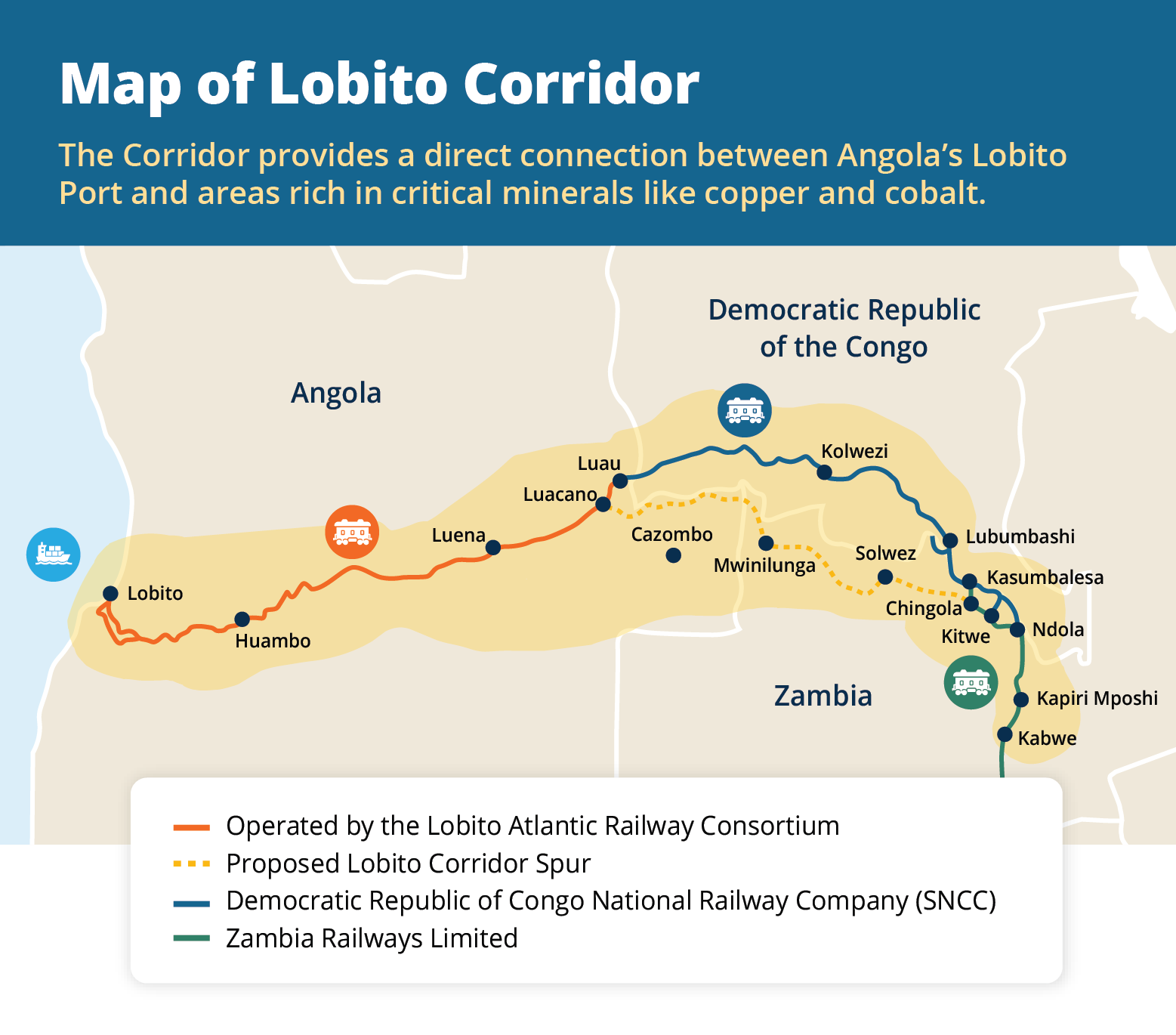
In a separate case documented by Forbidden Stories, a network of propaganda agents controlled by Russia’s Foreign Intelligence Services (SVR) reportedly created a fake website to discredit the U.S.-backed Lobito Corridor project in Angola, which is considered by analysts to be the largest and most strategically significant U.S.-supported infrastructure investment in Africa in recent years.46 The project will create a railway and logistics link that connects the mineral-rich interior of the Democratic Republic of the Congo (DRC) and Zambia to Angola’s Atlantic coast.47
In 2024, the SVR-affiliated network, known as “the Company” or “Politology,” reportedly spent about $3,400 on graffiti and a public demonstration meant to discredit U.S. President Joseph Biden’s visit to Angola. The same group has also reportedly been active in the DRC,48 whose government recently signed a minerals agreement with the current administration of U.S. President Donald Trump.
By creating fake websites and organizing symbolic protests to denounce the Lobito Corridor project, these operations aim to undermine public confidence in major, democracy-backed international infrastructure initiatives. As it unfolds, the Lobito Corridor will provide well-paid jobs to locals in Angola, with employment standards far above those associated with other major Angolan projects.49
If Moscow were to succeed in souring Angolan citizens and
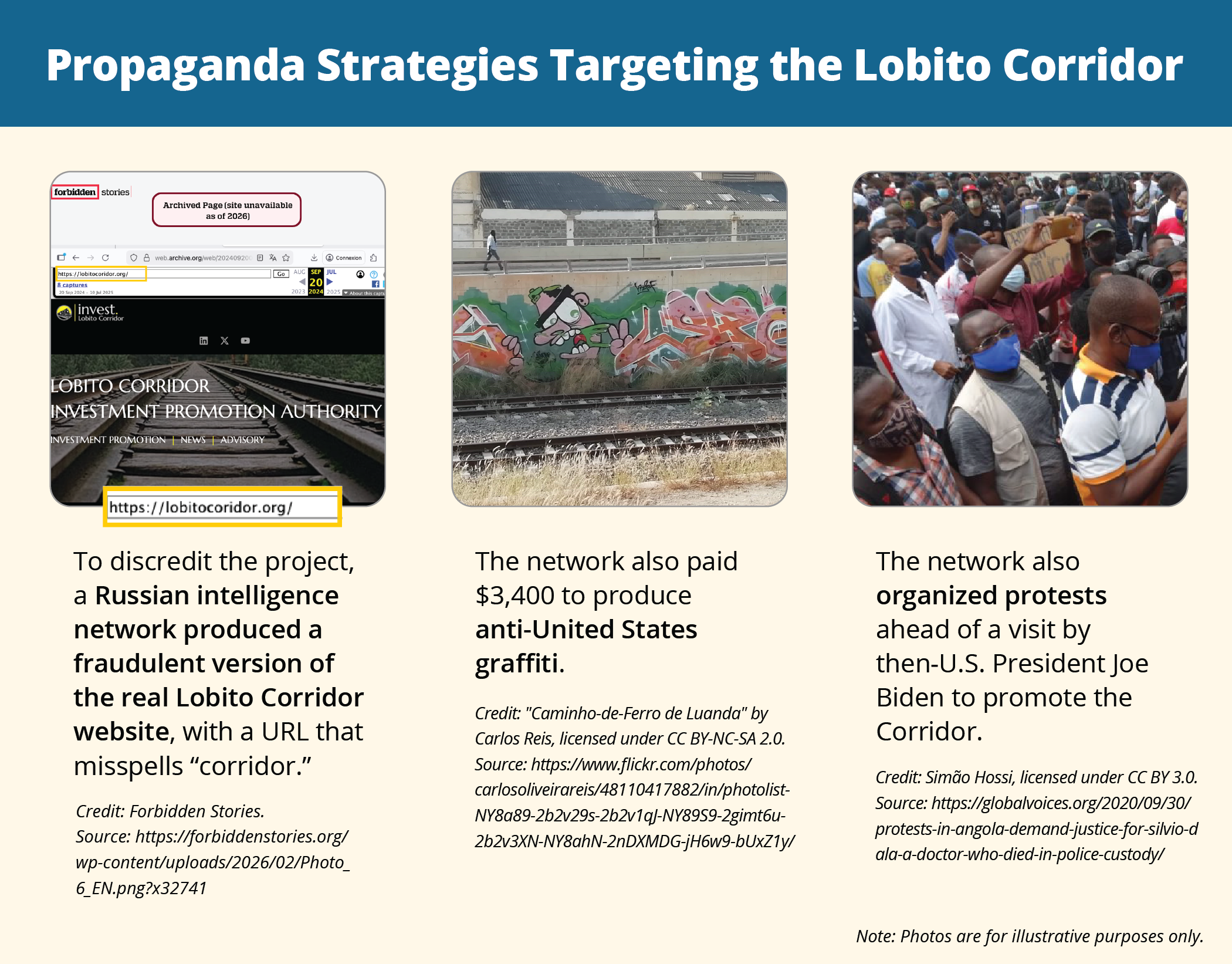 their government on the enterprise, it could exacerbate the lack of social and economic mobility that many families have faced for generations, while also hampering the ability of the United States and the EU to diversify their supply chains for critical minerals. Information manipulation by external authoritarian actors in general has the potential to disrupt transparent public debate among policymakers and civil society about key development projects and international partnerships.
If Moscow were to succeed in souring Angolan citizens and their government on the enterprise, it could exacerbate the lack of social and economic mobility that many families have faced for generations.
The Transfer of Authoritarian Legislative Models to Angola
In recent years, Angola’s government has enacted a series of controversial laws on national security and civil society that resemble authoritarian legislation in Russia and China. For example, Angola’s 2024 National Security Law defines “national security” in vague terms that mirror those in Russia’s 2015 National Security Strategy,50 effectively reinforcing authoritarian norms on “domestic stability.”51 Angola has also followed a global authoritarian trend by adopting overly broad, state-centric cybersecurity laws that threaten to further constrict the country’s already limited civic space.52
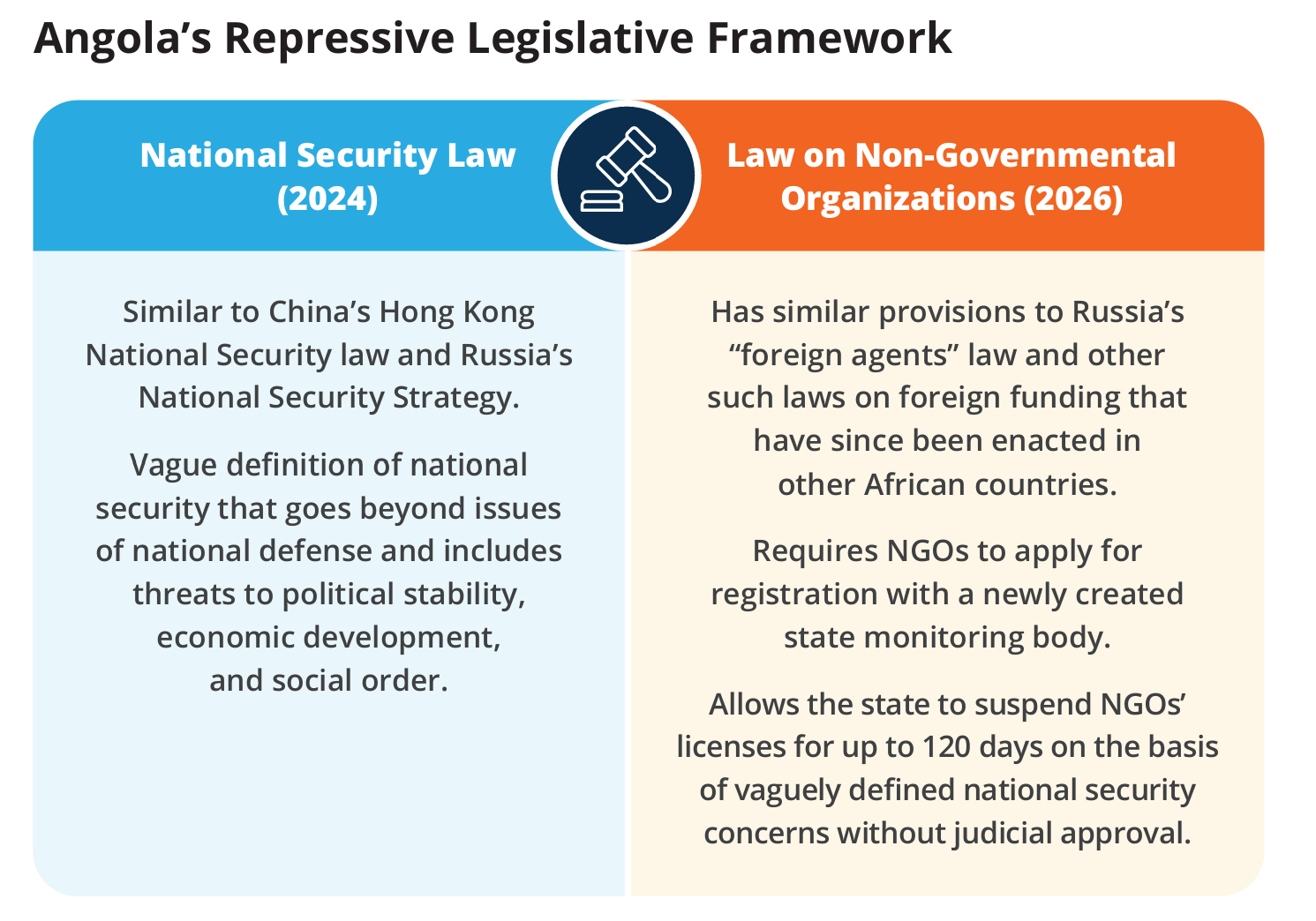
Similarly, Angola’s recently enacted Law on Nongovernmental Organizations echoes foreign funding laws around the world that followed the example of Russia’s 2012 “foreign agents” law and restricted the activity of both independent media outlets and nongovernmental organizations (NGOs). The Angolan law requires NGOs to obtain government authorization to operate, and it empowers authorities to suspend operating licenses for up to 120 days, without judicial approval, based on vaguely defined “unlawful conduct” or “national security threats.”53 These provisions resemble elements of restrictive NGO frameworks in Russia and China, where administrative suspension mechanisms have long been used to silence civil society.54 The inspiration for repressive NGO laws may not come just from Russia and China, however. Similar measures in Ethiopia, Zimbabwe, and Mozambique suggest that Angolan
officials may have drawn on multiple regional and international models.55
Statements made by Chinese officials indicate at least some degree of collaboration on governance issues. In March 2024, CCP leader Xi Jinping stated that China was willing to strengthen “exchanges of governance experience” with Angola, though the exact nature of these exchanges remains unclear.56
Practical Responses to Authoritarian Influence in Angola
Beijing and Moscow’s deepening engagement in Angola has systematically reinforced corruption, weakened governance, and restricted civic space, ultimately benefiting elite enrichment over the well-being of ordinary citizens. The two regimes’ evolving strategies—spanning economic influence, digital surveillance, legal frameworks, and information manipulation—continue to entrench antidemocratic systems and practices that stunt Angola’s long-term development.
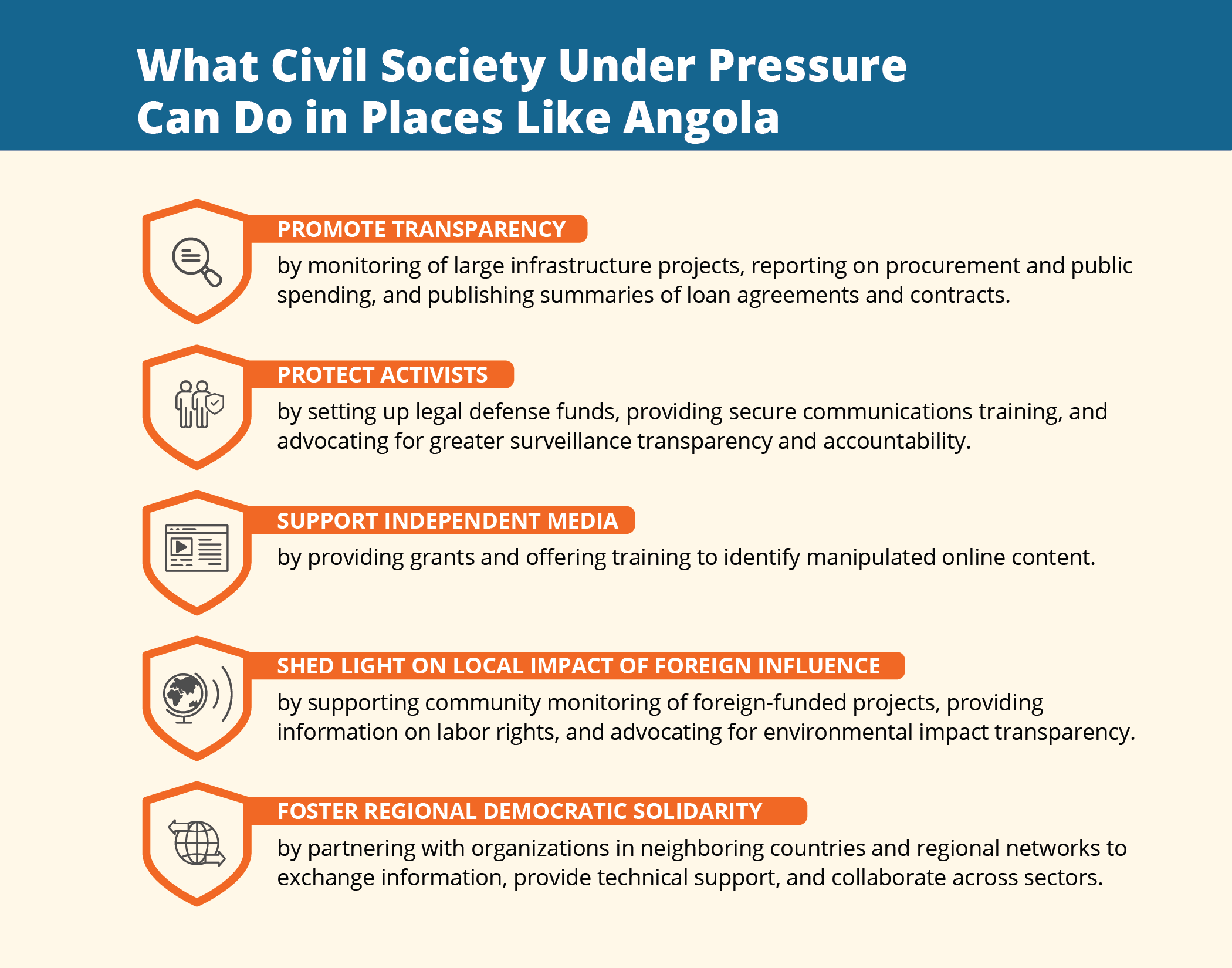
Despite these headwinds, Angola’s civil society has survived and remains active. It includes independent journalists, youth movements, human rights organizations, church-based groups, labor associations, and diaspora networks. The Angolan government is more tolerant of socially focused civil society organizations,57 while those engaged in advocacy for stronger governance, anticorruption safeguards, and human rights protections face sustained pressure from state institutions and political elites, who often perceive the activists’ work as a threat to their own interests.58 Civic groups that do not experience political pressure tend to lack resources and capacity, particularly those based outside major urban centers such as Luanda.
In this context, it is important to identify practical, achievable priorities that would help Angolan civil society deliver greater government accountability and counter foreign authoritarian influence. In the short and medium terms, civil society actors are most likely to secure progress on less politically sensitive and more technically oriented topics. These would include transparency practices, public awareness, and localized accountability mechanisms, as opposed to systemic political reform or high-level corruption cases.
The following measures are among those that remain within reach for Angolan activists, and may also be applicable in similar political environments in the region and around the world.
Strengthen Transparency on Development Financing and Debt
Civil society organizations can help address the lack of accountability and transparency in PRC development financing in Angola. They could find ways to monitor large infrastructure projects, such as mining operations, even in the absence of publicly available databases. They could then create accessible public reports that explain how large infrastructure projects impact local communities.
Investigative media outlets could similarly focus their work on procurement, debt contracts, whistleblower engagement, and public spending. Even small transparency initiatives, such as an effort to publish simplified summaries of loan agreements or infrastructure contracts, may significantly improve public understanding and accountability and allow Angola’s civic actors to more meaningfully press for change through the National Assembly and the government.
Protect Democracy Activists
The emerging legal and surveillance conditions described above raise serious concerns about the normalization of digital monitoring as a tool of political control. These structural challenges complicate civic responses in Angola and comparable countries worldwide.
Legal defense resources and rapid response mechanisms should be provided for journalists, activists, scholars, and religious leaders who face politicized charges under repressive national security, cybercrime, and “fake news” laws. Efforts should also be made to enlist local lawyers and pursue strategic litigation, both domestically and internationally, that challenges legal restrictions on fundamental freedoms.
In addition, it is critical to strengthen digital resilience amid the proliferation of surveillance tools and online manipulation campaigns. This can be achieved through training on cyber hygiene and secure communications for the prodemocracy community. Civic actors could hold social media platforms, telecommunications providers, and spyware companies accountable for any problematic cooperation with the authorities by advocating for transparency on surveillance requests, data retention rules, and procurement contracts. For example, in their advocacy regarding the use of Predator spyware against an Angolan journalist, Amnesty International, Front Line Defenders, and Friends of Angola called on the Angolan National Assembly to push for greater transparency on the use of surveillance tools.59
Bolster Independent Media, Local Radio, and Investigative Journalism
In Angola, as in many countries across the continent, private media outlets face mounting financial and political pressures,60 a vulnerability that both Beijing and Moscow actively exploit. To address the problem, donors should provide direct grants to local radio stations for equipment and journalist salaries; support regional partnerships that connect Angolan reporters with investigative networks in the Community of Portuguese Language Countries (CPLP), as well as in Nigeria, Kenya, and South Africa; and sponsor training on the detection and verification of manipulated online information. While the groups and networks providing such services are not media outlets themselves, they bolster media ecosystems and strengthen journalistic capacity. It is also important to note that despite the difference in media sector sustainability between some of these partner countries and less free societies like Angola, independent media and radio stations in Angola are still able to carefully navigate financial and political pitfalls to report transparently on the activities of foreign powers.
In Angola, private media outlets face mounting financial and political pressures, a vulnerability that both Beijing and Moscow actively exploit.
Raise Public Awareness About Negative Economic and Labor Impacts
Concerns about labor practices, environmental standards, and resource extraction linked to investments by authoritarian regimes must be addressed at the local level. This requires support for community-based monitoring of infrastructure projects, legal literacy programs on labor rights, and public campaigns calling for transparency concerning environmental damage. Such work would help ensure that economic engagement by foreign actors yields broad public benefits rather than elite enrichment, which is all too common under Beijing’s development model. In countries like Angola, the civic space for labor, environmental, and business groups remains far more open than for democracy or human rights organizations, and a focus on the practical impacts of development projects may provide opportunities for partnerships with human rights–focused advocacy groups that typically face greater pressure.
By contrast, framing foreign authoritarian influence in abstract geopolitical terms is often an ineffective strategy. Civil society activists should localize the narrative by connecting external influence directly to citizens’ everyday experiences, such as low wages, unsafe working conditions, land displacement, environmental degradation, and lack of public services.
Their communication strategies should employ clear, nontechnical language and trusted local platforms—particularly radio, community meetings, church assemblies, and labor associations, which remain influential outside major urban centers. Storytelling through the testimonies of affected workers and communities can be especially powerful in illustrating how opaque contracts and weak oversight affect people’s livelihoods.
Build Democratic Solidarity with Regional Partners
Angola’s civil society would benefit significantly from partnerships with organizations in other Lusophone countries and broader African regional networks. Democratic resilience is stronger when like-minded governments and activists collaborate across borders. Technical support and cross-sector cooperation among civil society organizations can, at times, be even more valuable than financial support. Organizations like Opening Central Africa (OCA) and Democratic Solidarity Africa (DSA) encourage this sort of information exchange, mutual support, and collaboration.
Especially in countries like Angola, the civic space for labor, environmental, and business groups remains far more open than for democracy or human rights organizations.
Challenges for Civic Resistance to Authoritarian Influence in Angola and Beyond
While the approaches described above could generate meaningful responses to foreign authoritarian influence, Angolan civil society continues to face deep structural obstacles. These problems are not unique to Angola, as other societies between partly free democracies and closed, totalitarian societies face similar challenges. All prodemocracy actors, including foreign funders, must take account of such barriers when designing and implementing their vital work.
• First, for civil society in Angola, the concepts stemming from expert analysis of corrosive authoritarian influence remain largely foreign and unfamiliar. Regardless of their source, many foreign loan agreements and security arrangements are opaque, and local civil society organizations, scholars, and journalists often lack access to primary documents necessary for evidence-based advocacy. How can civil society effectively respond to foreign influence when transparency is lacking and the necessary information is unavailable?
• Second, legal risks have intensified in recent years. New laws on cybersecurity, NGOs, “fake news,” and national security have created potential criminal liability for civic watchdog activities. The result is a climate of fear that stifles public engagement and discourages critical oversight. At the same time, journalists and other civic actors have limited avenues for legal recourse, as judicial institutions are often perceived as lacking independence or not adequately equipped to protect fundamental rights.61 How can journalists, activists, and civil society organizations carry out accountability efforts when the legal framework increasingly exposes them to prosecution or harassment?
• Third, resource constraints remain acute. Independent media and civil society organizations struggle to maintain domestic sources of financing, while international funding has encountered increasing political opposition in donor countries as well as state interference in Angola. Many private media outlets, particularly in traditional formats like print and radio, have collapsed, gone bankrupt, or been brought under state control. The few surviving independent radio outlets operate with extremely limited resources, and are often unable to pay adequate salaries or access the tools and equipment necessary to perform their work effectively.62 How can civil society remain independent and stable with limited domestic resources and growing constraints on external funding?
• Fourth, there is a conceptual gap regarding governance models. Many local stakeholders lack a clear understanding of how authoritarian systems often fail to deliver sustainable development.63 Democracies cannot win this contest for influence through trade agreements or economic coercion alone; democratic success requires informed civic actors who understand the new geopolitical dynamics and possess the tools to protect their sovereignty and basic freedoms.64 How can civil society promote democratic governance if the long-term benefits of democratic institutions are not widely understood or communicated?
Angolan civil society continues to face deep structural obstacles. These problems are not unique to Angola.
In short, the Angolan case demonstrates that authoritarian influence operates through the corrosion of institutions, such as the media, government procurement agencies, law enforcement bodies, labor regulators, and businesses. Beijing’s oil-backed development financing and digital infrastructure investment have enabled limited growth and modernization without the requisite accountability, while Moscow’s historic security ties and information operations have reinforced elite insulation and narrative influence. Together, the two authoritarian powers have deepened structural vulnerabilities in Angola’s political system, narrowing its civic space and weakening its basic mechanisms of public oversight.
Yet the negative trajectory is not inevitable. The longevity of kleptocratic governance relies more on the weakness of domestic oversight than on the influence strategies of external actors. Strengthening transparency, protecting civic space, and investing in digital resilience are not merely defensive measures against foreign influence. They are indispensable engines of progress toward a more democratic future for the country. The outcome of the struggle in Angola and the wider region will ultimately depend on whether free and independent public institutions can take root in a political environment long shaped by foreign exploitation of unchecked elite control over resources.
Strengthening transparency, protecting civic space, and investing in digital resilience are indispensable engines of progress towards a more democratic future for the country.
Endnotes
A New, More PermissiveContext for Authoritarian Influence at Scale
1. The Geopolitics of AI: Decoding the New Global Operating System, JPMorgan Chase Center for Geopolitics, October 2025, https://www.jpmorganchase.com/content/dam/jpmorganchase/documents/center-for-geopolitics/decoding-the-new-global-operating-system.pdf; “Global Risks Report 2026: Geopolitical and Economic Risks Rise in New Age of Competition,” news release, World Economic Forum, 14 January 2026, https://www.weforum.org/press/2026/01/global-risks-report-2026-geopolitical-and-economic-risks-rise-in-new-age-of-competition/.
2. Marina Nord et al., Democracy Report 2025: 25 Years of Autocratization—Democracy Trumped?, University of Gothenburg: V-Dem Institute, March 2025, https://www.v-dem.net/documents/60/V-dem-dr__2025_lowres.pdf.
3. Richard Wike and Shannon Schumacher, Democratic Rights Popular Globally but Commitment to Them Not Always Strong, Pew Research Center, February 2020, https://www.pewresearch.org/global/2020/02/27/democratic-rights-popular-globally-but-commitment-to-them-not-always-strong/; Richard Wike et al., “Dissatisfaction with Democracy Remains Widespread in Many Nations,” Pew Research Center, 30 June 2025, https://www.pewresearch.org/short-reads/2025/06/30/dissatisfaction-with-democracy-remains-widespread-in-many-nations/; Perceptions of Democracy: A Survey About How People Assess Democracy Around the World, International IDEA, 2024, https://www.idea.int/publications/catalogue/perceptions-of-democracy-survey.
4. Artificial Intelligence Index Report 2025, Stanford University Institute for Human-Centered Artificial Intelligence, April 2025, https://hai.stanford.edu/assets/files/hai_ai_index_report_2025.pdf.
5. Juan Pablo Cardenal et al., Sharp Power: Rising Authoritarian Influence, International Forum for Democratic Studies, December 2017, https://www.ned.org/wp-content/uploads/2017/12/Sharp-Power-Rising-Authoritarian-Influence-Full-Report.pdf.
6. Alexander Cooley and Alexander Dukalskis, Dictating the Agenda: The Authoritarian Resurgence in World Politics (Oxford: Oxford University Press, 2025).
7. National Endowment for Democracy, “The Fight for a Democracy Future—Carl Gershman Democracy Symposium,” posted 30 September 2021, YouTube, https://www.youtube.com/watch?v=teJhQGRrvos.
8. Kevin Sheives, “De-Risking’s Blind Spot: China’s Targeting of Global Civil Society,” The Diplomat, 1 April 2024, https://thediplomat.com/2024/04/de-riskings-blind-spot-chinas-targeting-of-global-civil-society/.
9. For more on the impact and spread of “smart cities,” see Beth Kerley, Smart Cities and Democratic Vulnerabilities, International Forum for Democratic Studies, December 2022, https://www.ned.org/wp-content/uploads/2022/12/Beth-Kerley_Smart-Cities-and-Democratic-Vulnerabilities.pdf; Jonathan E. Hillman and Maesea McCalpin, Watching Huawei’s “Safe Cities,” Center for Strategic and International Studies, November 2019, https://www.csis.org/analysis/watching-huaweis-safe-cities.
10. Ronja Tilli, “Two Decades of Decline in the Global State of Democracy,” Demo Finland, 4 September 2025, https://demofinland.org/en/two-decades-of-decline-in-the-global-state-of-democracy/.
11. Sarah Cook, “New Index Takes the Pulse of China’s Growing and Dynamic Foreign Influence,” Democracy’s Horizons, 18 February 2026, https://thinkdemocracy.substack.com/p/sarah-cook-cuts-through-the-noise-d10.
12. Ryan C. Berg, What Iran’s Isolation Says About Moscow and Beijing’s Commitment to Latin America’s Dictators, Center for Strategic and International Studies, June 2025, https://www.csis.org/analysis/what-irans-isolation-says-about-moscow-and-beijings-commitment-latin-americas-dictators.
13. Afshon Ostovar, “The Real War for Iran’s Future: Who Will Determine the Fate of the Islamic Republic?,” Foreign Affairs, May/June 2026, https://www.foreignaffairs.com/iran/real-war-irans-future.
14. Christopher Davidson, “Gulf States and Sharp Power: Allies to Adversaries,” Journal of Democracy 35, no. 1 (January 2024): 102–17, https://www.journalofdemocracy.org/articles/gulf-states-and-sharp-power-allies-to-adversaries/; Solomon N. Kimaita, “Beyond Conflict Intervention: Unmasking Gulf Supremacy Rivalries and Strategic Interests in the Horn of Africa,” International Journal of Research and Innovation in Social Science 10, no. 2 (2026), https://rsisinternational.org/journals/ijriss/uploads/vol10-iss2-pg3060-3067-202603_pdf.pdf.
15. Andrea Kendall-Taylor and Richard Fontaine, “The Axis of Upheaval: How America’s Adversaries Are Uniting to Overturn the Global Order,” Foreign Affairs, May/June 2024, https://www.foreignaffairs.com/china/axis-upheaval-russia-iran-north-korea-taylor-fontaine.
16. Carla Anne Robbins, “‘America First’ Meets the National Security and Defense Strategies,” Council on Foreign Relations, 13 November 2025, https://www.cfr.org/articles/america-first-meets-national-security-and-defense-strategies; Andrew Gray and Lili Bayer, “EU Proposes Joint Defence Push amid Russia Fears and US Worries,” Reuters, 19 March 2025, https://www.reuters.com/business/aerospace-defense/eu-proposes-joint-defence-push-amid-russia-fears-us-worries-2025-03-19/.
17. Rana Siu Inboden, Defending the Global Human Rights System from Authoritarian Assault: How Democracies Can Retake the Initiative, International Forum for Democratic Studies, July 2023, https://www.ned.org/defending-the-global-human-rights-system-from-authoritarian-assault-how-democracies-can-retake-the-initiative/.
18. Annika Silva-Leander et al., When Aid Fades: Impacts and Pathways for the Global Democracy Ecosystem, Global Democracy Coalition, November 2025, https://globaldemocracycoalition.org/when-aid-fades-impacts-and-pathways-for-the-global-democracy-ecosystem/.
19. David Pierson and Berry Wang, “Xi’s Parade to Showcase China’s Military Might and Circle of Autocrats,” The New York Times, 2 September 2025, https://www.nytimes.com/2025/09/01/world/asia/china-parade-putin-kim.html.
20. Anne Applebaum, Autocracy, Inc.: The Dictators Who Want to Run the World (New York, NY: Doubleday, 2024).
21. Richard Wike et al., “People Around the World Want Political Change, but Many Doubt It Can Happen,” Pew Research Center, 15 September 2025, https://www.pewresearch.org/global/2025/09/15/people-around-the-world-want-political-change-but-many-doubt-it-can-happen/; Perceptions of Democracy: A Survey About How People Assess Democracy Around the World, International IDEA.
22. Josh Chin and Raffaele Huang, “The AI Cold War That Will Redefine Everything,” The Wall Street Journal, 10 November 2025, https://www.wsj.com/tech/ai/the-ai-cold-war-that-will-redefine-everything-4e1810b2.
23. Edith M. Lederer and The Associated Press, “Critical Minerals Demand Snowballed to $2.5 Trillion Last Year and Could Triple by 2030, UN Projects,” Fortune, 6 March 2026, https://fortune.com/2026/03/06/united-nations-forecast-outlook-critical-minerals-cobalt-lithium-rare-earth/.
24. Lisa Garbe et al., “Authoritarian Collaboration and Repression in the Digital Age: Balancing Foreign Direct Investment and Control in Internet Infrastructure,” Democratization 33, no. 1 (2026): 85–108, https://www.tandfonline.com/doi/full/10.1080/13510347.2024.2442377#abstract.
25. Raj Bhala, “The New Age of Global Trade: Aggressive Neo-Mercantilism,” The Diplomat, March 2025, https://magazine.thediplomat.com/2025-03/the-new-age-of-global-trade-aggressive-neo-mercantilism.
26. For example, of the 15 countries that were deemed most vulnerable to Beijing’s influence by Doublethink Lab’s China Index project, none appear among the 20 countries rated most free by Freedom House. “Countries and Territories,” China Index, October 2024, https://china-index.io/country; “Countries and Territories,” Freedom House, https://freedomhouse.org/country/scores.
China’s Authoritarian Influence: Ambition and Scale Meet Open Doors and New Opportunities
1. “China’s Xi Tells Putin of ‘Changes Not Seen for 100 Years,’” Al Jazeera, 22 March 2023, https://www.aljazeera.com/news/2023/3/22/xi-tells-putin-of-changes-not-seen-for-100.
2. Kevin Slaten, “Protests Appear to Be Increasing in China. What Can We Learn from Them?,” Freedom House, 14 August 2025, https://freedomhouse.org/article/protests-appear-be-increasing-china-what-can-we-learn-them.
3. Victoria Elliott and Zeyi Yang, “The Chinese Government Just Got the World’s Largest Digital Rights Conference Canceled,” Wired, 1 May 2026, https://www.wired.com/story/the-chinese-government-pressured-zambia-to-cancel-the-worlds-largest-digital-rights-conference/.
4. “The Major Questions About China’s Foreign NGO Law Are Now Settled,” The China NGO Project, 8 August 2022, https://www.chinafile.com/ngo/latest/major-questions-about-chinas-foreign-ngo-law-are-now-settled; William Yang, “Why Are Foreign Journalists Fleeing China?,” Deutsche Welle, 4 January 2021, https://www.dw.com/en/why-are-foreign-journalists-fleeing-china/a-57075732.
5. Yana Gorokhovskaia and Grady Vaughan, Collaboration and Resistance: Tracking Transnational Repression in 2025, Freedom House, 2026, https://freedomhouse.org/report/special-report/2026/collaboration-and-resistance-tracking-transnational-repression-2025.
6. China: Transnational Repression Origin Country Case Study, Freedom House, 2021, https://freedomhouse.org/report/transnational-repression/china.
7. Rebekah Brown et al., Weaponized Words: Uyghur Language Software Hijacked to Deliver Malware, The Citizen Lab, 28 April 2025, https://citizenlab.ca/research/uyghur-language-software-hijacked-to-deliver-malware/.
8. Disrupting Malicious Uses of Our Models: An Update, February 2026, OpenAI, February 2026, https://cdn.openai.com/pdf/df438d70-e3fe-4a6c-a403-ff632def8f79/disrupting-malicious-uses-of-ai.pdf.
9. The “united front” refers to a group of organizations linked to the CCP that seek to expand the party’s influence and advance its goals. For more, see The Party Speaks for You: Foreign Interference and the Chinese Communist Party’s United Front System, Australian Strategic Policy Institute, 9 June 2020, https://www.aspi.org.au/report/party-speaks-you/.
10. Exporting Repression: Attacks on Protesters During Xi Jinping’s Visit to San Francisco in November 2023, Hong Kong Democracy Council and Students for a Free Tibet, July 2024, https://www.hkdc.us/ccpexportingrepression; “Protesters Hang ‘Free Tibet’ Banner Before Security Tightens for San Francisco APEC Summit,” Tibetan Review, 11 November 2023, https://www.tibetanreview.net/protesters-hang-free-tibet-banner-before-security-tightens-for-san-francisco-apec-summit/.
11. Kris Cheng, “UK Trial of 2 Alleged Hong Kong Spies Unveils Transnational Network,” Nikkei Asia, 26 March 2026, https://asia.nikkei.com/politics/international-relations/uk-trial-of-2-alleged-hong-kong-spies-unveils-transnational-network.
12. Albert Zhang and Danielle Cave, “Smart Asian Women Are the New Targets of CCP Global Online Repression,” The Strategist, 3 June 2022, https://www.aspistrategist.org.au/smart-asian-women-are-the-new-targets-of-ccp-global-online-repression/; Amy Hawkins et al., “Sexually Explicit Letters About Exiled Hong Kong Activists Sent to UK and Australian Addresses,” The Guardian, 10 December 2025, https://www.theguardian.com/world/2025/dec/11/sexually-explicit-letters-deepfake-hong-kong-activists-uk-australia.
13. Geneva Abdul, “‘They Can Reach Me Wherever’: China Using Financial Tactics to Coerce People Who Flee, Says Report,” The Guardian, 25 March 2026, https://www.theguardian.com/world/2026/mar/25/china-hong-kong-dissidents-transnational-repression-report.
14. Helen Davidson, “Exiled Hong Kong Legislator Calls for Action After HSBC Bank Accounts Frozen,” The Guardian, 7 December 2020, https://www.theguardian.com/world/2020/dec/07/exiled-hong-kong-legislator-calls-for-inquiry-after-hsbc-freezes-bank-account.
15. Nils Pratley, “Caught Between China and the US, the Pressure for HSBC to Split Grows,” The Guardian, 26 January 2021, https://www.theguardian.com/business/nils-pratley-on-finance/2021/jan/26/caught-between-china-and-the-us-the-pressure-for-hsbc-split.
16. Sam Goodman and Ray Wong, Rights Before Economic Repression: Getting Banks to Push Back Against Economic Transnational Repression, China Strategic Risks Institute, April 2026, https://www.csri.global/research/rights-before-economic-repression.
17. Sheena Chestnut Greitens et al., China’s Foreign Police Training: A Global Footprint, Carnegie Endowment for International Peace, 13 November 2025, https://carnegieendowment.org/research/2025/11/chinas-foreign-police-training-a-global-footprint.
18. Greitens et al., China’s Foreign Police Training: A Global Footprint; “China’s Creepiest Export Surge,” The Economist, 13 November 2025, https://www.economist.com/international/2025/11/13/chinas-creepiest-export-surge.
19. Greitens et al., China’s Foreign Police Training: A Global Footprint.
20. 110 Overseas: Chinese Transnational Policing Gone Wild, Safeguard Defenders, 29 October 2022, https://safeguarddefenders.com/sites/default/files/pdf/110%20Overseas%20%28v5%29.pdf.
21. 110 Overseas: Chinese Transnational Policing Gone Wild, Safeguard Defenders.
22. Patrol and Persuade: A Follow-Up Investigation to 110 Overseas, Safeguard Defenders, December 2022, https://safeguarddefenders.com/sites/default/files/pdf/Patrol%20and%20Persuade%20v2.pdf.
23. Patrol and Persuade: A Follow-up Investigation to 110 Overseas, Safeguard Defenders.
24. Dake Kang, “Kazakhstan Sentences 19 for Protest Against Repression in China’s Xinjiang Region,” Associated Press, 27 April 2026, https://apnews.com/article/kazakhstan-china-protest-xinjiang-b3c79eac1cea64b439d73e6f51115e93.
25. Maqpal Mukankyzy et al., “China’s Diplomatic Pressure Looms over Case Against Xinjiang Activists in Kazakhstan,” Radio Free Europe/Radio Liberty, 19 January 2026, https://www.rferl.org/a/kazakhstan-china-xinjiang-activism-uyghur-xi-atazhurt-rights/33654001.html.
26. “Detained, Denied, Deported: How Chinese Authorities Attempted to Silence a Uyghur Scholar and Rights Advocate,” Freedom House, 16 April 2026, https://freedomhouse.org/article/detained-denied-deported-how-chinese-authorities-attempted-silence-uyghur-scholar-and.
27. “Thailand Must Immediately Halt Deportation of 48 Uyghurs to China: UN Experts,” Office of the UN High Commissioner for Human Rights, 21 January 2025, https://www.ohchr.org/en/press-releases/2025/01/thailand-must-immediately-halt-deportation-48-uyghurs-china-un-experts; “UN Experts Urge Thailand Not to Deport 48 Uyghurs to China,” Reuters, 21 January 2025, https://www.reuters.com/world/china/un-experts-urge-thailand-not-deport-48-uyghurs-china-2025-01-22/; Yalkun Uluyol, “Unknown Fate for Uyghurs Deported from Thailand to China,” Human Rights Watch, 25 February 2026, https://www.hrw.org/news/2026/02/26/unknown-fate-for-uyghurs-deported-from-thailand-to-china.
28. “Repository of United Nations Recommendations on Human Rights in China,” International Service for Human Rights, 23 April 2026, https://ishr.ch/defenders-toolbox/resources/repository-of-united-nations-recommendations-on-human-rights-china/.
29. “Xi Jinping Meets with Secretary-General of the United Nations (UN) António Guter,” Embassy of the People’s Republic of China in the Republic of the Philippines, 26 April 2019, https://ph.china-embassy.gov.cn/eng/chinew/201904/t20190429_1173000.htm.
30. Raphaël Viana David, Budget Battles at the UN: How States Try to Defund Human Rights, International Service for Human Rights, 21 October 2025, https://ishr.ch/defenders-toolbox/resources/report-how-states-try-to-defund-human-rights-at-the-un/.
31. Anouk Wear and Rana Siu Inboden, “PRC Attempts to Shape Norms at UNHRC,” Jamestown Foundation, 6 February 2026, https://jamestown.org/prc-attempts-to-shape-norms-at-unhrc/.
32. Rana Siu Inboden, “Statement Before the Congressional Executive Commission on China—Hearing on the PRC’s Universal Periodic Review and the Real State of Human Rights in China,” Ecoi.net, 1 February 2024, https://www.ecoi.net/en/document/2110754.html.
33. Andréa Worden, “China’s Win-Win at the UN Human Rights Council: Just Not for Human Rights,” Sinopsis, 28 May 2020, https://sinopsis.cz/en/worden-win-win/; “The Costs of International Advocacy: China’s Interference in United Nations Human Rights Mechanisms,” Human Rights Watch, September 5, 2017, https://www.hrw.org/report/2017/09/05/costs-international-advocacy/chinas-interference-united-nations-human-rights.
34. Anouk Wear and Rana Siu Inboden, “PRC Attempts to Shape Norms at UNHRC,” Jamestown Foundation.
35. Raphaël Viana David, China’s Efforts to Block Civil Society Access to the United Nations, International Service for Human Rights, April 2025, https://ishr.ch/wp-content/uploads/2025/04/ISHR-2025-Report_China-UN-Access-2.pdf.
36.The Price of Retreat: America Cedes Global Leadership to China, U.S. Senate Foreign Relations Committee Minority Report, July 2025, https://www.foreign.senate.gov/imo/media/doc/sfrc_minority_china_report.pdf.
37. Xia Xue, “中国趁机填补美国国际宣传真空 美国人对中国坏印象5年来首跌” [China seizes the opportunity to fill the vacuum in U.S. international propaganda; Americans’ negative impression of China falls for the first time in five years], Radio Free Asia, 18 April 2025, https://www.rfa.org/mandarin/zhengzhi/waijiao/2025/04/18/us-china-popaganda-usagm-fundings-pew-survey/.
38. Jordan Haime et al., Centralization+: Understanding China’s Transforming Strategy for Global Information Influence, China Media Project, February 2026, https://mpf.se/download/18.4626748819c47b558e3732/1770885553343/Centralization.pdf.
39. Sarah Cook, “2025 Recap: Five Key Developments in Beijing’s Foreign Information Influence,” UnderReported China, 30 December 2025, https://underreportedchina.substack.com/p/2025-recap-five-key-developments; “Hasan Piker’s China Tour Draws Fire After Viral Tiananmen Police Encounter,” China Strategy Institute, 17 November 2025, https://www.chinastrategy.org/2025/11/17/hasan-pikers-china-tour-draws-fire-after-viral-tiananmen-police-encounter/.
40. Joe Cash, “How China Plans to Dominate Global Trade Long After Trump,” Reuters, 19 February 2026, https://www.reuters.com/world/china/how-china-plans-dominate-global-trade-long-after-trump-2026-02-19/.
41. Jonathan Kearsley et al., “‘If You Make China the Enemy, China Will Be the Enemy’: Beijing’s Fresh Threat to Australia,” The Sydney Morning Herald, 18 November 2020, https://www.smh.com.au/world/asia/if-you-make-china-the-enemy-china-will-be-the-enemy-beijing-s-fresh-threat-to-australia-20201118-p56fqs.html; Valbona Zeneli, Lithuania’s Policy on China: An Unlikely EU Trailblazer, Atlantic Council, 10 November 2025, https://www.atlanticcouncil.org/in-depth-research-reports/report/lithuanias-policy-on-china-an-unlikely-eu-trailblazer/; Andreas Boje Forsby and Bjornar Sverdrup-Thygeson, “More Bark than Bite? Assessing China’s Coercive Measures in Scandinavia,” Norwegian Institute of International Affairs, 2022, https://www.nupi.no/content/pdf_preview/24818/file/NUPI_Research_Paper_1_2022_forsby.pdf; Matthew Reynolds and Matthew P. Goodman, Deny, Deflect, Deter: Countering China’s Economic Coercion, Center for Strategic & International Studies, March 2023, https://csis-website-prod.s3.amazonaws.com/s3fs-public/2023-03/230321_Goodman_CounteringChina%27s_EconomicCoercion.pdf; Fergus Hunter et al., Countering China’s Coercive Diplomacy: Prioritising Economic Security, Sovereignty, and the Rules-Based Order, Australian Strategic Policy Institute, February 2023, https://ad-aspi.s3.ap-southeast-2.amazonaws.com/2023-02/Countering%20Chinas%20coercive%20diplomacy_1.pdf?VersionId=HZDwezgnFY5eitQqtEMEU7WuFci8S75z.
42. Casey Hall and Joe Cash, “China Positions Itself as a Stable Economic Force amid Global Uncertainty at Beijing Forum,” Reuters, 24 March 2026, https://www.reuters.com/world/china/china-positions-itself-stable-economic-force-amid-global-uncertainty-beijing-2026-03-24/.
43.The Price of Retreat: America Cedes Global Leadership to China, U.S. Senate Foreign Relations Committee Minority Report.
44. Bradley C. Parks et al., Chasing China: Learning to Play by Beijing’s Global Lending Rules, AidData, November 2025, https://docs.aiddata.org/reports/chasing-china/Chasing_China_Full_Report.pdf.
45. “China Directs Government Capital Toward Strategic Minerals in New Investment Guidance,” Rare Earth Exchanges, 16 January 2026, https://rareearthexchanges.com/news/china-directs-government-capital-toward-strategic-minerals-in-new-investment-guidance/.
46. China’s Minerals Mafia: A Global Pattern of Corruption, Environmental Destruction, and Human Rights Abuse, U.S. House of Representatives Select Committee on the Strategic Competition Between the United States and the Chinese Communist Party, May 2026, https://files.constantcontact.com/f0eecb46901/2d655223-f73a-45fc-9c2c-ca4d550d6bdb.pdf.
47. Chiwoyu Sinyangwe, “Toxic Spill Tests Zambia-China Partnership,” The Africa Report, 14 March 2025, https://www.theafricareport.com/378863/toxic-spill-tests-zambia-china-partnership/.
48. Pamela Kapekele, “‘Catastrophic’ Acid Spills at Copper Mines Test Zambia’s Plans to Boost Production,” Climate Home News, 28 March 2025, https://www.climatechangenews.com/2025/03/28/catastrophic-acid-spills-at-copper-mines-test-zambia-plans-to-boost-production/.
49. Sinyangwe, “Toxic Spill Tests Zambia-China Partnership.”
50. “Report of the Committee on Lands, Environment, and Tourism on the Auditor General’s Report on Environmental Degradation Caused by Mining Activities for the Fourth Session of the Eleventh National Assembly Appointed on 25th September, 2014,” National Assembly of Zambia, 25 September 2014, https://www.parliament.gov.zm/sites/default/files/documents/committee_reports/Report%20-%20Auditor%20General’s%20Report%20-%20Environmental%20degradation.pdf.
51. Yeshiel Panchia, “Collapse in Chambishi—Tailings Failure Is a Canary in Zambia’s Copperbelt,” Daily Maverick, 4 March 2025, https://www.dailymaverick.co.za/article/2025-03-04-chambishi-tailings-failure-a-canary-in-zambias-copperbelt/; “Sino Metals Blamed for Negligence on Dam Collapse and Contamination of Rivers,” Diamond Media, 24 February 2025, https://diamondtvzambia.com/sino-metals-blamed-for-negligence-on-dam-collapse-and-contamination-of-rivers/; Bumba Mulenga, “Body of Zambian Engineers Returns Damning Report on Construction, Management of Sino Metals’ Dam,” Zambia Monitor, 27 February 2025, https://www.zambiamonitor.com/body-of-zambian-engineers-returns-damning-report-on-construction-management-of-sino-metals-dam/.
52. Panchia, “Collapse in Chambishi—Tailings Failure Is a Canary in Zambia’s Copperbelt.”
53. Parks et al., Chasing China: Learning to Play by Beijing’s Global Lending Rules.
54.The PRC’s Extraterritorial Legal Architecture: Long-Arm Jurisdiction as an Instrument of Transnational Repression and Statecraft, China Strategic Risks Institute, January 2026, https://static1.squarespace.com/static/61d5a7bdbb804663a82e154a/t/697437a7aa9a25393ea670a0/1769224103590/China%27s+Extraterritorial+Lawfare.pdf.
55. David McCabe and Tripp Mickle, “Chinese Companies’ New Tactic to Stop Damaging Research: Legal Threats,” The New York Times, 11 February 2025, https://www.nytimes.com/2025/02/11/technology/chinese-company-legal-threats-researchers.html.
56. Katie Surma, “China Silences Environmental Reporters in Africa to Protect Its Investments,” The Xylom, 4 December 2025, https://www.thexylom.com/post/how-china-silences-environmental-reporters-beyond-its-borders.
57. Katie Surma, “How China Silences Environmental Reporters Beyond Its Borders”, Inside Climate News, 23 November 2025, https://insideclimatenews.org/news/23112025/china-environmental-journalism-suppression-africa/
58. Valentin Weber, Data-Centric Authoritarianism: How China’s Development of Frontier Technologies Could Globalize Repression, National Endowment for Democracy, 11 February 2025, https://www.ned.org/data-centric-authoritarianism-how-chinas-development-of-frontier-technologies-could-globalize-repression-2/; Joe Parkinson et al., “Huawei Technicians Helped African Governments Spy on Political Opponents,” The Wall Street Journal, 15 August 2019, https://www.wsj.com/articles/huawei-technicians-helped-african-governments-spy-on-political-opponents-11565793017.
59. Valentin Weber, The Worldwide Web of Chinese and Russian Information Controls, Open Technology Fund, n.d., https://public.opentech.fund/documents/English_Weber_WWW_of_Information_Controls_Final.pdf.
60. Mark Gill, “”Great Firewall in a Box” – How a massive data leak unveiled China’s censorship export model,” TechRadar, https://www.techradar.com/vpn/vpn-privacy-security/great-firewall-in-a-box-how-a-massive-data-leak-unveiled-chinas-censorship-export-model.
61. Zeyi Yang, “Massive Leak Shows How a Chinese Company Is Exporting the Great Firewall to the World,” Wired, 8 September 2025, https://www.wired.com/story/geedge-networks-mass-censorship-leak/.
62. Yang, “Massive Leak Shows How a Chinese Company Is Exporting the Great Firewall to the World.”
63. Weber, Data-Centric Authoritarianism: How China’s Development of Frontier Technologies Could Globalize Repression.
64. Daniel Swift and Sean Turnell, “China’s Myanmar Project Could End U.S. Sanctions,” Foundation for Defense of Democracies, 18 November 2025, https://www.fdd.org/analysis/2025/11/18/chinas-myanmar-project-could-end-u-s-sanctions/.
65. Kyle Orland, “The Questions the Chinese Government Doesn’t Want DeepSeek AI to Answer,” Ars Technica, 29 January 2025, https://arstechnica.com/ai/2025/01/the-questions-the-chinese-government-doesnt-want-deepseek-ai-to-answer/.
66. Anna Tong, “The Top Open AI Models Are Chinese. Arcee AI Thinks That’s a Problem,” Forbes, 2 February 2026, https://www.forbes.com/sites/annatong/2026/02/02/the-top-open-ai-models-are-chinese-arcee-ai-thinks-thats-a-problem/.
67. Rachel Cheung, “Cheap and Open Source, Chinese AI Models Are Taking Off,” The Wire China, 9 November 2025, https://www.thewirechina.com/2025/11/09/cheap-and-open-source-chinese-ai-models-are-taking-off/; Chris McGuire et al., “DeepSeek V4 Signals a New Phase in the U.S.–China AI Rivalry,” Council on Foreign Relations, 29 April 2026, https://www.cfr.org/articles/deepseek-v4-signals-a-new-phase-in-the-u-s-china-ai-rivalry.
68. Sarah Cook, “China’s DeepSeek: Implications of Its Growing Reach in Autocracies and Democracies,” UnderReported China, 30 January 2026, https://underreportedchina.substack.com/p/chinas-deepseek-implications-for-democracies-and-autocracies; Emiko Matsui, “Huawei Integrates DeepSeek-V3.2 AI into Celia for Top Phones,” Huawei Central, 8 October 2025, https://www.huaweicentral.com/huawei-integrates-deepseek-v3-2-ai-into-celia-for-top-phones/#google_vignette; Vivek Chilukuri and Ruby Scanlon, Countering the Digital Silk Road, Center for a New American Security, October 2025, https://s3.us-east-1.amazonaws.com/files.cnas.org/documents/Digital-Silk-Road-FINAL-TECH-102025indd.pdf.
69. Lily Jamali, “Is China Quietly Winning the AI Race?,” British Broadcasting Corporation, 23 January 2026, https://www.bbc.com/news/articles/c86v52gv726o.
70. Zeyi Yang, “Here’s How DeepSeek Censorship Actually Works—and How to Get Around It,” Wired, 31 January 2025, https://www.wired.com/story/deepseek-censorship/.
71. Sarah Cook, “How Chinese AI Models Spread Propaganda and Censorship Globally,” UnderReported China, 5 March 2026, https://underreportedchina.substack.com/p/how-chinese-ai-models-spread-propaganda-and-censorship; Alex Colville et al., Guided Intelligence—China’s AI Strategy and the Global Information Space, China Media Project, 2026, https://mpf.se/psychological-defence-agency/publications/archive/2026-02-12-guided-intelligence—chinas-ai-strategy-and-the-global-information-space.
72. Colville et al., Guided Intelligence—China’s AI Strategy and the Global Informatino Space; Yang, “Here’s How DeepSeek Censorship Actually Works—and How to Get Around It.”
73. “Hearing on Rule by Law: China’s Increasingly Global Legal Reach,” U.S.-China Economic and Security Review Commission, 4 May 2023, https://www.uscc.gov/sites/default/files/2023-05/May_4_Hearing_Transcript.pdf.
74. Paul Sonne and Alina Lobzina, “Russia Pushes a State-Controlled ‘Super App’ by Sabotaging Its Rivals,” The New York Times, 21 October 2025, https://www.nytimes.com/2025/10/21/world/europe/russia-max-app.html.
75.Tightening the Net: China’s Infrastructure of Oppression in Iran, Article 19, February 2026, https://www.article19.org/wp-content/uploads/2021/07/A19-Tightening-the-Net-China-Iran-Report.pdf.
76. Konstantinos Komaitis, “Analysis: China’s Bid to Rewrite the Internet’s DNA,” Digital Forensic Research Lab, 5 September 2025, https://dfrlab.org/2025/09/05/analysis-chinas-bid-to-rewrite-the-internets-dna/.
77. Muntazir Abbas, “China to Host WRC 2027; India, US Fume,” Telecom.com, 27 June 2025, https://telecom.economictimes.indiatimes.com/news/policy/china-secures-hosting-rights-for-world-telecommunication-conference-2027-us-and-india-disappointed/122106443.
78.China’s Minerals Mafia: A Global Pattern of Corruption, Environmental Destruction, and Human Rights Abuse, U.S. House of Representatives Select Committee on the Strategic Competition Between the United States and the Chinese Communist Party.
Losing Allies, but Doubling Down: Russian Authoritarian Influence after the Invasion of Ukraine
1. Alexander Cooley, “Authoritarianism Goes Global: Countering Democratic Norms,” Journal of Democracy 26, no. 3 (2015): 49–63, https://dx.doi.org/10.1353/jod.2015.0049; Joseph Siegle, Winning the Battle of Ideas: Exposing Global Authoritarian Narratives and Revitalizing Democratic Principles (Washington, DC: National Endowment for Democracy, February 2024), https://www.ned.org/winning-the-battle-of-ideas-exposing-global-authoritarian-narratives-and-revitalizing-democratic-principles/.
2. Cooley, “Authoritarianism Goes Global;” Siegle, Winning the Battle of Ideas.
3. Hannah Notte, We Shall Outlast Them: Putin’s Global Campaign to Defeat the West (W. W. Norton, 2026 forthcoming).
4. Michael Kimmage and Hannah Notte, “The Limits of Russian Power: Why Putin Isn’t Thriving in Trump’s Anarchic World,” Foreign Affairs, 5 February 2026, https://www.foreignaffairs.com/russia/limits-russian-power.
5. Darren L. Linvill et al., “‘THE RUSSIANS ARE HACKING MY BRAIN!’—Investigating Russia’s Internet Research Agency Twitter Tactics During the 2016 United States Presidential Campaign,” Computers in Human Behavior 99 (October 2019): 292–300, https://doi.org/10.1016/j.chb.2019.05.027; Adam Badawy et al., “Characterizing the 2016 Russian IRA Influence Campaign,” Social Network Analysis and Mining 9, no. 1 (2019): 31, https://doi.org/10.1007/s13278-019-0578-6.
6. User engagement with Russian state media on TikTok more than doubled in early 2024 compared with 2023. See Valerie Wirtschafter, “Tracing the Rise of Russian State Media on TikTok,” Brookings Institution, 2 May 2024, https://www.brookings.edu/articles/tracing-the-rise-of-russian-state-media-on-tiktok/.
7. Katia Glod and Maria Branea, “How Moldova Stands Up to Putin,” Journal of Democracy 37, no. 1, (2026): 105–119, https://dx.doi.org/10.1353/jod.2026.a977948.
8. “Moldovan Police Accuse Pro-Russian Oligarch of $39M Vote-Buying,” Radio Free Europe/Radio Liberty (RFE/RL), 25 October 2024, https://www.rferl.org/a/moldova-police-accuse-shor-russia-oligarch-39m-vote-buying/33172951.html.
9. Sarah Rainsford, “Russian Cash-for-Votes Flows into Moldova as Nation Heads to the Polls,” British Broadcasting Corporation (BBC), 20 October 2024, https://www.bbc.com/news/articles/c23kdjxxx1jo.
10. Oana Marocico et al., “How Russian-Funded Fake News Network Aims to Disrupt Election in Europe—BBC Investigation,” BBC, 21 September 2025, https://www.bbc.com/news/articles/c4g5kl0n5d2o; Victoria Olari et al., “Malign Interference in Moldova Ahead of Presidential Election and European Referendum,” Digital Forensic Research Lab, 18 October 2024, https://dfrlab.org/2024/10/18/malign-interference-moldova/.
11. Olari et al., “Malign Interference in Moldova Ahead of Presidential Election and European Referendum.”
12. Matthew Schaaf and Andrew Rogan, “A Lesson in Resilience: Moldova’s Resistance to Election Interference,” International Foundation for Electoral Systems, 17 December 2025, https://www.ifes.org/publications/lesson-resilience-moldovas-resistance-election-interference.
13. Jaroslav Lukiv, “Greece Extradites Oligarch to Moldova in $1bn Fraud Case,” BBC, 25 September 2025, https://www.bbc.com/news/articles/clyldynzg48o.
14. “Despite Mass Protests, Georgia’s ‘Foreign Agent’ Bill Becomes Law,” RFE/RL, 3 June 2024, https://www.rferl.org/a/georgia-parliament-signs-foreign-agent-law/32976772.html.
15. “Georgian President Won’t Recognize Parliamentary Election Result, Calls for Protest,” National Public Radio, 28 October 2024, https://www.npr.org/2024/10/28/g-s1-30261/georgia-elections-russia-europe.
16. “Russian Information Operations in the 2024 Election Cycle,” International Society for Fair Elections and Democracy, 4 April 2025, https://www.isfed.ge/eng/blogi/rusuli-sainformatsio-operatsia-2024-tslis-saparlamento-archevnebtan-dakavshirebit.
17. “Georgia Fired 700 Civil Servants for Supporting Pro-EU Protests, Watchdog Says,” Reuters, 15 April 2025, https://www.reuters.com/world/europe/georgia-fired-700-civil-servants-supporting-pro-eu-protests-watchdog-says-2025-04-15/.
18. “EU-Georgia Relations: State of Play,” European Parliament, May 2025, https://www.europarl.europa.eu/RegData/etudes/ATAG/2025/772849/EPRS_ATA(2025)772849_EN.pdf.
19. “Georgia Fired 700 Civil Servants for Supporting Pro-EU Protests, Watchdog Says,” Reuters.
20. “The Crisis of Credibility: Fake Observers at the October 4, 2025, Georgian Local Elections,” European Platform for Democratic Elections, 15 October 2025, https://epde.org/?news=statement-the-crisis-of-credibility-fake-observers-at-the-october-4-2025-georgian-local-elections.
21. Shota Gvineria, “Targeted Disruption: Russian Interference in the 2024 Elections of Moldova, Romania and Georgia,” GEOpolitics, 8 May 2025, https://politicsgeo.com/targeted-disruption-russian-interference-in-the-2024-elections-of-moldova-romania-and-georgia/.
22. “More Taxes for More War: Unpacking Russia’s 2026 Budget,” Moscow Times, 7 October 2025, https://www.themoscowtimes.com/2025/10/07/more-taxes-for-more-war-unpacking-russias-2026-budget-a90736; Antonia Langford, “Kremlin Pours Record Sum into State Propaganda,” Kyiv Post, 3 October 2025, https://www.kyivpost.com/post/61421.
23. Alexander Cooley and Alexander Dukalskis, Dictating the Agenda: The Authoritarian Resurgence in World Politics (Oxford University Press, 2025), 119–120.
24. Cooley and Dukalskis, Dictating the Agenda, 125–127.
25. “Russia Turns to TV to Influence African Audiences,” African Defense Forum, 10 September 2024, https://adf-magazine.com/2024/09/russia-turns-to-tv-to-influence-african-audiences/; Elian Peltier et al., “How Putin Became a Hero on African TV,” New York Times, 13 April 2023, https://www.nytimes.com/2023/04/13/world/africa/russia-africa-disinformation.html.
26. Léa Peruchon, “Propaganda Machine: Russia’s Information Offensive in the Sahel,” Forbidden Stories, 21 November 2024, https://forbiddenstories.org/propaganda-machine-russias-information-offensive-in-the-sahel/.
Le Monde describes the African Initiative project as “a ‘news agency’ run by Russian intelligence.” Morgane Le Cam, “The Bamako School of Journalism: A New Face of Russia’s Propaganda Strategy in Africa,” Le Monde, 10 December 2024, https://www.lemonde.fr/en/le-monde-africa/article/2024/11/23/the-bamako-school-of-journalism-a-new-face-of-russia-s-propaganda-strategy-in-africa_6733793_124.html.
27. Anastasiia Akhtyrska, “Russia Launches Large-Scale Disinformation Operations in Africa and Latin America—Foreign Intelligence Service,” Censor.NET, 18 June 2025, https://censor.net/en/n3558589.
28. For example, the platform Voces, run by Mexico’s Club de Periodistas, sources more than half of its articles (54 percent) from Russian and Cuban state media. Peter Benzoni et al., “Borrowed ‘Voces’: How a Mexican Journalism Club Became a Mouthpiece for Russia and Cuba,” German Marshall Fund of the United States, 4 December 2025, https://www.gmfus.org/news/borrowed-voces. On Brazil, see “In Latin America, Russia’s Ambassadors and State Media Tailor Anti-Ukraine Content to the Local Context,” Atlantic Council, 29 February 2024, https://www.atlanticcouncil.org/in-depth-research-reports/issue-brief/in-latin-america-russias-ambassadors-and-state-media-tailor-anti-ukraine-content-to-the-local-context/.
29. This content analysis focused on 101 randomly selected news stories, official communications, and secondary sources that amplified or republished Russian state media content. The selected content was published between January and December 2025. The sample is roughly divided between Africa-focused (n=53) and Latin America–focused (n=48) content. Primary sources include RT (Global, Español, and Français editions) and Sputnik (Global, Afrique, Mundo, and Brazil editions). Official sources include social media communications from Russian embassies in the Central African Republic, Mali, Cuba, Brazil, Venezuela, Ethiopia, and Argentina. Secondary sources include regional outlets like Afrique Média TV, Maliweb, La Jornada, and TeleSUR.
30. Each news story was coded for the presence or absence of thematic categories organized into three tiers: Africa-specific themes, Latin America–specific themes, and universal themes. The Africa tier included seven categories, such as anti-French/anti-Western influence narratives, Russia as a security partner, and multipolarity and Western decline. There were eight Latin America–specific themes, including U.S. militarism and aggression, BRICS and multipolarity, and regime change and intervention. The six universal themes included 2025 U.S. foreign policy shifts, “transactional” diplomacy, and U.S. hypocrisy. Each thematic category contained multiple variants with specific operational definitions to ensure consistency. Where applicable, news items could be coded for multiple themes.
31. When the administration moved to shutter USAID in February 2025, Russian Foreign Ministry spokesperson Maria Zakharova declared that “the only thing we take a certain satisfaction from is that everything we said turned out to be true,” describing the agency as “a machine for interfering in internal affairs, a mechanism for changing regimes.” “Russia Welcomes USAID Cuts, Calls Agency ‘Machine for Interfering,’” Moscow Times, 6 February 2025, https://www.themoscowtimes.com/2025/02/06/russia-welcomes-usaid-cuts-calls-agency-machine-for-interfering-a87895.
32. Maria Abi-Habib, “Russian Disinformation Comes to Mexico, Seeking to Rupture U.S. Ties,” New York Times, 24 November 2025, https://www.nytimes.com/2025/11/24/world/americas/russia-disinformation-mexico.html; “Nicaragua: A Latin American Hotspot for Russian Propaganda,” Reporters Without Borders, 25 September 2025, https://rsf.org/en/nicaragua-latin-american-hotspot-russian-propaganda; Douglas Farah and Román D. Ortiz, Russian Influence Campaigns in Latin America (Washington, DC: United States Institute of Peace, October 2023), https://www.govinfo.gov/content/pkg/GOVPUB-Y3_P31-PURL-gpo222377/pdf/GOVPUB-Y3_P31-PURL-gpo222377.pdf.
33. Langford, “Kremlin Pours Record Sum into State Propaganda.”
34. Yana Gorokhovskaia and Grady Vaughan, Collaboration and Resistance: Tracking Transnational Repression in 2025, Freedom House, 2026, https://freedomhouse.org/report/special-report/2026/collaboration-and-resistance-tracking-transnational-repression-2025.
35. Nate Schenkkan et al., Perpetrators and Methods of Transnational Repression and Possible Counter Strategies (Brussels: European Parliament, January 2026), 26, https://www.europarl.europa.eu/RegData/etudes/STUD/2026/775286/EXAS_STU(2026)775286_EN.pdf.
36. “Transnational Repression by the Russian Federation: Threats, Tendencies, Solutions,” OVD-Info, May 2025, https://reports.ovd.info/en/transnational-repression-russian-federation-threats-tendencies-solutions. For details on migration destination by country and estimated numbers, see also Margarita Zavadskaya, “The War-Induced Exodus from Russia: A Security Problem or Convenient Bogey?,” Finnish Institute of International Affairs, March 2023, https://www.fiia.fi/wp-content/uploads/2023/03/bp358_margarita_war-induced-exodus-from-russia.pdf.
37. “Transnational Repression by the Russian Federation: Threats, Tendencies, Solutions,” OVD-Info.
38. “Kremlin Moves to Silence Russia War Critics in Central Asia,” VOA News, 22 October 2024, https://www.voanews.com/a/kremlin-moves-to-silence-russian-war-critics-in-central-asia/7832720.html.
39. “Kazakhstan Moves to Extradite Ex-Navalny Volunteer to Russia, Anti-War Group Says,” Moscow Times, 11 February 2026, https://www.themoscowtimes.com/2026/02/11/kazakhstan-moves-to-extradite-ex-navalny-volunteer-to-russia-anti-war-group-says-a91912.
40. “Kremlin Moves to Silence Russia War Critics in Central Asia,” VOA News.
41. “Transnational Repression by the Russian Federation: Threats, Tendencies, Solutions,” OVD-Info.
42. Schenkkan et. al., Perpetrators and Methods of Transnational Repression and Possible Counter Strategies.
43. “Полиция в Берлине расследует возможное отравление двух политэмигранток из России” [Police in Berlin are investigating the possible poisoning of two political émigrés from Russia], BBC Russian Service, 21 May 2023, https://www.bbc.com/russian/news-65638693.
44. Mitchell Prothero, “Russian Pilot Who Stole Helicopter to Defect Found Shot to Death in Spain,” Vice, 20 February 2024, https://www.vice.com/en/article/maxim-kuzminov-russian-pilot-defected-ukraine-shot-spain/.
45. Tim Zadorozhnyy, “Russia Ordered 2 Assassination Attempts on Popular Journalist Dmytro Gordon, Ukraine Security Service Says,” Kyiv Independent, 23 June 2025, https://kyivindependent.com/russia-ordered-2-assassination-attempts-on-ukrainian-journalist-gordon-sbu-says-06-2025/.
46. Julian E. Barnes et al., “U.S. Uncovers Russian Plot to Assassinate C.E.O. of German Arms Maker,” New York Times, 11 June 2024, https://www.nytimes.com/2024/07/11/us/politics/russia-assassination-plot-germany.html.
47. Lewis Wiseman, “Russia Is Expanding Its Espionage Output at a ‘Staggeringly Reckless’ Rate. Here’s Why,” ABC News, 30 May 2025, https://www.abc.net.au/news/2025-05-31/russia-spy-espionage-network-expanding/105297530.
48. Nate Schenkkan, “The Golden Age of Transnational Repression,” Journal of Democracy 36, no. 4 (2025): 36–50, https://dx.doi.org/10.1353/jod.2025.a970347; Schenkkan et. al, Perpetrators and Methods of Transnational Repression and Possible Counter Strategies.
49. Schenkkan et. al., Perpetrators and Methods of Transnational Repression and Possible Counter Strategies, 23–24.
50. Denis Mikhailov, “Repression Without Borders: How Putin Targets Russian Opposition Figures Abroad,” Byline Times, 25 June 2025, https://bylinetimes.com/2025/06/25/russia-domestic-repression-dissent-kremlin/.
51. On “everyday” forms of transnational repression, see Saipira Furstenberg et al., “Spatialising State Practices Through Transnational Repression,” European Journal of International Security 6, no. 3 (2021): 358–78, https://doi.org/10.1017/eis.2021.10.
52. “Russia’s Repression Record,” Committee to Protect Journalists, 5 December 2025, https://cpj.org/2025/12/russias-repression-record/.
53. “Exiled, Convicted, Surveilled: How Russia Has Prosecuted Nearly 70 Journalists Beyond Its Borders,” Reporters Without Borders, 15 October 2025, https://rsf.org/en/exiled-convicted-surveilled-how-russia-has-prosecuted-nearly-70-journalists-beyond-its-borders.
54. Updated data are available at OVD-Info, https://data-scripts.ovd.info/agents/.
55. “Fine After Fine. Over One Hundred Russian ‘Foreign Agents’ Are on the Verge of Criminal Prosecution,” Mediazona, 17 May 2024, https://en.zona.media/article/2024/05/17/foreign-agents-trl. Russia first introduced the “foreign agent” designation in 2012 and has amended the associated laws multiple times since then. The designation carries the risk of administrative penalties and criminal prosecution. It is widely understood by rights groups and analysts as a stigmatizing label intended to delegitimize targeted people and entities in the eyes of domestic and international audiences.
56. Derren Chan, “Leaked Interpol Files Reveal States Abuse Red Notices to Target Dissidents,” Jurist, 27 May 2026, https://www.jurist.org/news/2026/01/interpol-leaked-files-reveal-states-abuse-red-notices-to-target-dissidents/.
57. Mariana Katzarova, Situation of Human Rights in the Russian Federation: Report of the Special Rapporteur on the Situation of Human Rights in the Russian Federation (New York: Office of the UN High Commissioner for Human Rights, September 2025), https://www.ohchr.org/sites/default/files/documents/hrbodies/hrcouncil/sessions-regular/session60/advance-version/a-hrc-60-59-aev.pdf.; Yana Gorokhovskaia and Isabel Linzer, Defending Democracy in Exile: Policy Response to Transnational Repression (Washington, DC: Freedom House, June 2022), https://freedomhouse.org/sites/default/files/2022-05/Complete_TransnationalRepressionReport2022_NEW_0.pdf.
58. Schenkkan et al., Perpetrators and Methods of Transnational Repression and Possible Counter Strategies.
59. Andrei Soldatov and Irina Borogan, “Putin’s New Cyber Empire: How the Kremlin Is Embedding Russian Technology Around the World,” Foreign Affairs, 25 August 2025, https://www.foreignaffairs.com/russia/putins-new-cyber-empire.
60. Insikt Group, “Tracking Deployment of Russian Surveillance Technologies in Central Asia and Latin America,” Recorded Future, 7 January 2025, https://assets.recordedfuture.com/insikt-report-pdfs/2025/ta-ru-2025-0107.pdf.
61. Insikt Group, “Tracking Deployment of Russian Surveillance Technologies in Central Asia and Latin America,” 1–2, 7–10. Russian vendors promote these systems at trade shows across Africa, Latin America, and the Middle East.
Autocratic Exports, Local Consequences, and Civic Resistance: China and Russia’s Reinforcement of Angola’s Authoritarianism
1. “Why Russia Exports Arms to Africa,” Deutsche Welle, 29 May 2020, https://www.dw.com/en/russian-arms-exports-to-africa-moscows-long-term-strategy/a-53596471.
2. Mujtaba Ali, “Millions Pocketed in Corrupt Angola Debt Deal,” Organized Crime and Corruption Reporting Project (OCCRP), 17 April 2013, https://www.occrp.org/en/investigation/millions-pocketed-in-corrupt-angola-debt-deal.
3. Global Times (Singapore), “Arkady Gaydamak: The Man Who Turned Debt Into Power,” Medium, 8 November 2025, https://medium.com/@GlobalTimesSingapore/arkady-gaydamak-the-man-who-turned-debt-into-power-19d2755c4529.
4. “Chinese Loans to Africa Database,” Boston University, n.d., https://www.bu.edu/gdp/chinese-loans-to-africa-database/.
5. Anna Fifield, “China Pledges $60 Billion in Aid and Loans to Africa, No ‘Political Conditions Attached,’” The Washington Post, 3 September 2018, https://www.washingtonpost.com/world/china-pledges-60-billion-in-aid-and-loans-to-africa-no-strings-attached/2018/09/03/a446af2a-af88-11e8-a810-4d6b627c3d5d_story.html; Andreas Kern and Bernhard Reinsberg, “The Political Economy of Chinese Debt and International Monetary Fund Conditionality,” Global Studies Quarterly 2, no. 4 (October 2022), https://academic.oup.com/isagsq/article/2/4/ksac062/6843523.
6. Kern and Reinsberg, “The Political Economy of Chinese Debt and International Monetary Fund Conditionality.”
7. Rafael Marques and Thomas J. Duesterberg, “The ‘Odious’ Legacy of Chinese Development Assistance in Africa: The Case of Angola,” Hudson Institute, February 2023, https://www.makaangola.org/wp-content/uploads/2023/02/TheOdiousLegacyofChineseDevelopmentAssistanceinAfricaTheCaseofAngola.pdf.
8. Olívio Quilumbo, “Angola’s US$61.5 Billion Contracts by Presidential Decree. No Public Tender,” Maka Angola, 26 February 2026, https://www.makaangola.org/2026/02/angolas-u61-5-billion-contracts-by-presidential-decree-no-public-tender/.
9. For example, see Lusa, “Angola: NGOs Denounce Work Irregularities That Indicate Corruption,” Aman Alliance, 11 December 2024, https://www.aman-alliance.org/Home/ContentDetail/83648.
10. Peter Cates, “The (in)Efficacy of Multilateral Corruption Laws: Why the United States Should Endorse the International Anti-Corruption Court,” Northwestern Journal of International Law & Business 44, no. 1 (2023), https://scholarlycommons.law.northwestern.edu/cgi/viewcontent.cgi?article=1900&context=njilb.
11. “Angola Risk Report,” GAN Integrity, 5 November 2020, https://www.ganintegrity.com/country-profiles/angola/.
12. Victoria Bassetti et al., “A Master Class in Corruption: The Luanda Leaks Across the Natural Resource Value Chain,” Brookings Institution, 23 July 2020, https://www.brookings.edu/articles/a-master-class-in-corruption-the-luanda-leaks-across-the-natural-resource-value-chain/.
13. “Kopelipa recebeu suborno de 200 milhões de dólares pela construção de três centralidades” [Kopelipa received a $200 million bribe for the construction of three urban centers], Imparcial Press, 5 November 2023, https://imparcialpress.net/kopelipa-recebeu-suborno-de-200-milhoes-de-dolares-pela-construcao-de-tres-centralidades/.
14. “Friends of Angola and Transparency International Welcome US Sanctions Against Former Corrupt Officials in Angola,” Transparency International, 13 December 2021, https://www.transparency.org/en/press/welcome-us-sanctions-against-former-corrupt-officials-in-angola.
15. “Press Release from the UNITA Parliamentary Group on the Poor Conditions of the Workers of the Pan-China Company,” National Union for the Total Independence of Angola (UNITA), 19 February 2026, https://unita-angola.co.ao/nota-de-imprensa-do-grupo-parlamentar-da-unita-sobre-as-pessimas-condicoes-dos-trabalhadores-da-empresa-pan-china/#google_vignette.
16. Florindo Chivucute, “Development Without Dignity: The Pan China Case and the Cost of Impunity in Angola,” Friends of Angola, 19 February 2026, https://friendsofangola.org/development-without-dignity-the-pan-china-case-and-the-cost-of-impunity-in-angola/.
17. Paulo Faria, “Deputação na PAN CHINA: Condições de Alojamento Precaríssimas para os Trabalhadores Angolanos (5)” [Delegation on PAN CHINA: Extremely poor housing conditions for Angolan workers (5)], Facebook, 18 February 2026, https://www.facebook.com/reel/1458285245964468.
18. Paulo Faria, “Deputação na PAN CHINA: Casa dos Trabalhadores Chineses (6)” [Delegation on PAN CHINA: Housing of Chinese workers (6)], Facebook, 18 February 2026, https://www.facebook.com/reel/4511459722411228.
19. Faria, “Deputação na PAN CHINA: Casa dos Trabalhadores Chineses (6).”
20. Paulo Faria, “Deputação na PAN CHINA: Deploráveis Condições de Segurança e Higiene no Trabalho para os Angolanos” [Delegation on PAN CHINA: Deplorable occupational health and safety conditions for Angolans], Facebook, 18 February 2026, https://www.facebook.com/reel/956687470253585.
21. “Press Release from the UNITA Parliamentary Group on the Poor Conditions of the Workers of the Pan-China Company,” UNITA.
22. “Press Release from the UNITA Parliamentary Group on the Poor Conditions of the Workers of the Pan-China Company,” UNITA.
23. Lei Geral do Trabalho No. 12/23, https://www.lgt.gov.ao/wp-content/uploads/2025/05/Livro-da-Lei-Geral-do-Trabalho.pdf.
24. “Angola,” in 2024 Country Reports on Human Rights Practices (Washington, DC: U.S. Department of State, 2025), https://www.state.gov/reports/2024-country-reports-on-human-rights-practices/angola/.
25. “Press Release from the UNITA Parliamentary Group on the Poor Conditions of the Workers of the Pan-China Company,” UNITA.
26. “Company Profile: Pan-China Construction Group Co. Ltd.,” China Chamber of Commerce for Import and Export of Machinery and Electronic Products, https://www.cccme.cn/shop/cccme10395/introduction.aspx.
27. “New office . . . Angola’s ruling party, the Movimento Popular de Libertação de Angola (MPLA), inaugurated its new nine-storey headquarters in Luanda on Wednesday as part of its 69th anniversary celebrations,” The Namibian, 10 December 2025, https://www.facebook.com/photo/?fbid=1265559128933529.
28. “Pan-China Group,” Devex, n.d., https://www.devex.com/organizations/pan-china-group-142576; Vitor Pereira, “From Recognition to Renewal: How Pan China Group Is Building the Next Chapter of High-Quality Urban Development,” LinkedIn, 22 January 2026, https://www.linkedin.com/pulse/from-recognition-renewal-how-pan-china-group-building-vitor-pereira-co87e?tl=en.
29. Ryan Fedasiuk, “How China’s United Front System Works Overseas,” The Strategist, Australian Strategic Policy Institute, 13 April 2022, https://www.aspistrategist.org.au/how-chinas-united-front-system-works-overseas/.
30. Thousands of miles away, similar concerns have surfaced in places like Brazil, where government labor inspectors found that workers recruited to build a massive Chinese electric vehicle factory were living in conditions authorities described as “analogous to slavery.” Terrence McCoy and Christian Shepherd, “They Came to Build China’s EV Future. Investigators Found Conditions Akin to ‘Slavery,’” The Washington Post, 1 March 2026, https://www.washingtonpost.com/world/2026/03/01/byd-slavery-allegations-brazil/.
31. “ZTE Corporation Angola—China’s Second Digital Infrastructure Force,” Digital Angola, 27 February 2026, https://digitalangola.com/entities/zte-angola/.
32. “Chinese Cooperation Strengthens Security in Angola and Cabo Verde,” FurtherAfrica, 14 January 2020, https://furtherafrica.com/2020/01/14/chinese-cooperation-strengthens-security-in-angola-and-cabo-verde/.
33. “Angola,” in Freedom on the Net 2024 (Washington, DC: Freedom House, 2024), https://freedomhouse.org/country/angola/freedom-net/2024.
34. Melvin H. L. Wong et al., “How Does China’s Development Model Affect State Stability in African Countries?,” AidData, 22 January 2020, https://www.aiddata.org/blog/how-does-chinas-development-model-affect-state-stability-in-african-countries.
35. “Privacy & Data Protection—Angola’s Emerging Framework,” Digital Angola, n.d., https://digitalangola.com/regulation/privacy-data-protection/.
36. Sheena Chestnut Greitens et al., China’s Authoritarian Exports (Austin, Texas: Strauss Center for International Security and Law, July 2025), https://www.strausscenter.org/wp-content/uploads/Chinas-Authoritarian-Exports.pdf.
37. “Angola,” in Freedom on the Net 2024.
38. “Huawei Angola—Beijing’s Digital Infrastructure Builder,” Digital Angola, 27 February 2026, https://digitalangola.com/entities/huawei-angola/.
39. Gabriel Scala, “Huawei Invests in Angola’s Digital Future with New R&D Hub and Training Programmes,” FurtherAfrica, 28 October 2025, https://furtherafrica.com/2025/10/28/huawei-invests-in-angolas-digital-future-with-new-rd-hub-and-training-programmes/.
40. Valentin Weber, “In the UAE, Chinese Surveillance Cameras Track Iran War Developments,” China: Technosphere, 1 April 2026, https://open.substack.com/pub/chinatechnosphere/p/in-the-uae-chinese-cctv-tracks-iran.
41. For example, when prominent Angolan journalist and lawyer Teixeira Cândido learned that he had been targeted by Predator spyware, he described feeling “naked” due to the invasion of his privacy. Now he reportedly restricts his communications and no longer trusts his devices. While the Predator spyware used in this case is not of Chinese origin, its deployment highlights the broader trend of increasing availability and use of advanced surveillance tools within governance systems that lack robust oversight. “Angola: Prominent Journalist Hacked with Predator Spyware,” Amnesty International, 18 February 2026, https://www.amnesty.org/en/latest/news/2026/02/angola-spyware/.
42. “Data Security Business Advisory: Risks and Considerations for Businesses Using Data Services and Equipment from Firms Linked to the People’s Republic of China,” U.S. Department of Homeland Security, 2020, https://www.dhs.gov/sites/default/files/publications/20_1222_data-security-business-advisory.pdf.
43. “How Moscow Is Reinventing Its Influence Machine Across Africa,” Radio France Internationale, 19 August 2025, https://www.rfi.fr/en/africa/20250819-how-moscow-is-reinventing-its-influence-machine-across-africa.
44. Fernando Calueto, “Caso russos: Tribunal começa a julgar arguidos acusados de terrorismo na próxima” [Russian case: Court to begin trial of defendants accused of terrorism next Tuesday], Novo Journal, 17 March 2026, https://novojornal.co.ao/sociedade/detalhe/caso-russos-tribunal-comeca-a-julgar-arguidos-acusados-de-terrorismo-na-proxima-terca-feira-70484.html.
45. Maria Jevstafjeva et al., “Inside the Alleged Russian Operation to Trigger Anti-Government Protests in Angola,” British Broadcasting Corporation, 23 March 2026, https://www.bbc.com/news/articles/c1mklzkz41jo.
46. Eloïse Layan et al., “Sixty Russian Agents Identified: Prigozhin’s Influence Network Taken Over by the Foreign Intelligence Service,” Forbidden Stories, 20 February 2026, https://forbiddenstories.org/russian-agents-prigozhins-influence-network-taken-over-by-the-intelligence-service/.
47. Sarah Way, “What to Know About the Lobito Corridor—and How It May Change How Minerals Move,” Atlantic Council, 20 December 2024, https://www.atlanticcouncil.org/blogs/africasource/what-to-know-about-the-lobito-corridor-and-how-it-may-change-how-minerals-move/.
48. Layan et al., “Sixty Russian Agents Identified.”
49. “Embaixadora da UE adverte que salários no Corredor do Lobito não devem fugir aos praticados na Europa” [EU ambassador warns that salaries in the Lobito Corridor should not deviate from those practiced in Europe], Angola24Horas, 1 December 2025, https://www.angola24horas.com/sociedade/item/33266-embaixadora-da-ue-adverte-que-salarios-no-corredor-do-lobito-nao-devem-fugir-aos-praticados-na-.
50. “English Translation of the 2015 Russian National Security Strategy,” Russia Matters, n.d., https://www.russiamatters.org/node/21421.
51. “Lei No. 15/24 – Lei de Segurança Nacional” [Law No. 15/24 – National Security Law], AngoLEX, n.d., https://angolex.com/paginas/leis/lei-de-seguranca-nacional-15a-24a.html.
52. Rui Verde, “Cybersecurity: Angola’s Latest Tool of Authoritarian Consolidation,” Maka Angola, 22 January 2026, https://www.makaangola.org/2026/01/cybersecurity-angolas-latest-tool-of-authoritarian-consolidation/.
53. “Lei No. 2/26 – Lei das Organizações Não-Governamentais” [Law No. 2/26 – Law on Nongovernmental Organizations], AngoLex, n.d., https://angolex.com/paginas/leis/lei-das-organizacoes-nao-governamentais-2a-26a.html.
54. Suparna Chaudhry, “The Assault on Civil Society: Explaining State Crackdown on NGOs,” International Organization 76, no. 3 (February 2022), https://www.cambridge.org/core/journals/international-organization/article/assault-on-civil-society-explaining-state-crackdown-on-ngos/71993D2DC576D810ADEC7675C229853B; Agence France-Presse, “How China’s Civil Society Collapsed Under Xi,” France 24, 4 October 2022, https://www.france24.com/en/live-news/20221004-how-china-s-civil-society-collapsed-under-xi.
55. Jeanne Elone, “Backlash Against Democracy: The Regulation of Civil Society in Africa,” Democracy and Society 7, no. 2 (May 2023), https://africaportal.org/wp-content/uploads/2023/05/elone_civil_society1.pdf; Godfrey Musila, The Spread of Anti-NGO Measures in Africa: Freedoms Under Threat (Washington, DC: Freedom House, 2019), https://freedomhouse.org/report/special-report/2019/spread-anti-ngo-measures-africa-freedoms-under-threat.
56. Xinhua, “Chinese, Angolan Presidents Hold Talks, Elevating Bilateral Ties to Comprehensive Strategic Cooperative Partnership,” State Council, People’s Republic of China, 15 March 2024, https://english.www.gov.cn/news/202403/15/content_WS65f421a9c6d0868f4e8e51d5.html.
57. Inge Amundsen et al., Civil Society and Social Movements in Contemporary Angola, (Bergen, Norway: Chr. Michelsen Institute, 2025), https://www.cmi.no/publications/9585-civil-society-and-social-movements-in-contemporary-angola-we-are-civil-society.
58. Rafael Marques de Morais, “War on Civil Society, Continuity of Plunder,” Maka Angola, 21 January 2026, https://www.makaangola.org/2026/01/war-on-civil-society-continuity-of-plunder/.
59. “Angola: Prominent Journalist Hacked with Predator Spyware,” Amnesty International.
60. “Angola,” Reporters Without Borders, n.d., https://rsf.org/en/country/angola.
61. Rafael Marques de Morais, “Justice Capture in Angola,” Maka Angola, 13 December 2022, https://www.makaangola.org/2022/12/justice-capture-in-angola/.
62. Israel Campos, “Angola’s ‘Well‑Behaved’ Media,” Africa Is a Country, 13 February 2024, https://africasacountry.com/2024/02/angolas-well-behaved-media.
63. Joseph Lemoine et al., False Promises: The Authoritarian Development Models of China and Russia (Washington, DC: Atlantic Council, January 2024), https://www.atlanticcouncil.org/in-depth-research-reports/report/false-promises-the-authoritarian-development-models-of-china-and-russia/.
64. Joseph Siegle, Winning the Battle of Ideas: Exposing Global Authoritarian Narratives and Revitalizing Democratic Principles (Washington, DC: International Forum for Democratic Studies, February 2024), https://www.ned.org/new-report-exposing-authoritarian-narratives-in-the-battle-of-ideas/.
About the Authors
Kevin Sheives serves as the director of the International Forum for Democratic Studies at the National Endowment for Democracy. He oversees NED’s intellectual engagement on democracy issues, strategic forecasting, and policy planning. Kevin served nearly fifteen years in the U.S. government with the State Department’s China Desk and East Asia and Pacific Affairs bureau. Follow him on X @KSheives or https://www.linkedin.com/in/kevin-sheives-48779829/.
Alexander Cooley is the Claire Tow professor of political science at Barnard College, Columbia University and a non-resident Fellow at the Kennan Institute. His research examines how authoritarian states project power abroad, transnational kleptocracy, and the international relations of Eurasia, and he is the author or editor of several books, including Dictators Without Borders, Exit from Hegemony, and Dictating the Agenda. He is on X at @CooleyOnEurasia and on LinkedIn at linkedin.com/in/alexanderacooley.
Caroline Costello is an assistant director with the Atlantic Council’s Global China Hub. Her work focuses primarily on China’s investments in the Global South but also supports wide-ranging programming on U.S.-China relations, economic dependencies, and high-tech innovation. She has published work on U.S.-China relations and China’s presence in the Global South for the Atlantic Council and Foreign Policy that has been covered by The New York Times and the China Global South Project. Follow her on X @Caroline_Costel or https://www.linkedin.com/in/caroline-costello-124907169/.
William Nee is the senior program manager for East Asia at the National Endowment for Democracy. He previously worked at the Network of Chinese Human Rights Defenders, Amnesty International, and China Labour Bulletin. He can be reached at: X: @williamnee or LinkedIn: https://www.linkedin.com/in/williamnee/.
Florindo Chivucute is the founder and executive director of Friends of Angola, a nonprofit organization dedicated to promoting democracy, transparency, and good governance in Angola and central Africa. He has led innovative civic engagement initiatives, including digital surveillance investigation and Global Magnitsky sanctions submissions. He can be reached at: X: @Chivucute or LinkedIn: https://www.linkedin.com/in/florindo-chivucute-094a7922/.
ACKNOWLEDGMENTS
The authors appreciate the contributions of the International Forum’s staff and leadership, including Beth Kerley, Maya Recanati, Grayson Lewis, James Storen, and Lilla Khan—all of whom played important roles in the report’s editing and publication. The authors thank this report’s multiple expert peer reviewers for lending their expertise and knowledge to further sharpen and refine the analysis. Special thanks are also due to Tyler Roylance and Malak Monir for their copyediting and editorial coordination support. Thanks also to Shiori Yamamoto, who provided valuable support as a research assistant to Professor Cooley. Finally, the Forum wishes to acknowledge Factor3 Digital for their efforts and invaluable support in designing this report for publication.